1-hour Ryōgoku walk, followed by a 2-hour live sumo show
Private walking tour of Ryogoku for up to 6 guests
Find the circle marking sumo's first indoor arena
Chanko hotpot, mochi pounding and a chance to step into the ring
Leave with insider knowledge and the confidence to keep exploring
Overview
Nobody knows exactly when sumo began. Japan's oldest chronicles, including the 8th-century Nihon Shoki, already tell of wrestling bouts, and the sports history stretches back at least 1,500 years.
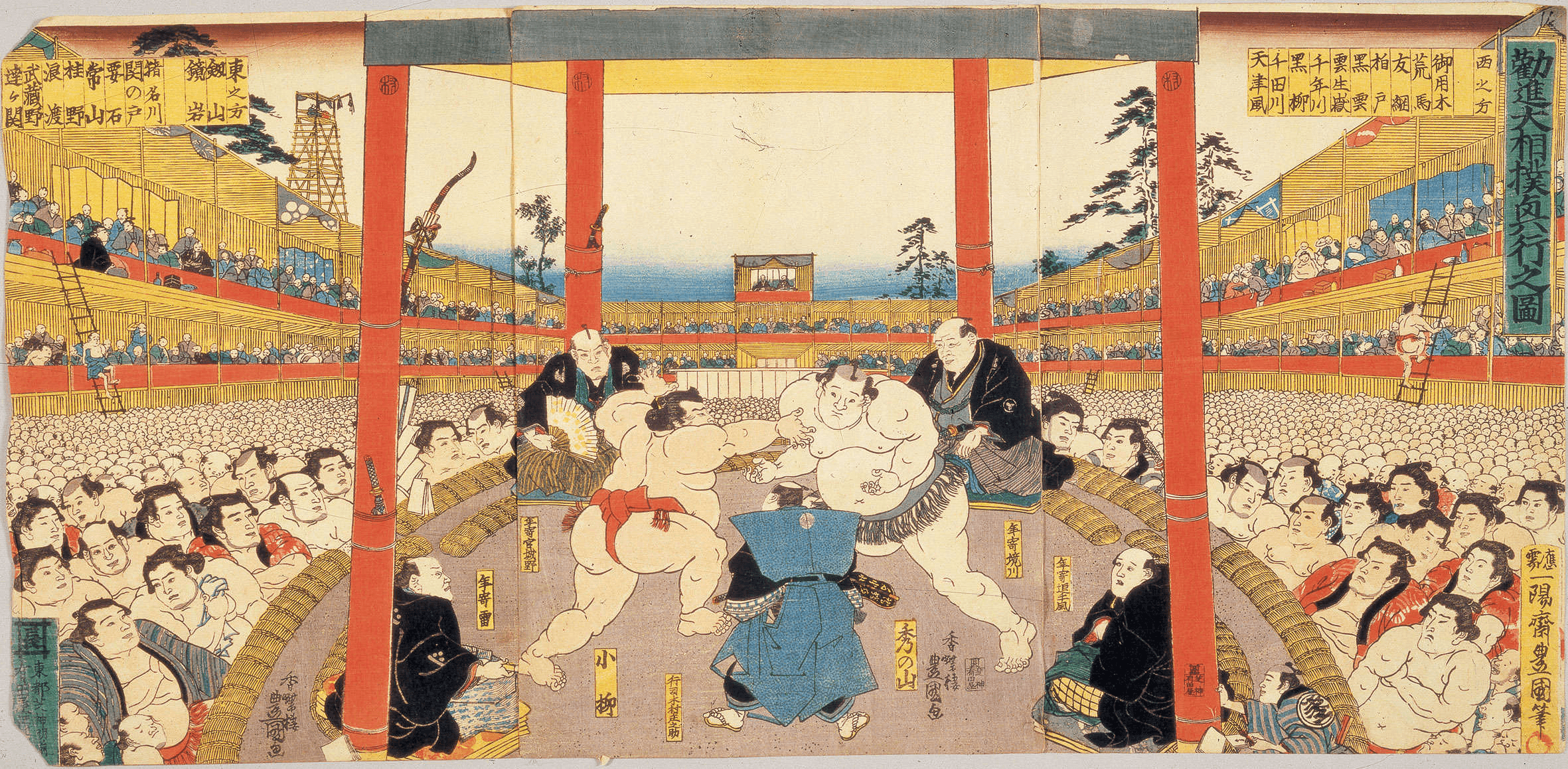
What Ryogoku gave it was a home. In 1657, after a fire killed around 100,000 people in Edo, the temple of Ekoin was built for the dead that had nobody left to mourn. The temple later became a venue for kanjin sumo (fundraising tournaments held to raise money for temples and shrines), and from 1833 every Edo tournament was held in its grounds. Sumo has found a permanent stage in the city.
On this private sumo tour in Tokyo, your local expert traces that story, from today's 11,000-seat Kokugikan back to the temple yard where Ryogoku's sumo history took shape.
Then take your seat at SUMO LAND Tokyo, where former top-division wrestlers fight a few meters away, and every stamp and handful of salt finally means something to you.
Where we'll meet
Outside Ryōgoku Edo NOREN (West Exit ticket gate, JR Ryōgoku Station, JR Chūō-Sōbu Line) 1-3-20 Yokoami, Sumida City, Tokyo 130-00151-3-20 Yokoami, Sumida City, Tokyo 130-0015
What You Could Do
Every TOMOGO! tour is led by a local expert, so the exact route may vary depending on the day, group interests, weather and what is happening in and around the city.
Think of this as a glimpse of what your Ryogoku adventure could possibly include.
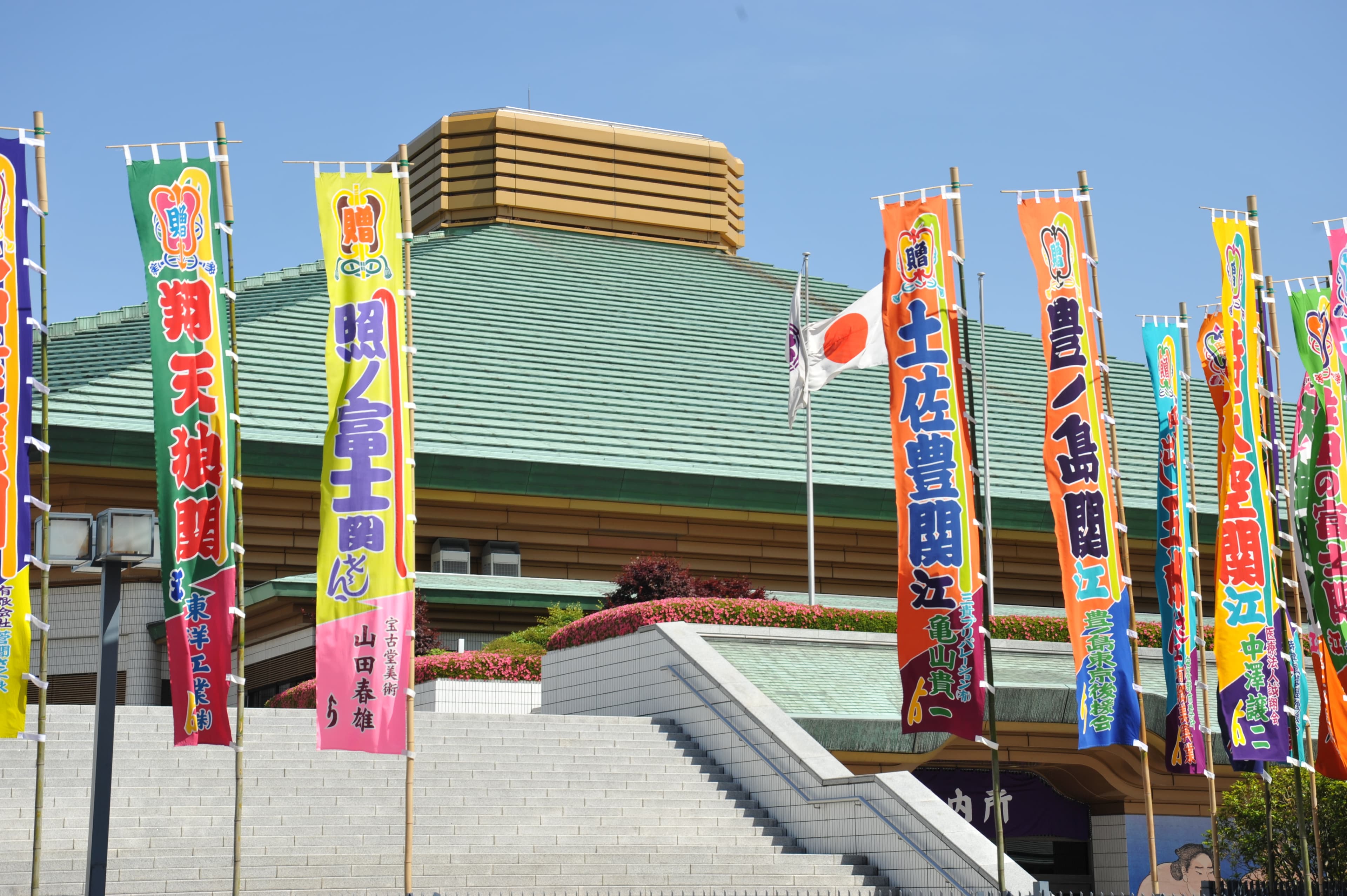
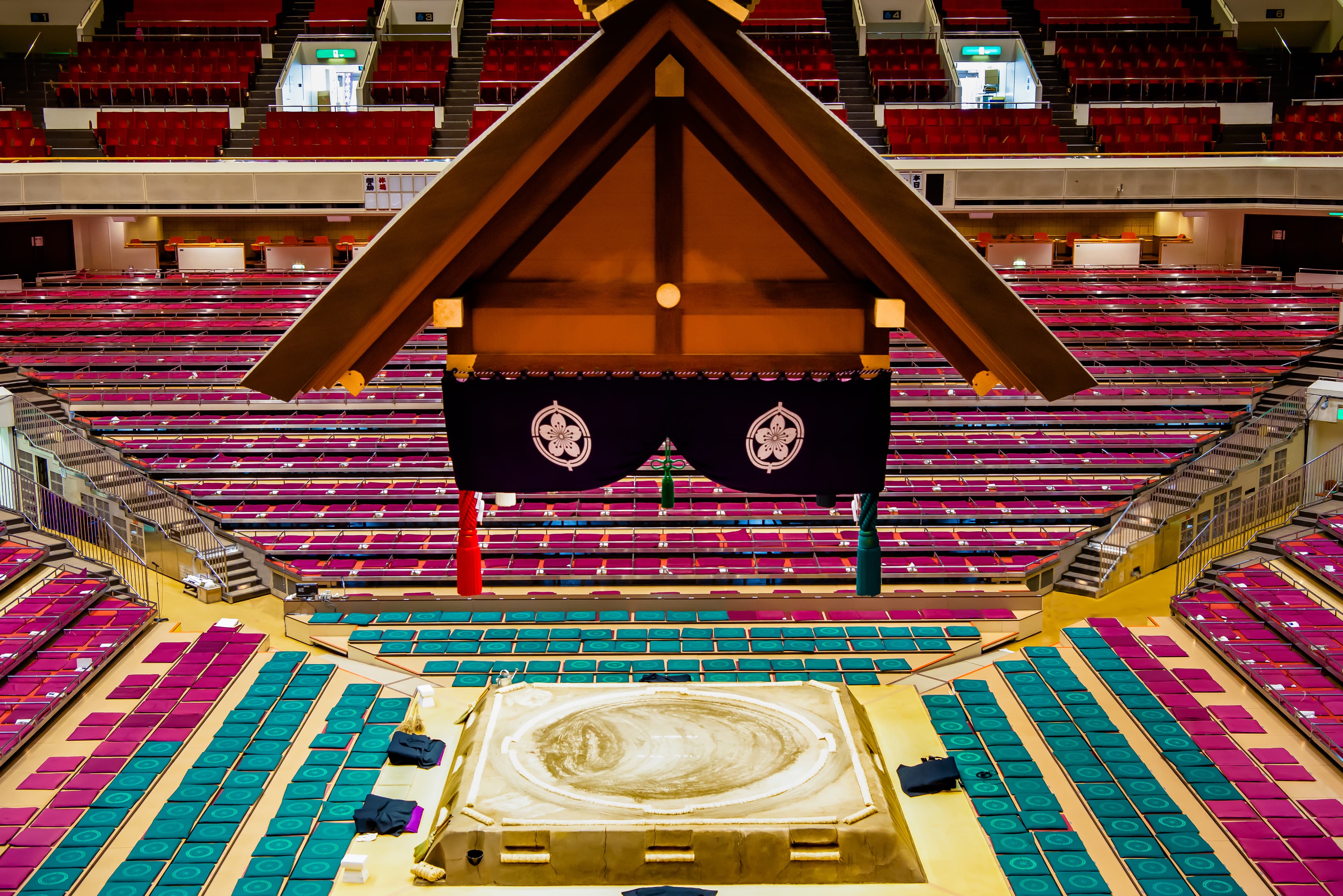
Ryogoku Kokugikan: The House of the National SportUnder that green copper roof, this building can seat 11,000 people for each of Tokyo's three Grand Sumo tournaments a year. It's the obvious landmark, and a good place to get to grips with the basics. The rules are surprisingly simple: step out of the ring or touch the ground with anything but your feet, and you lose.
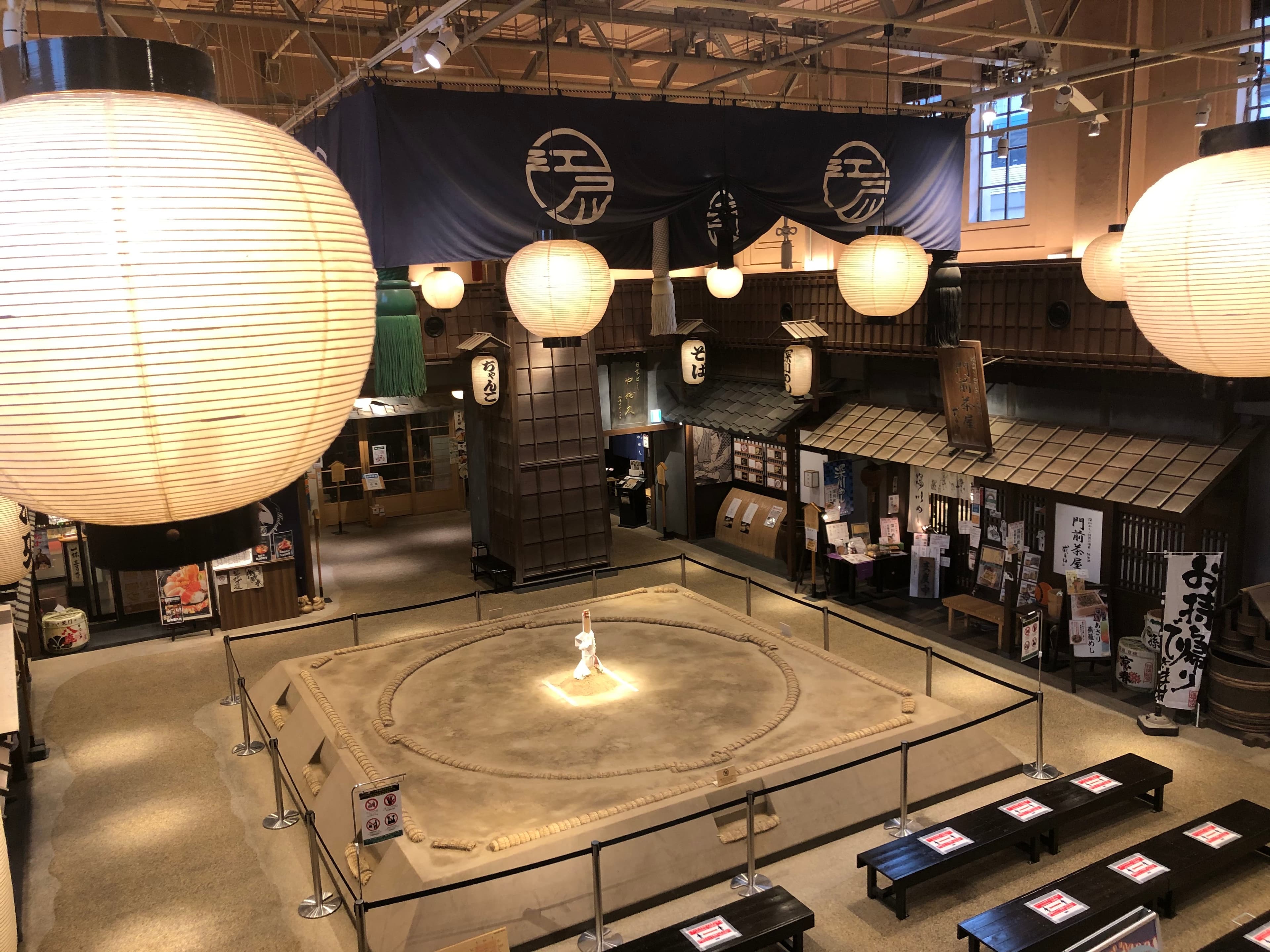
Ryogoku Edo NOREN: A Real Ring in an Old Railway StationInside Ryogoku's 1929 station building sits a full-size sumo ring you can stand right beside, no ticket needed. This is where the sport stops being abstract. Your local expert shows you how to read the ring, why wrestlers throw salt to purify it, and what the crouch and the stare-down actually mean.
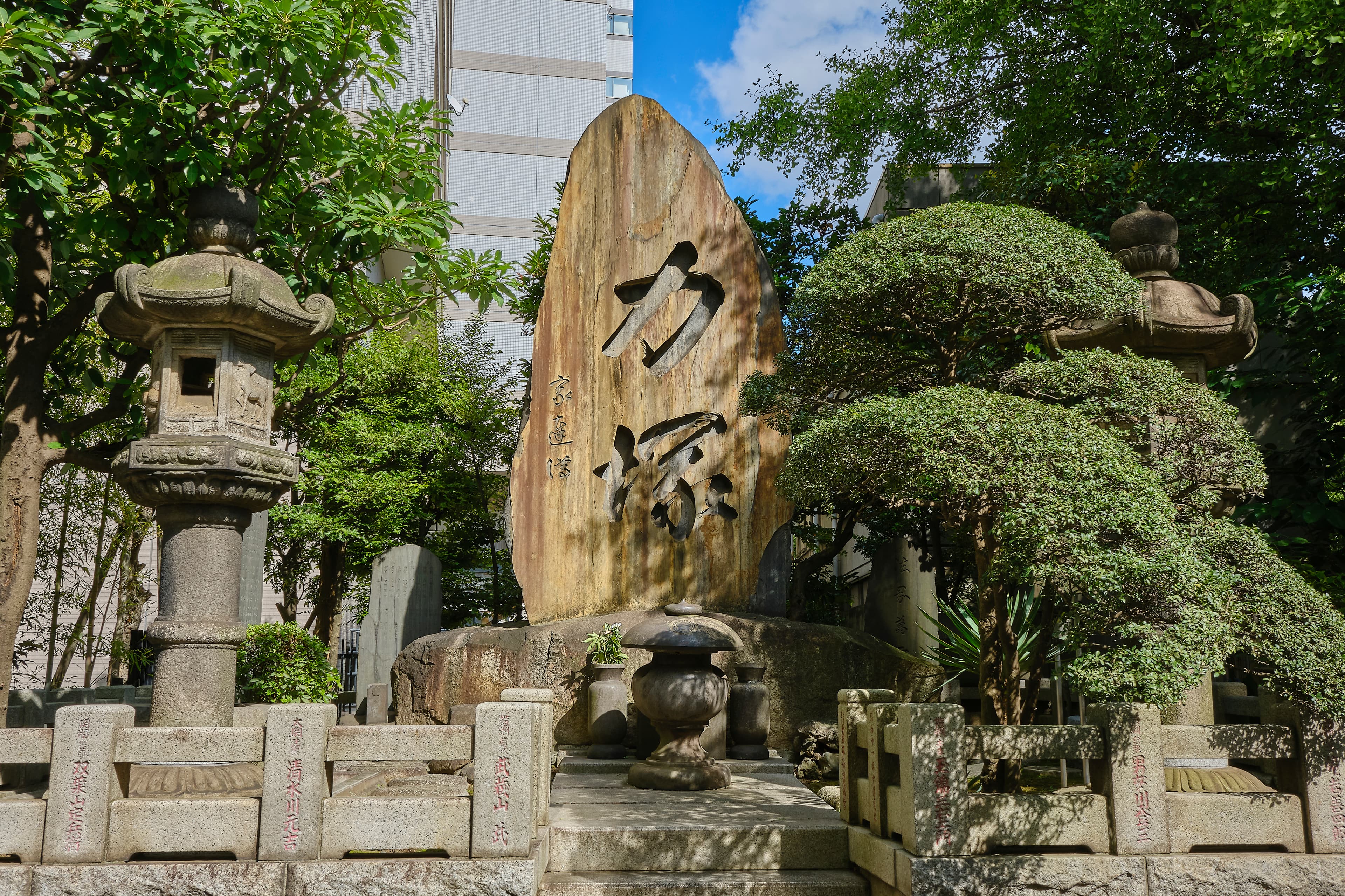
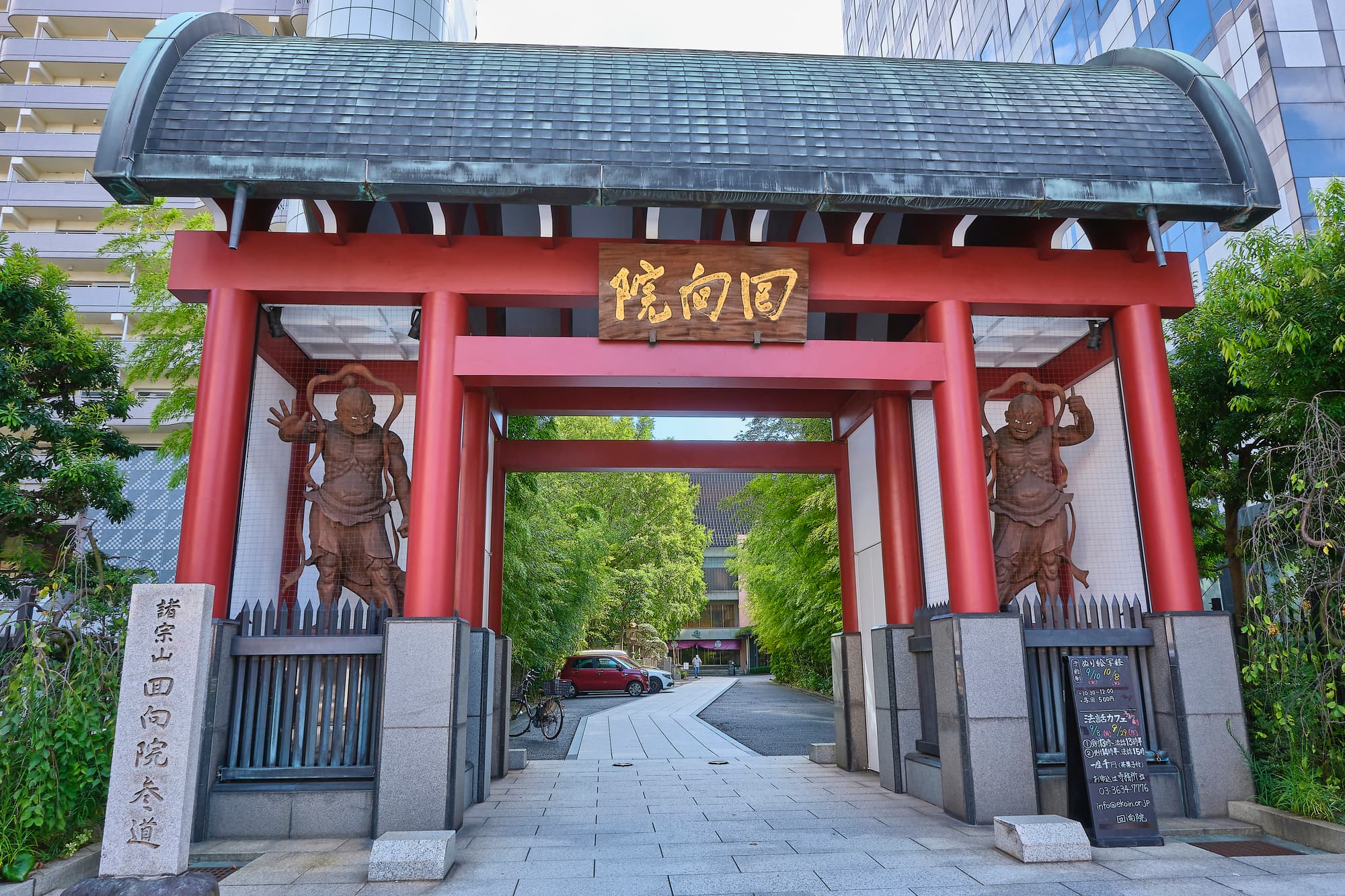
Ekoin Temple: Sumo's Home for 76 YearsEkoin was founded in 1657 to pray for the roughly 100,000 people killed in the Great Meireki Fire, most with no family left to mourn them. From 1768 it hosted charity sumo to fund that work, and from 1833 to 1909 every Edo tournament was held here. You'll stand at the Chikara-zuka, the "power mound" raised in the 1930s for past wrestlers, where young wrestlers still come to pray for strength.
The Mystery Circle: Where the First Arena StoodIn a quiet parking lot next door, a circle is set into the paving, which is easy to miss unless you know what you're looking for. It marks the ring of sumo's first purpose-built indoor arena, where tournaments could finally take place no matter the weather. From here, three eras of sumo sit remarkably close together: the temple yard, this lost arena, and the green-roofed hall where sumo is broadcast today.
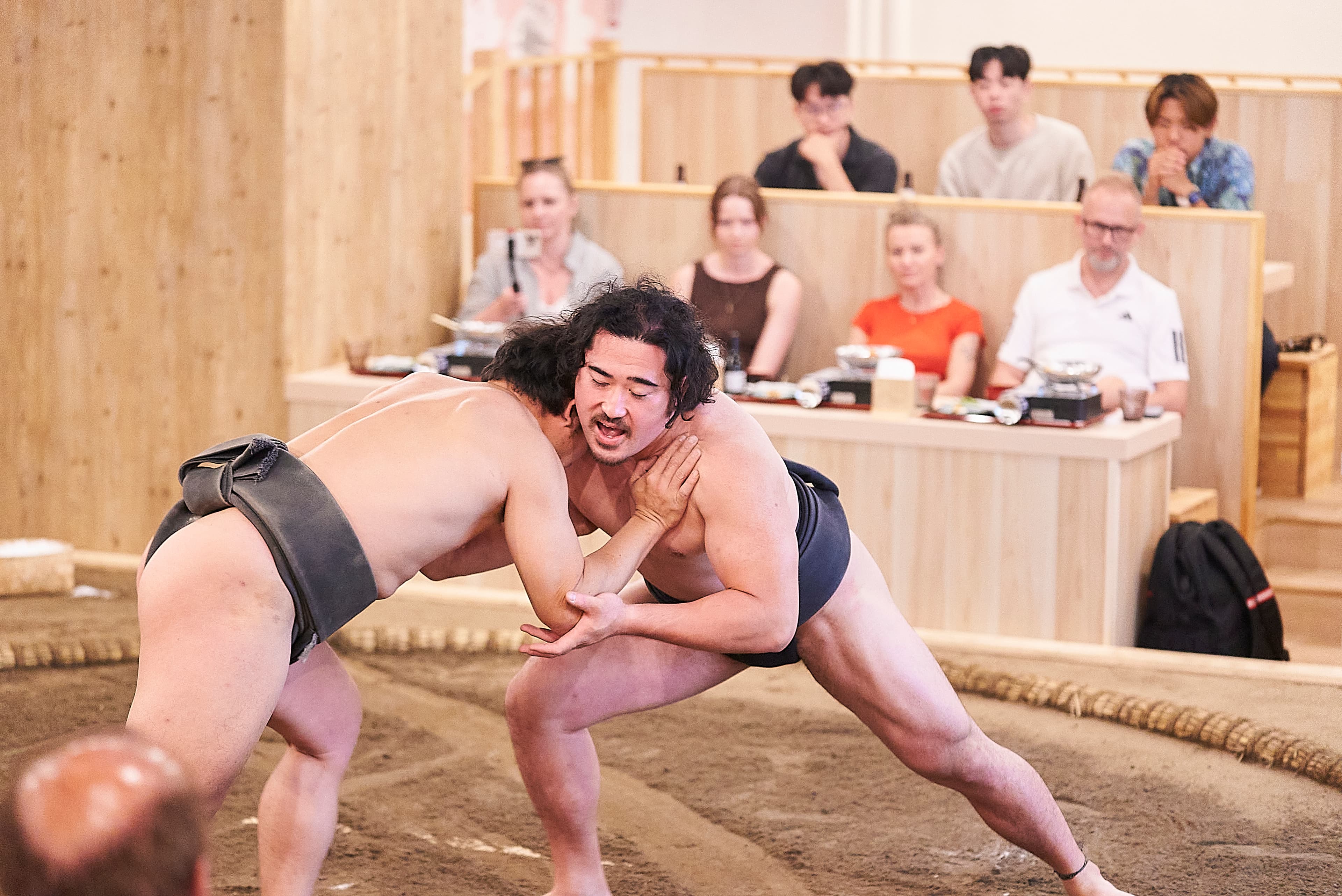
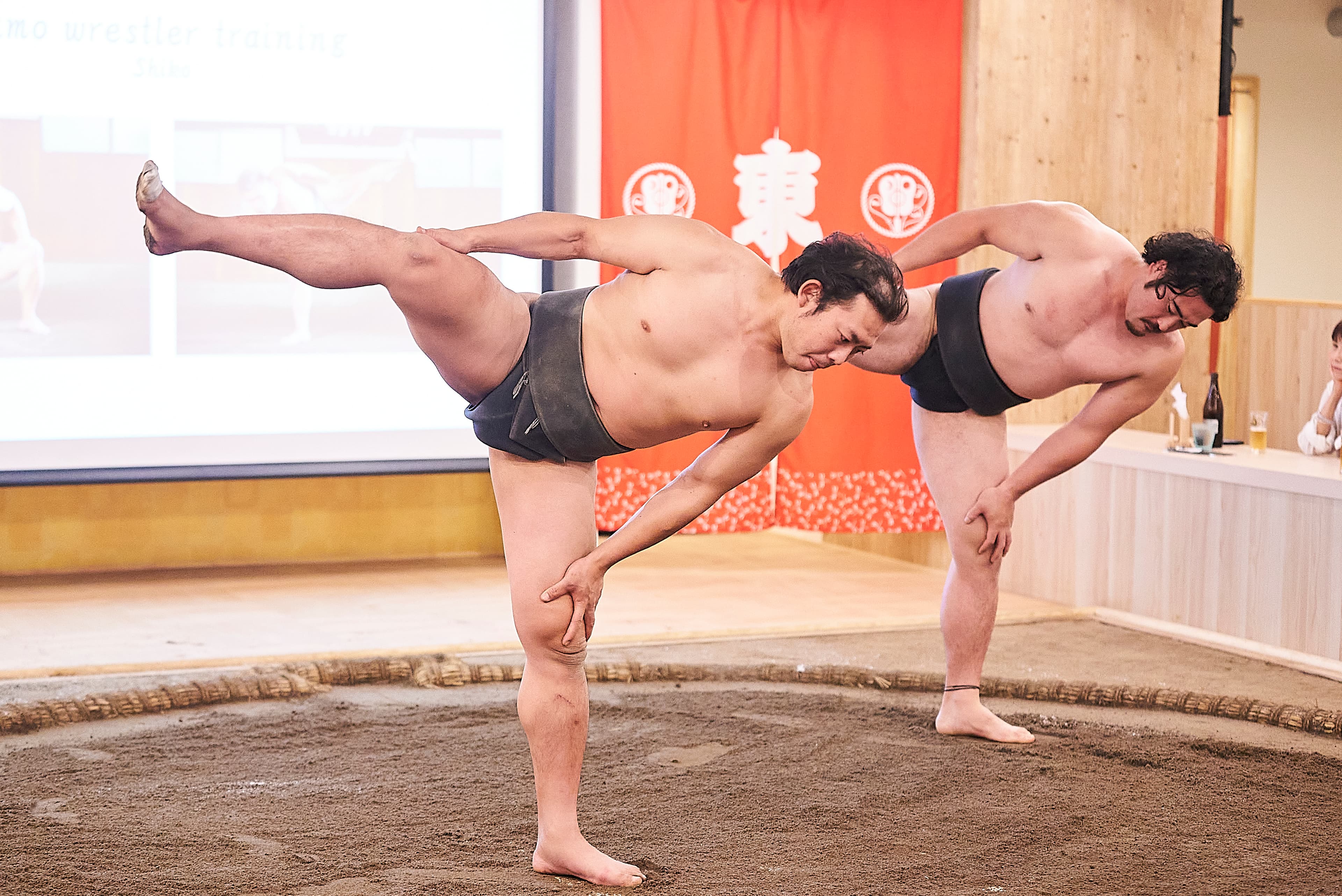
SUMO LAND Tokyo: Ringside with Former Top-Division WrestlersFormer top-division wrestlers take the ring for a live sumo wrestling show supervised by Asahifuji, the 63rd Yokozuna, just meters from your seat. Settle in with a soy sauce chanko hotpot (For those with dietary requirements, please get in touch with us at least 2 days in advance and we will inform SUMO LAND Tokyo) overseen by the Isegahama stable, join the mochi pounding, and, if you're picked, step into the ring to face a wrestler yourself. Finish with photos alongside the sumo wrestlers.
Tour Reviews
0.0
0
No Tour Reviews
Available
Included / Not Included
Included
Your Local Expert throughout the experience.
Pre-experience planning conversation via the TOMOGO! app.
A private walking tour of the Ryogoku area.
Personalized recommendations during and after your experience.
Flexible stops or itinerary adjustments where applicable.
A seat at the SUMO LAND Tokyo live show, with soy sauce chanko hotpot, mochi pounding, a photo session and a souvenir.
Not Included
Food and drinks unless specifically stated.
Entrance fees unless specifically stated.
Personal purchases, souvenirs, or optional activities.
Transportation to the meeting point and after the experience.
A.
Meet your local expert outside Ryogoku Edo NOREN, at the West Exit ticket gate of JR Ryogoku Station (JR Chūo-Sobu Line). The tour runs twice a day, each timed to a live show: meet at 9:30 for the 11:00 show, or 13:00 for the 14:30 show. The walk is paced so you're in your seats when the show starts, and your exact time is confirmed when you book.
A.
About three hours in total: an hour-long guided walk through Ryogoku, then the SUMO LAND show, which runs about two hours including the meal.
A.
Very little. There's around 15 minutes of actual walking across the whole route, all on flat ground, with plenty of time standing at each stop.
A.
The guided walk is completely private: just you, your travel companions and your local expert, for up to 6 guests. You set the pace and can ask anything you like. At SUMO LAND, you'll be seated alongside other guests for the show.
A.
Yes, it's a family-friendly tour. Children are welcome to join the mochi pounding and, if picked during the show, to step into the ring. The walk is short and easy, which makes it a good first introduction to sumo for all ages.
A.
The standard chanko hotpot comes with chicken. Vegetarian and vegan versions are available, but they must be requested when you book, not on the day, so the kitchen can prepare for you.
A.
Seating is arranged around the ring with tabletop burners for the hotpot, so you sit close to the action.
A.
General seating is arranged around the ring with tabletop burners for the hotpot, so you sit close to the action.
A.
The walk is short and flat, so the guided part is very manageable. Seating at the show may be low, so please share any mobility needs when you book and we'll arrange the best option with SUMO LAND.
A.
The SUMO LAND show is conducted in English. The guided walk is available in multiple languages, though availability varies by local expert. Use the language selector when booking to check, and contact us if your preferred language isn't listed.
A.
You can, and you'd have a fun afternoon. The walk adds the part a show doesn't have time for: how a temple fundraiser became a national sport, what each ritual means, and where it all happened. Arrive with that, and the show looks very different.
A.
Wear everyday, casual clothing suitable for walking in. Comfortable shoes are essential. If you're visiting in summer, Japan can be very hot and humid, so be sure to dress lightly and consider a sun hat. In the rainy season (roughly June to mid-July), a compact umbrella or lightweight rain jacket is worth bringing. Layers are useful in spring and autumn when temperatures can drop in the evening.
A.
Yes. As Japan remains a largely cash-based society, many venues do not accept cards. We recommend carrying at least ¥3,000–¥5,000 for optional food, drinks, or souvenirs during the tour. It's also possible to stop by an ATM to get cash while on tour. For international cards, ATMs at 7-Eleven and Japan Post are the most reliable.
A.
The walk is mostly outdoors but short, and Edo NOREN gives indoor cover if it rains. Everything at SUMO LAND is indoors. The tour runs in light rain. In the event of severe weather (such as a typhoon warning), we will contact you as early as possible to discuss rescheduling or a refund.
A.
Plans change, we get that. Please contact us as soon as possible if you need to cancel or reschedule.
Our tours come with free cancellation and rescheduling up to 24 hours before the scheduled start time. Cancellations or changes requested within 24 hours of the start time are non-refundable and will not be accepted. All deadlines are based on the local time of the experience.
Because show seats and dietary requests are confirmed with SUMO LAND in advance, we recommend booking at least 48 hours ahead.
A.
Yes. Each TOMOGO! tour leader is a local who genuinely knows the area. Not just the landmarks, but the stories, the backstreets, and the kind of insider knowledge that doesn't show up in travel guides. That local perspective is central to what makes TOMOGO! tours worthwhile.
A.
Tipping is not expected or required. As it's not a common custom in Japan, your tour leader won't be anticipating it. That said, if you had a great time and want to show your appreciation, it's always welcome and will mean a lot.
A.
If you enjoyed this tour and want to explore more of Japan with a local expert, we have tours running across Tokyo, Osaka, Kyoto, Nara, Kawagoe, Kanagawa and more. New destinations are being added all the time. Check out our tour page for more details.
¥20,900/ person
Free Cancellation
Take Japan with you
Book tours, chat with your Local Expert, and discover hidden gems, all from your phone.
Un recorrido privado a pie por la zona de Ryogoku.
Paradas flexibles o ajustes de itinerario cuando corresponda.
Tour privado de sumo en Tokio: Adéntrate en 1.500 años de lucha de sumo.
Overview
Nadie sabe con exactitud cuándo comenzó el sumo. Las crónicas más antiguas de Japón, incluido el Nihon Shoki del siglo VIII, ya hablan de combates de lucha libre, y la historia de este deporte se remonta al menos a 1500 años.
Ryogoku le brindó un hogar. En 1657, tras un incendio que causó la muerte de unas 100 000 personas en Edo, se construyó el templo de Ekoin para honrar a los fallecidos, que no tenían a quién llorar. Posteriormente, el templo se convirtió en sede del kanjin sumo (torneos benéficos para recaudar fondos para templos y santuarios), y desde 1833 todos los torneos de Edo se celebraron en sus terrenos. El sumo ha encontrado un escenario permanente en la ciudad.
En este tour privado de sumo en Tokio, un experto local le guiará a través de esta historia, desde el actual Kokugikan, con capacidad para 11 000 personas, hasta el patio del templo donde se forjó la historia del sumo en Ryogoku.
Luego, toma asiento en SUMO LAND Tokyo, donde antiguos luchadores de primera división pelean a pocos metros de distancia, y cada sello y puñado de sal finalmente tendrá un significado para ti.
Su experto local durante toda la experiencia.
Comida y bebidas, salvo que se indique lo contrario.
Un asiento en el espectáculo en vivo de SUMO LAND Tokyo, con olla caliente de salsa de soja chanko, preparación de mochi, una sesión de fotos y un recuerdo.
Transporte hasta el punto de encuentro y después de la experiencia.
Tour privado a pie por Tokio: Descubra los secretos de Shinjuku con un guía experto local.
Shinjuku: Tour privado de bares y callejuelas iluminadas con luces de neón.
Recomendaciones personalizadas durante y después de su experiencia.
Conversación de planificación previa a la experiencia a través de la aplicación TOMOGO!.
Se cobra entrada, salvo que se indique lo contrario.
Compras personales, recuerdos o actividades opcionales.