 Emilija's tour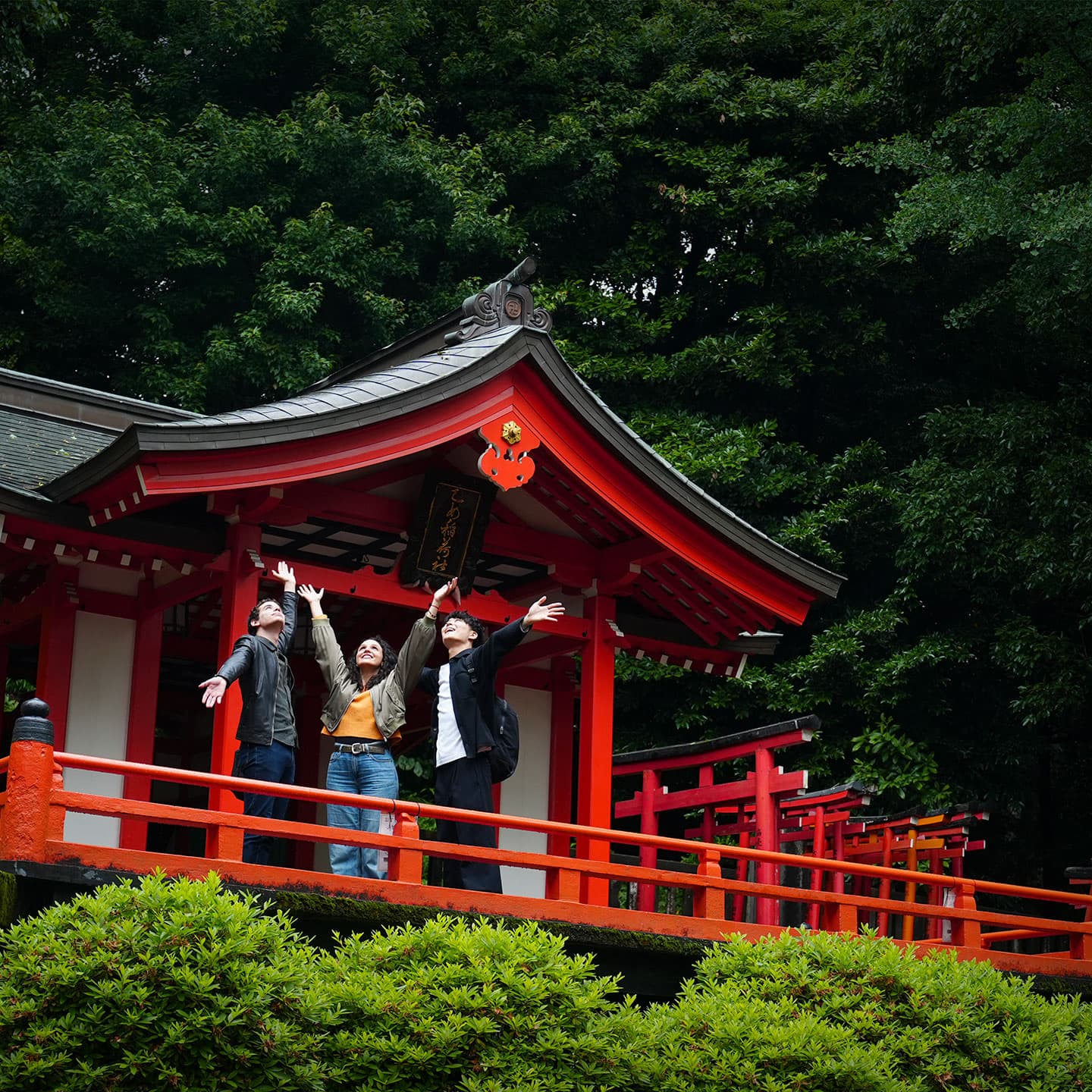

Private Yanaka Walking Tour: The Tokyo District That Fire Built
Edo burned so often the fires has a nickname. Yanaka was built to stop them reaching the city center. Somehow, it survived too.Key Facts
Overview
Edo burned so often that the fires had a nickname: the flowers of Edo.
With wooden buildings packed tightly together, fire could move through the city fast. The shogunate’s answer was to move many of Edo’s temples away from the center and north toward Yanaka, opening up pockets of empty land where they had once stood.
There is an irony to what happened next. The open land created to protect central Edo also left a buffer between the city center and Yanaka, helping stop fires from reaching the very area the temples had been moved to.
Around 70 of those temples are still here today, concentrated within roughly a square kilometer, and that is what you can explore on this Yanaka walking tour. A Local Expert connects the story as you walk: why the temples were sent here in the first place, and how the same decision may have helped preserve so much of Yanaka itself.
As a fully private tour, the pace is yours. Linger in the cemetery, ask about the shop fronts, and leave with recommendations for the rest of your time in Tokyo.
Where we'll meet
What You Could Do
It is two buildings joined: a concrete atelier with an 8.5-meter ceiling on one side, traditional tatami rooms on the other, and the oldest existing rooftop garden in Tokyo. Shoes come off at the door and socks are required. The museum is closed on Monday's and Thursday's, so choose your tour dates wisely if you want to visit.
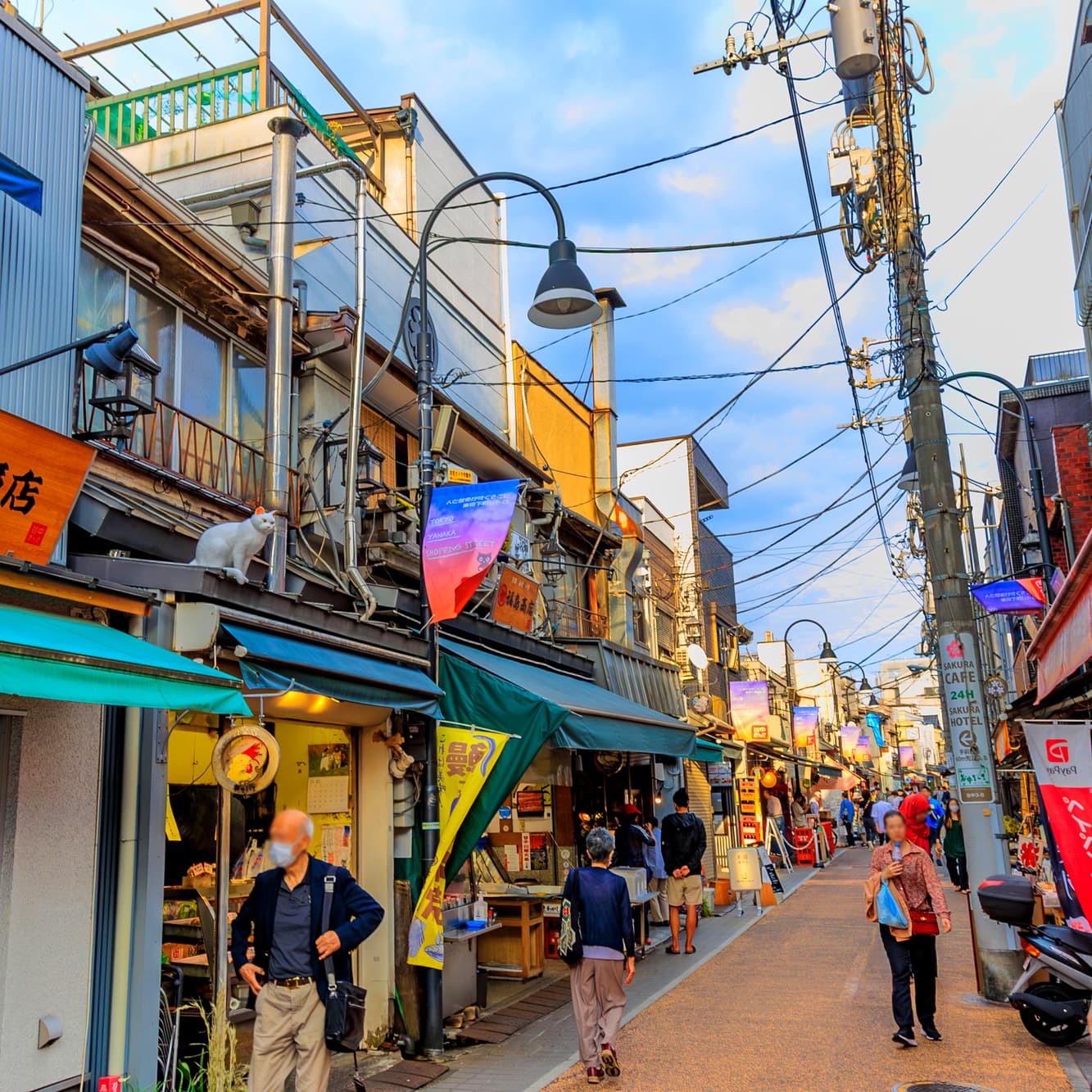
Look closely at the roof eaves and you might spot a cat or two glancing down at you. These wooden figures are a nod to the cats the shops once kept to deal with rats. There are seven in total, see how many you can find before your Local Expert points them out.
Entry is free, however, it shows only a handful of artists throughout the year, and is closed between exhibitions, so what is on when you visit is down to luck.
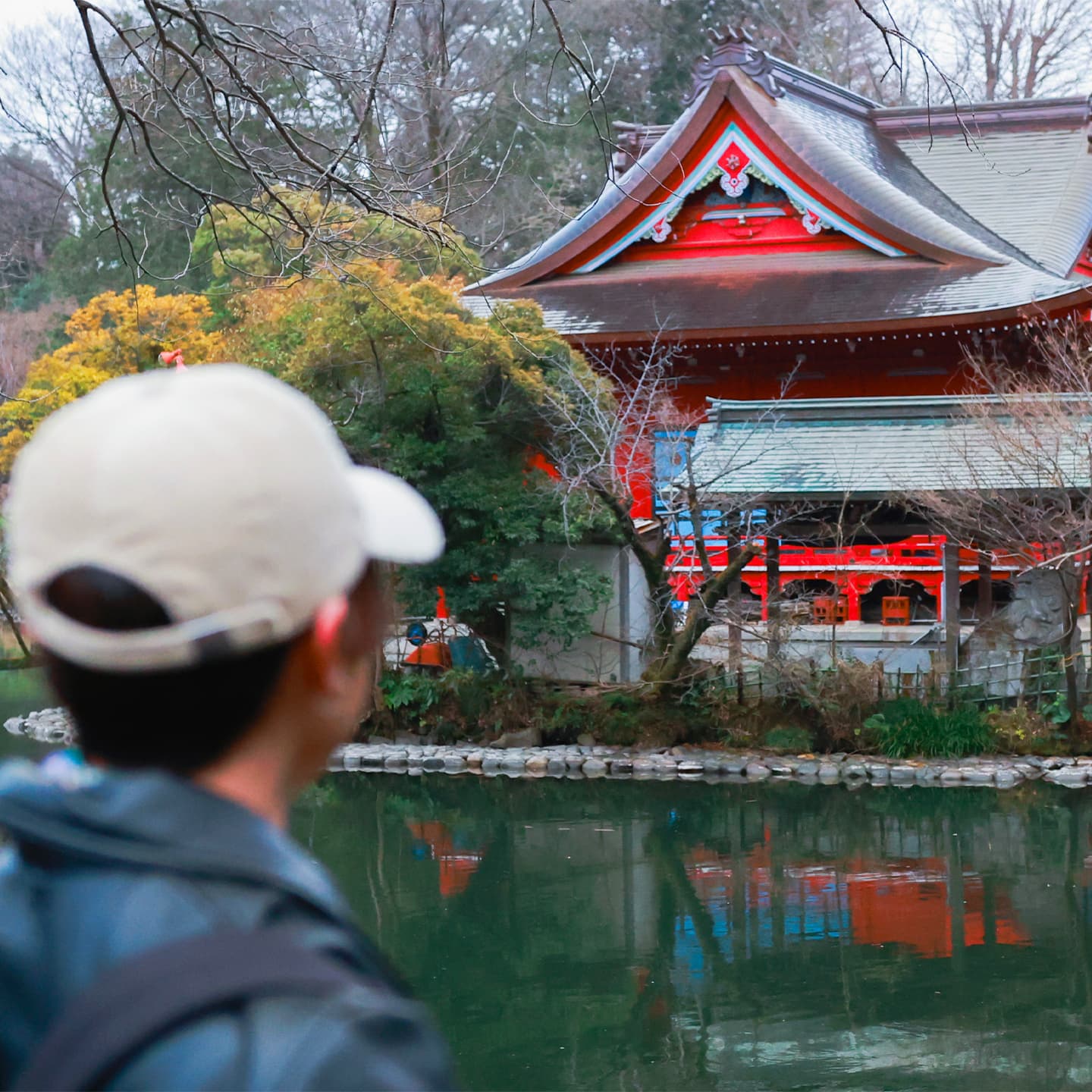
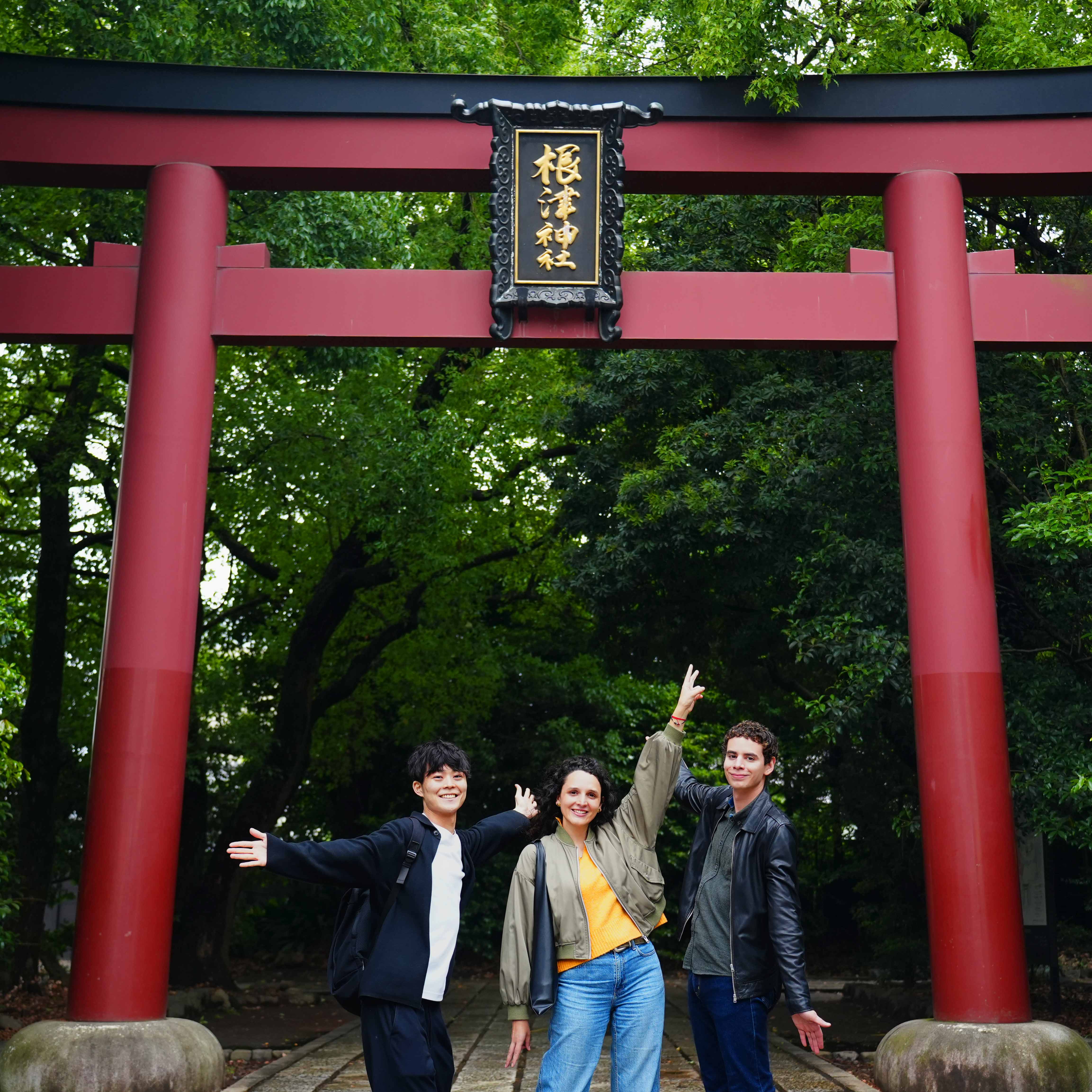
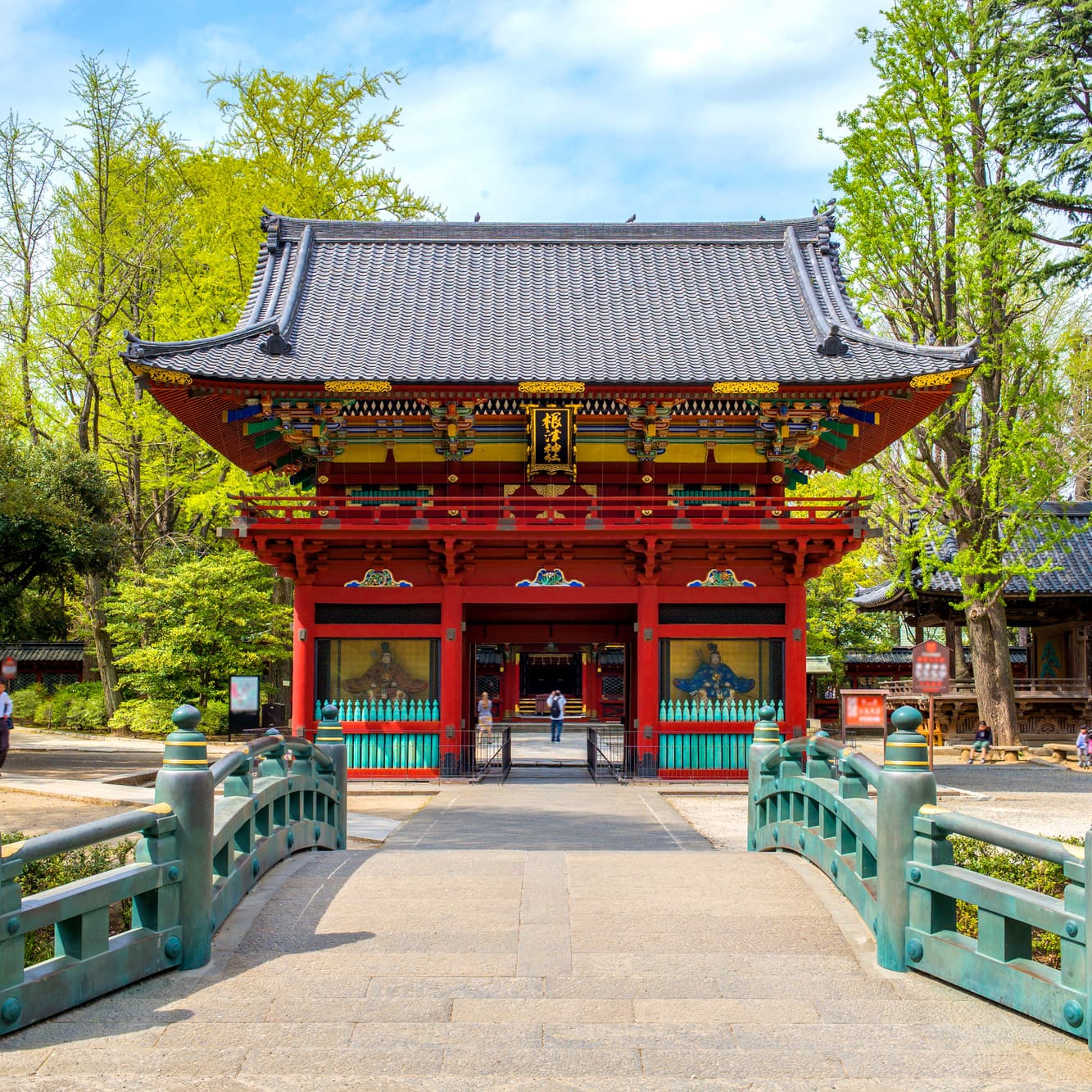
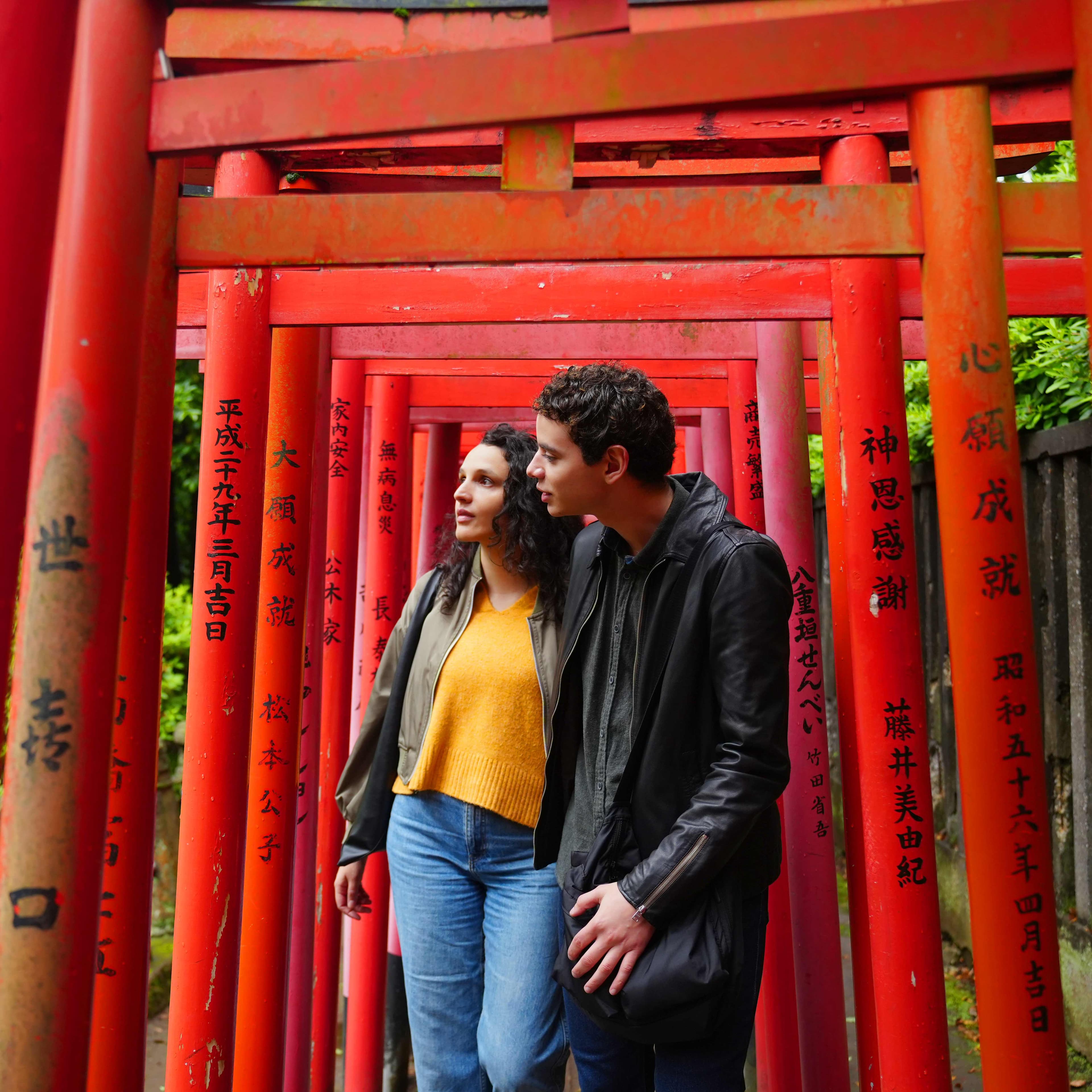
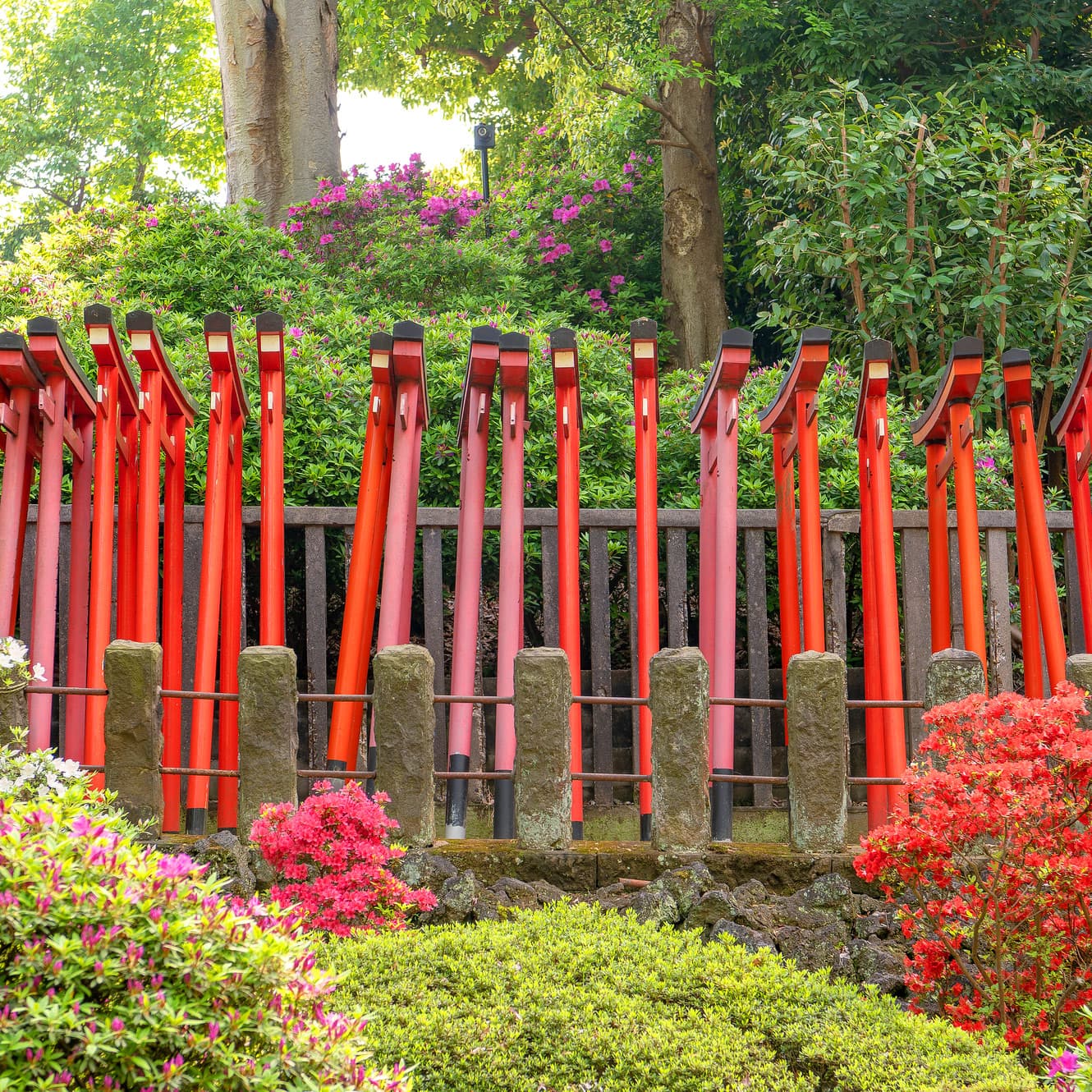
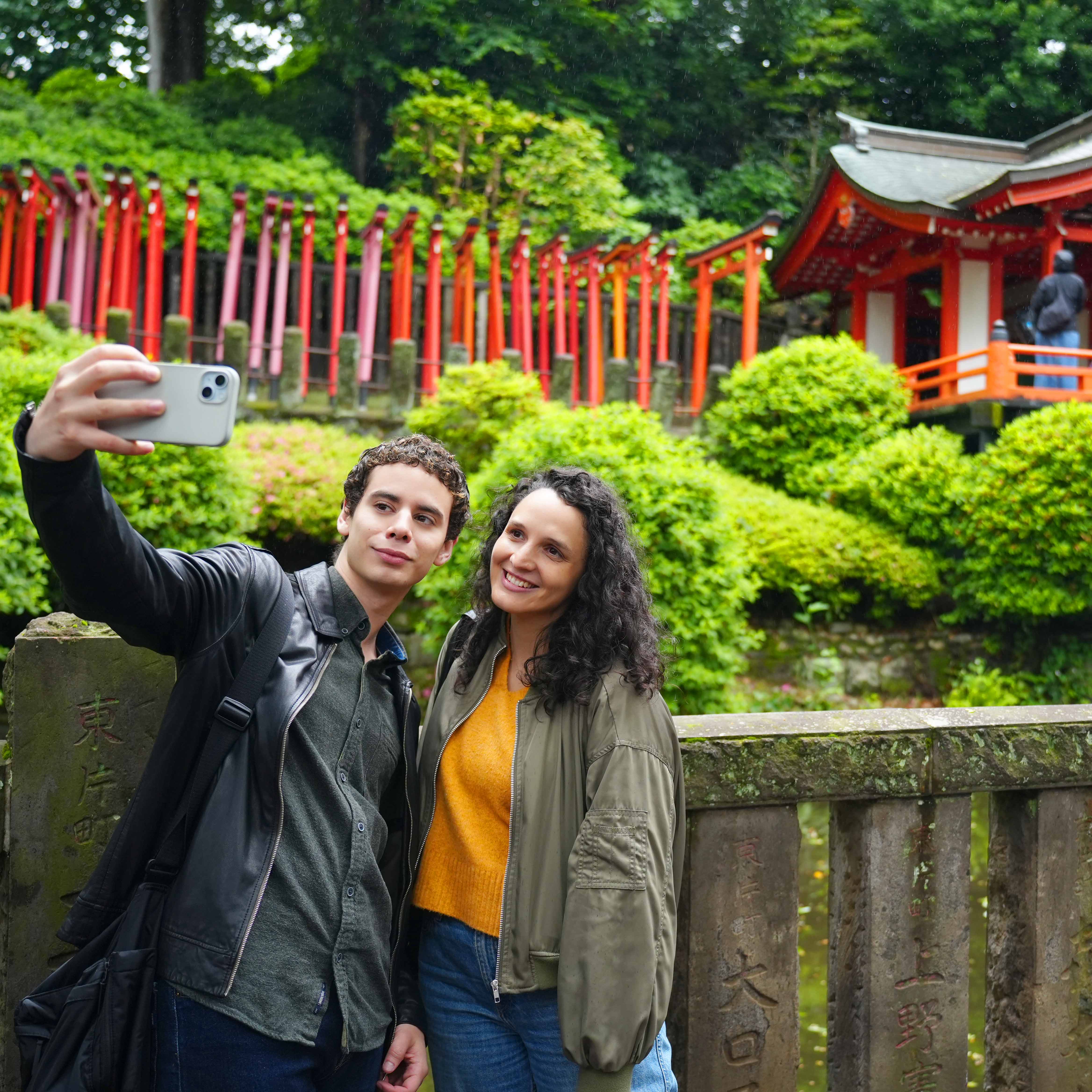
The azalea garden peaks through April and asks a small donation to enter, and the tunnel of small torii gates behind it draws the Fushimi Inari comparison at a fraction of the crowd. Your Local Expert closes the private walking tour here with recommendations for the rest of your trip.
Tour Reviews
Included / Not Included
Meet your Local Expert outside the public restrooms at Nippori Station's North Ticket Gate, West Exit, on the Gotenzaka side of the station. This is the exit that leads up toward Yanaka Cemetery and Yanaka Ginza. If you come out at the South Ticket Gate by mistake, walk north alongside the platforms and you will reach it in a couple of minutes.
This is a completely private tour. Just you, your travel companions, and your Local Expert. You won't be joined by strangers, and the experience is tailored entirely to you. This means you can set the pace, ask questions freely, and adapt the route as you go.
The tour typically runs around 3 hours, though this can vary depending on your pace, interests, and how long you stick around at each stop. As a private tour, there's no set route, so if you want to spend more time somewhere, just let your Local Expert know.
Because every tour is fully tailored to you, there is no fixed finishing point. Your Local Expert will work around wherever you need to be next, whether that's back at the starting point, a particular station, or simply pointed in the right direction for your next plan. Just let them know during booking and they'll make it work.
The tour is a fully private, guided walking experience through a mix of Yanaka's most interesting and lesser-known areas. The itinerary is completely customizable, but can, for example, include stops at Kyo-o-ji, Yanaka Cemetery, Yanaka Ginza, and Nezu Shrine. During the tour, your Local Expert will share local stories and history at each stop. They will also provide personalized recommendations for the rest of your time in Tokyo. Entrance fees, food, drinks and transport are not included unless otherwise stated at booking.
Not necessarily, and that's by design. Every TOMOGO! tour is led by a Local Expert, so the route may shift depending on the day, the weather, what's happening in the neighborhood, and your personal interests. The itinerary on this page is an example of what your tour could include. Talk to your Local Expert during the booking process if there are specific things you're hoping to see.
Yes you can! This is one of the main benefits of a private tour. Whether you're interested in old wooden architecture, Edo history, street photography, or Yanaka's quieter residential corners, let your Local Expert know and they'll adjust accordingly. If you have specific questions or places in mind, make sure to share them when you book.
Yes, Yanaka is easy to explore on your own, but having a Local Expert helps you discover local shops and experience the area beyond just walking through it.
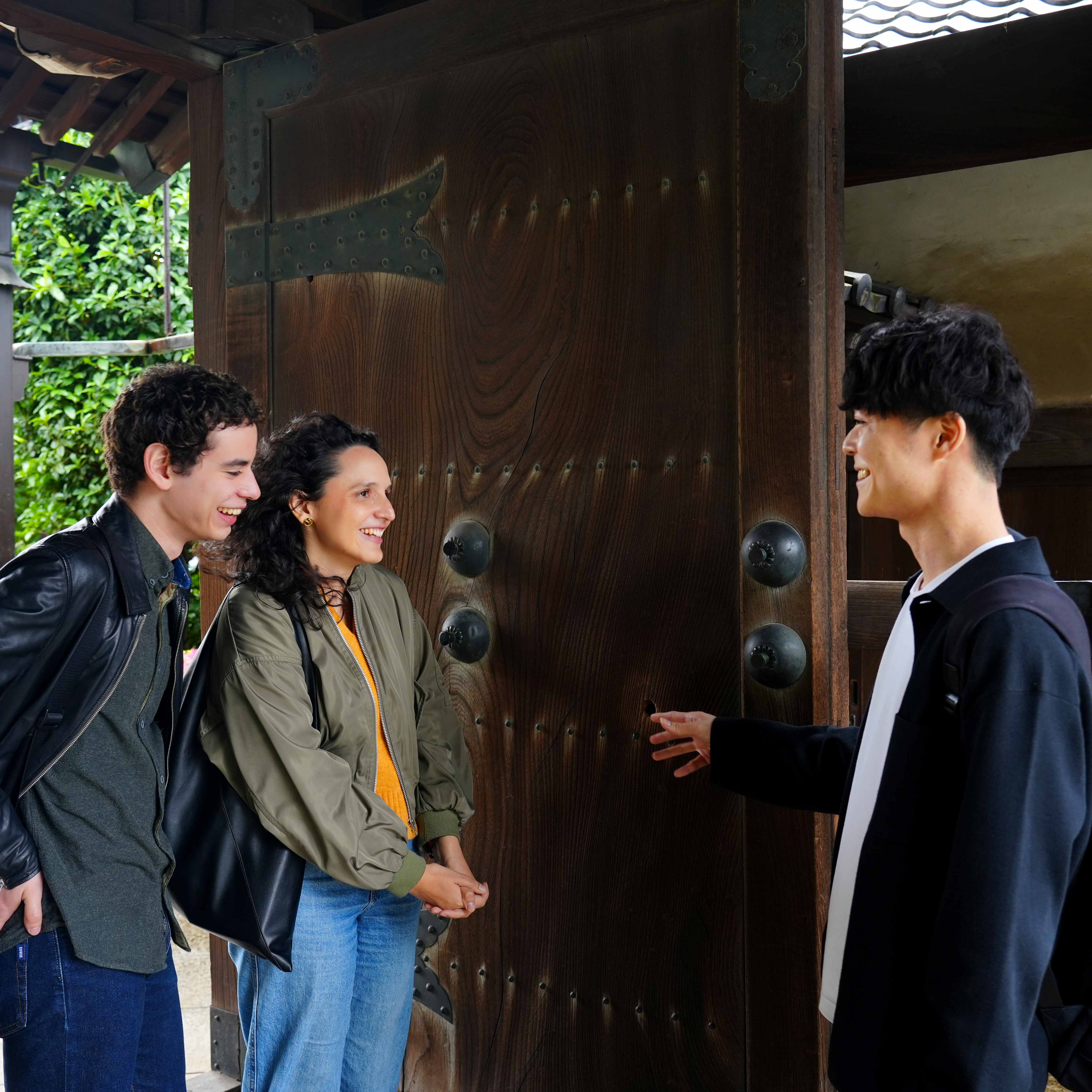
Yes, if what you saw was Yanaka Ginza and the cats, which is what most first visits amount to. The parts that need a guide are the ones with no English signage: the bullet holes in the gate at Kyo-o-ji, the foundation stone where Tenno-ji's pagoda stood until 1957, and the reason around 70 temples ended up in one square kilometer in the first place. The route also reaches Nezu Shrine and the Asakura house, which people tend to miss on a first pass.
Wednesday, Friday and Saturday are the strongest. Monday is the one to avoid: the Asakura Museum, Kayaba Coffee, SCAI The Bathhouse and most of the shops at Ueno Sakuragi Atari all close, which takes several of the indoor stops off the table. The Asakura Museum also closes on Thursdays, and SCAI closes Sundays and between exhibitions. The outdoor stops: Kyo-o-ji, Yanaka Cemetery, Tenno-ji, Yanaka Ginza and Nezu Shrine, run every day. Tell us your date at booking and your Local Expert will build the route around what is actually open.
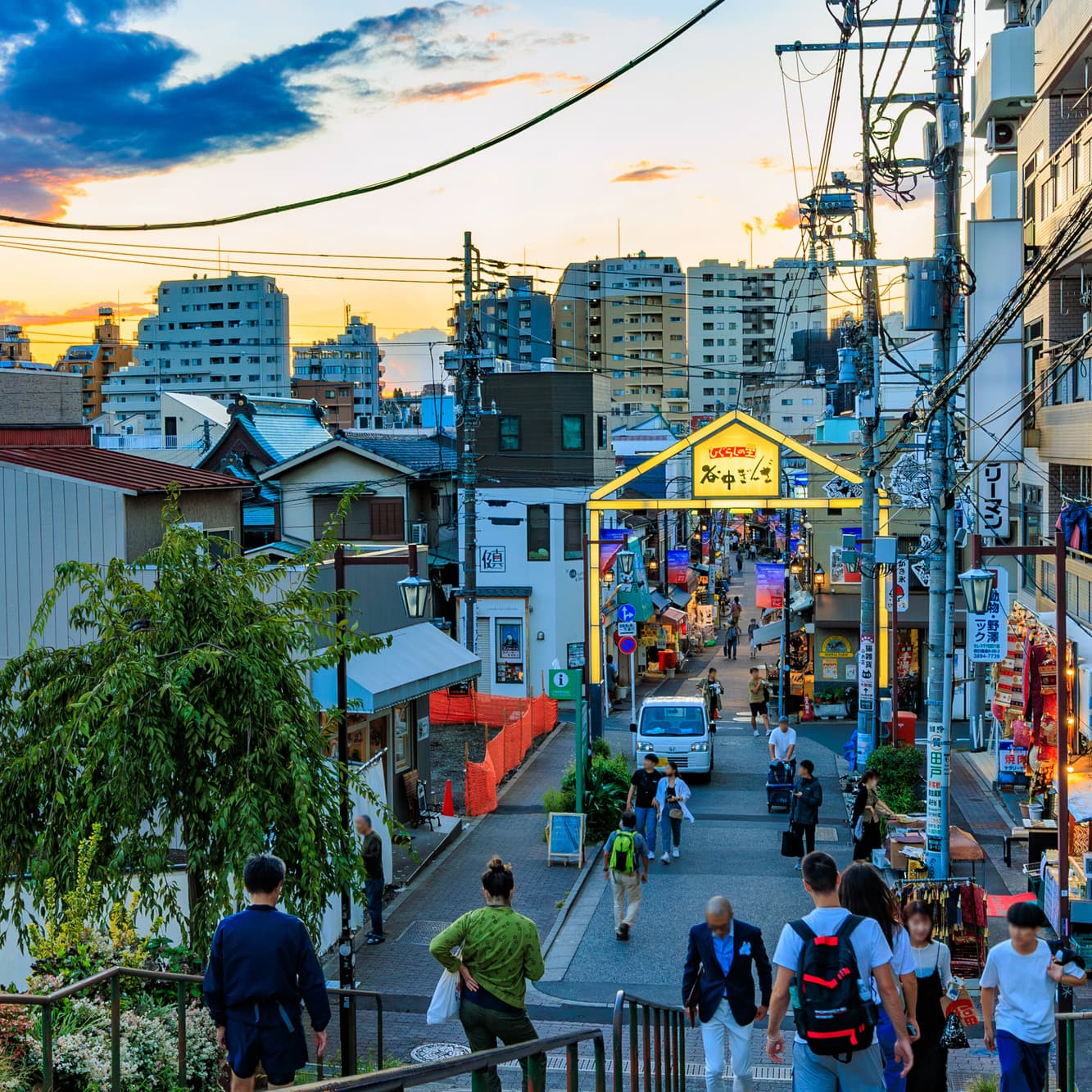
Mid-morning to late afternoon. Yanaka Ginza's shops mostly open around 11am and many close by 6pm or 7pm, and the Asakura Museum's last entry is 4:00pm. A later start lets you come down Yuyake Dandan while the light is still on the street, which is what the steps are named for. If you want both the museum and the sunset, a 1:00pm start is ideal.
Most of the route is free. The Asakura Museum charges ¥500 for adults, including university students, and ¥250 for school-age children. Nezu Shrine's grounds are free, but the azalea garden asks a donation of roughly ¥500–1,000 during the April festival. SCAI The Bathhouse is free. Because these stops are optional, their entry fees are not included in the tour price. If you would like to stop by any of them, be sure to let your Local Expert know before the tour starts and bring cash to pay with.
Possibly, but nobody can promise a cat. Yanaka's reputation for them is real and long-standing, and you will certainly see them in the form the neighborhood has made of them: cat-shaped signage, cat-shaped snacks, cats painted on shutters and perched on rooftops. Live ones tend to turn up around the cemetery and the quieter temple lanes, more often in the morning and late afternoon than at midday. Your Local Expert knows the usual spots and will take you past them if that is what you came for.
Nezu is on the standard route, since Nezu Shrine is usually the final stop. Sendagi sits between the two and its lanes are easy to fold in if you want more of the residential side of Yanesen. Ueno is a different matter: Ueno Park and its museums are around fifteen minutes' walk south and would take most of a day on their own, so we treat them as a separate outing rather than an extension. Raise either at booking and your Local Expert will tell you honestly what fits into three hours.
You'll cover about 4–5 kilometers over the course of the tour. Yanaka sits on high ground and Nezu is in the valley below, so expect around 20 meters of elevation change across the route, along with named slopes like Gotenzaka and the thirty-six steps of Yuyake Dandan. Some of the temple lanes off Yanaka Ginza are narrow and uneven. Comfortable shoes for walking in are strongly recommended.
Partly, and the honest answer depends on the route. Yanaka Cemetery and the grounds at Nezu Shrine are flat, wide and step-free, and Yanaka Ginza itself is a level street. The awkward parts are Yuyake Dandan, thirty-six steps with no ramp and no lift, and the Asakura Museum, which has stairs between floors and requires shoes off at the door. Both can be skipped. There is a gentler road route down to Yanaka Ginza that avoids the steps entirely, and a wheelchair or a pram works on that adjusted route. Tell us at booking so your Local Expert can plan it properly rather than improvising on the day.
Yes, and Yanaka tends to suit them better than a temple-heavy route usually does. The draws are the cats, the snacks along Yanaka Ginza that you eat standing on the street, and the steps. Nothing on the route is loud or crowded in the way central Tokyo can be, and the cemetery, despite the name, reads as a park with wide paths and cherry trees. The pace is yours, so a shorter version with more food stops and fewer temples is easy to arrange.
Wear everyday, casual clothing suitable for walking in. Comfortable shoes are essential. If you're visiting in summer, Japan can be very hot and humid, so be sure to dress lightly and consider a sun hat. In the rainy season (roughly June to mid-July), a compact umbrella or lightweight rain jacket is worth bringing. Layers are useful in spring and autumn when temperatures can drop in the evening. If the Asakura Museum is on your route, wear socks you are happy to be seen in, as bare feet are not allowed inside.
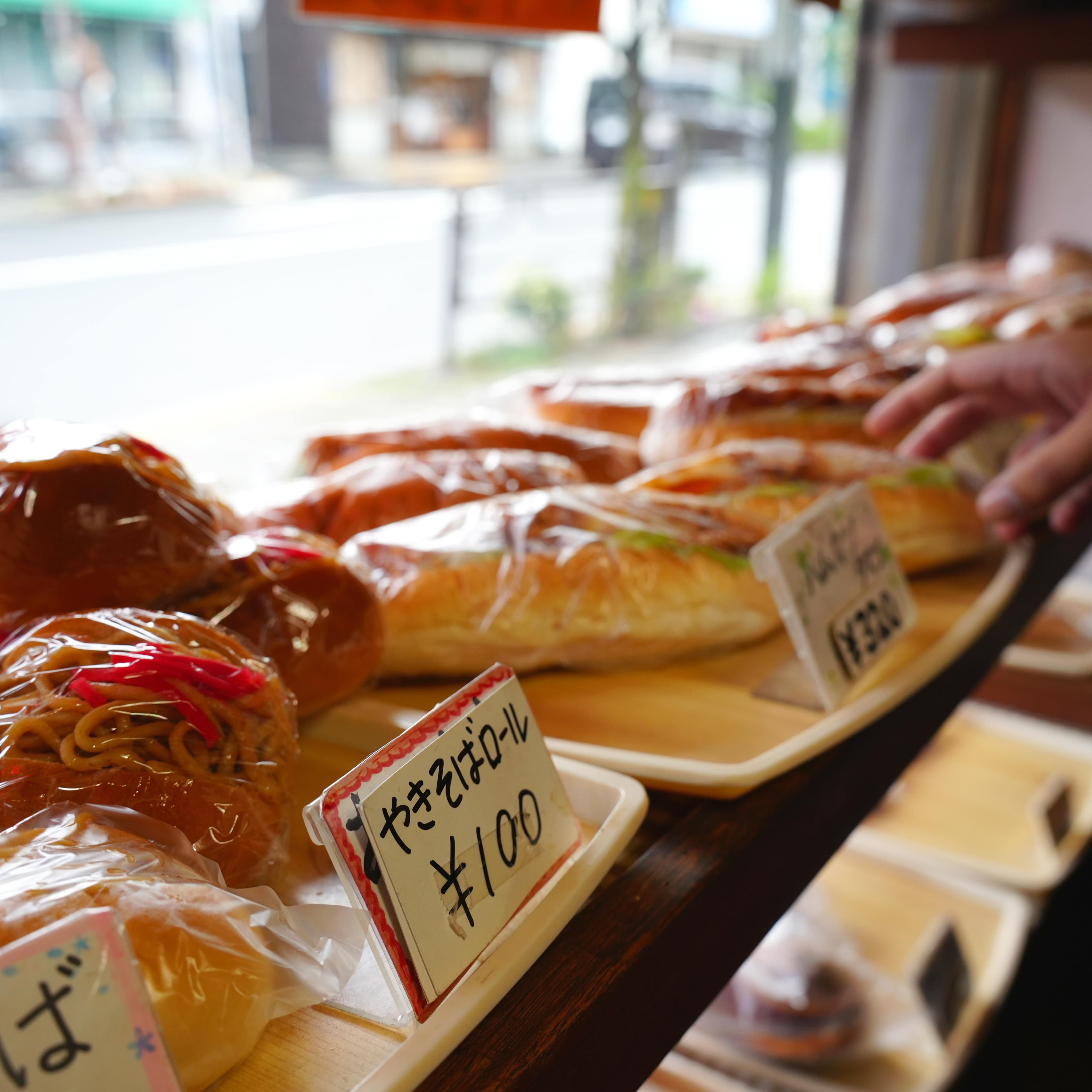
Yes. As Japan remains a largely cash-based society, many of the smaller venues in Yanaka do not accept cards. We recommend carrying at least ¥3,000–¥5,000 for optional food, drinks, or souvenirs during the tour. It's also possible to stop by an ATM to get cash while on tour. For international cards, ATMs at 7-Eleven and Japan Post are the most reliable.
The tour runs in light rain, though it is worth knowing that Yanaka is mostly open lanes, a cemetery and a shrine, so there is less shelter here than on a covered-arcade route. Your Local Expert will adapt, leaning on the indoor stops and shortening the walk between them. Bring an umbrella; the shops along Yanaka Ginza sell them. In the event of severe weather (such as a typhoon warning), we will contact you as early as possible to discuss rescheduling or a refund.
Yes. TOMOGO! tours are available in 27 languages, though availability varies by tour and also depends on which Local Experts are based in each area. Use the language selector when booking to check availability for this tour. If your preferred language isn't available, contact us and we'll do our best to help.
Yes. Each TOMOGO! Local Expert is a local who genuinely knows the area. Not just the landmarks, but the stories, the backstreets, and the kind of insider knowledge that doesn't show up in travel guides. That local perspective is central to what makes TOMOGO! tours worthwhile.
Absolutely. This is a core part of what the tour is for. By the end you'll have a clearer sense of where everything is, what's worth coming back to, and how to enjoy Yanaka on your own terms. Your Local Expert will give you personalized suggestions based on what you enjoyed most during the tour.
Tipping is not expected or required. As it's not a common custom in Japan, your Local Expert won't be anticipating it. That said, if you had a great time and want to show your appreciation, it's always welcome and will mean a lot.
Plans change, we get that. Please contact us as soon as possible if you need to cancel or reschedule. Our tours come with free cancellation and rescheduling up to 24 hours before the scheduled start time. Cancellations or changes requested within 24 hours of the start time are non-refundable and will not be accepted. All deadlines are based on the local time of the experience.
If you enjoyed this tour and want to explore more of Japan with a Local Expert, we have tours running across Tokyo, Osaka, Kyoto, Nara, Kawagoe, Kanagawa and more. New destinations are being added all the time. Check out our tour page for more details.
Both, in practice. Yanesen is the name locals use for the three adjoining neighborhoods of Yanaka, Nezu and Sendagi, made by taking the first syllable of each. The standard route crosses all three: it starts in Yanaka, drops through Sendagi's lanes, and finishes at Nezu Shrine. We list it as a Yanaka walking tour because that is where the temples and the shopping street are, but if you have been searching for a Yanesen walking tour, this is the same walk.