
Weather in Japan in October: Temperatures, Rain and What to Wear
October is one of the most comfortable months to be in Japan. It is also one of the trickiest to pack for.
Look up a forecast for Tokyo and it will say 22°C (72°F). Helpful, but only up to a point. Do you need a coat? Will it rain? And if you are coming for the autumn leaves, will they be there when you are?
Here is the short version. October in Japan is mild, the evenings are cooler than the afternoons by a wider margin than you would guess, Tokyo gets more rain in October than in any other month of the year, and the famous red maples are mostly a November event in the big cities.
None of that is bad news. It just means packing for the month you are actually getting.
Why "October in Japan" Doesn't Mean One Thing
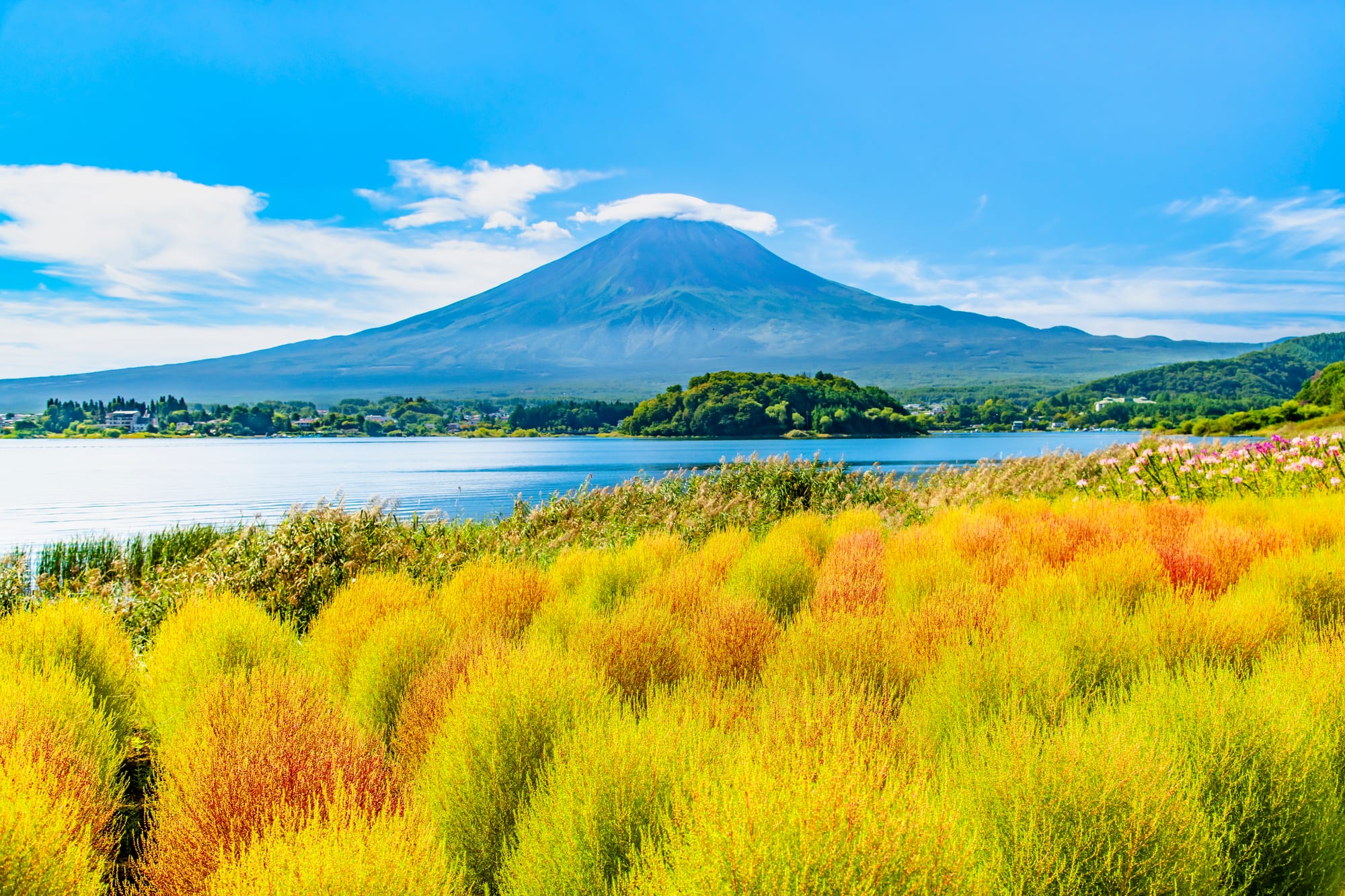
Japan runs more than 3,000 kilometers from north to south, and autumn moves down the country gradually rather than arriving everywhere at once. It also moves downward, from high ground to low.
That second part is the one that catches people out. Elevation matters as much as latitude here.
Take Nikko, for example — a popular day trip from Tokyo. Japan Meteorological Agency records put central Nikko at an October average of 14.1°C(57°F). Head up into the Oku-Nikko highlands around Lake Chuzenji, barely an hour further on, and the October average drops to 9.6°C(49°F). That is colder than Sapporo, six hundred kilometers to the north.
Same prefecture, same day, five degrees apart.
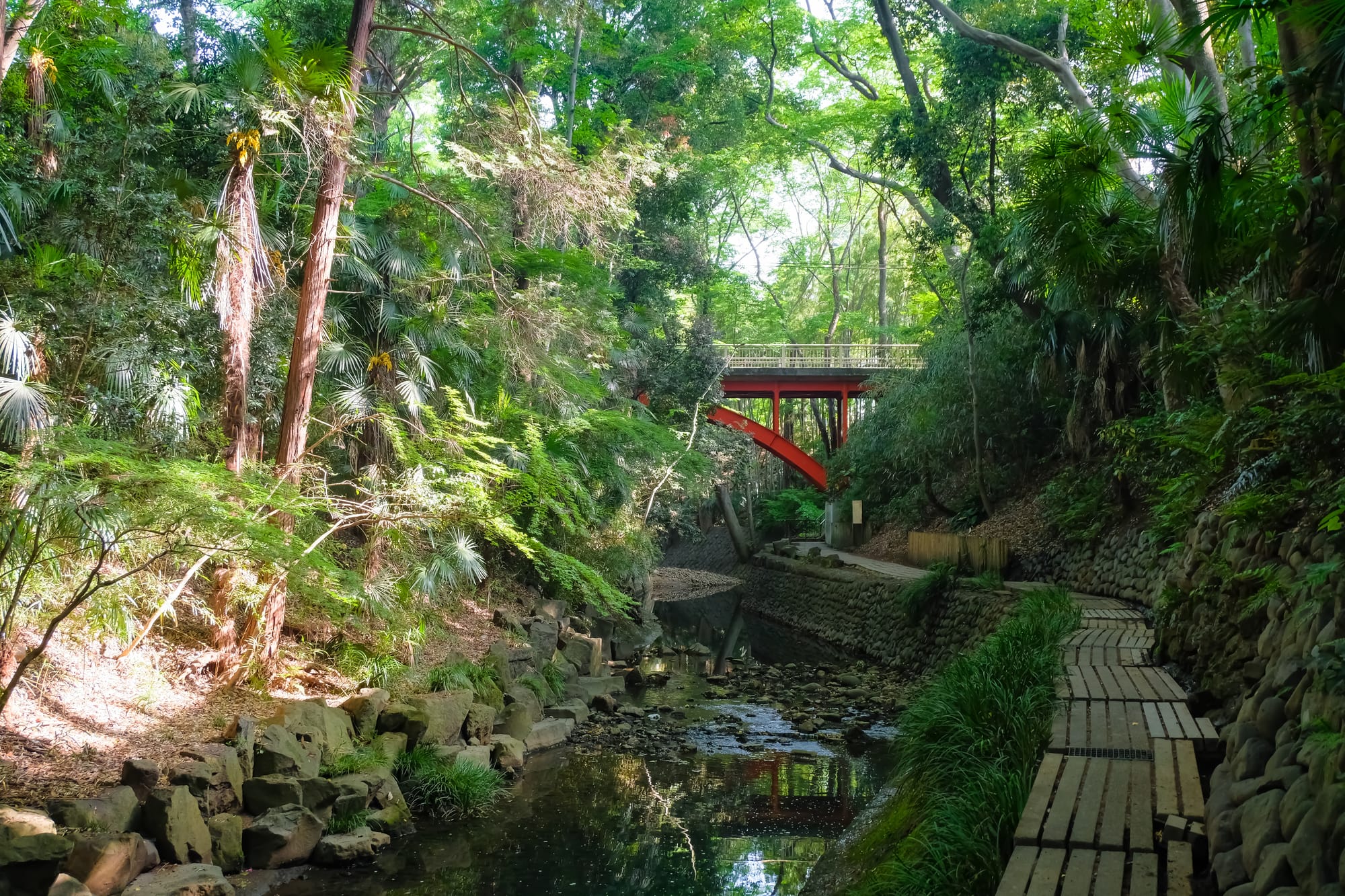
Looking for an escape from the city buzz?
Discover a secret pocket of nature in Tokyo with one of our Local Experts.
Japan's October Weather, Region by Region
| City | Average | Daily High | Daily Low | Rainfall |
|---|---|---|---|---|
| Tokyo | 18.0℃(64°F) | 22.0℃(71°F) | 14.8℃(59°F) | 234.8mm |
| Osaka | 19.5℃(67°F) | 23.7℃(75°F) | 16.0℃(61°F) | 136mm |
| Kyoto | 18.4℃(65°F) | 23.4℃(74°F) | 14.4℃(58°F) | 143.2mm |
| Kobe | 19.8℃(68°F) | 23.2℃(74°F) | 16.7℃(62°F) | 118mm |
| Sapporo | 12.1℃(54°F) | 16.4℃(62°F) | 8.0℃(46°F) | 109.9mm |
| Asahikawa | 9.4℃(49°F) | 14.9℃(59°F) | 4.4℃(40°F) | 106mm |
| Hiroshima | 18.8℃(66°F) | 23.7℃(75°F) | 14.9℃(59°F) | 109.2mm |
| Sendai | 15.7℃(60°F) | 19.8℃(68°F) | 11.9℃(53°F) | 150.6mm |
| Fukuoka | 19.6℃(67°F) | 23.7℃(75°F) | 16.0℃(60°F) | 94.5mm |
| Nagoya | 18.6℃(65°F) | 23.3℃(74°F) | 14.8℃(59°F) | 164.7mm |
| Kanazawa | 17.6℃(64°F) | 21.8℃(71°F) | 13.9℃(57°F) | 177mm |
| Takayama | 13.5℃(56°F) | 19.9℃(68°F) | 9.2℃(49°F) | 156mm |
| Nikko | 14.1℃(57°F) | 18.8℃(66°F) | 10.1℃(50°F) | 218.1mm |
| Hakuba | 11.9℃(53°F) | 17.7℃(64°F) | 7.4℃(45°F) | 136.5mm |
| Naha | 25.5℃(78°F) | 28.1℃(83°F) | 23.5℃(74°F) | 179mm |
Every figure on this table comes from the Japan Meteorological Agency, using the official 1991–2020 climate normals. These are the current normals: the JMA revises them once a decade, so 1991–2020 is the most recent set published.
Tokyo and Kanto: Comfortable walking weather. Afternoons in the low twenties, mornings and evenings closer to fifteen. The cities hold their heat after dark better than the surrounding countryside, so a day trip out to the hills will feel cooler than the same hour in Shinjuku or Shibuya.
Kyoto and Osaka: Slightly warmer than Tokyo through the day, and considerably drier. Kyoto runs from a 23.4°C (74°F) afternoon down to a 14.4°C (58°F) dawn, a nine-degree swing and the widest of any major city on the list. It is the reason early temple mornings feel so much colder than the photographs suggest.
Hokkaido: A different season entirely. Sapporo averages 12.1°C (54°F) and Asahikawa 9.4°C (49°F), with overnight lows around four. Heating goes on during October, and by the end of the month frosty mornings are routine in the north of the island.
Okinawa: Still summer by most definitions. Naha averages 25.5°C (78°F), roughly what Tokyo feels like in June, and the sea stays warm enough to swim.
The mountains: Takayama averages 13.5°C (56°F) but runs from 19.9°C (68°F) in the afternoon to 9.2°C (49°F) at dawn, a swing of nearly eleven degrees. That is the largest daily range on the table, and anywhere at altitude behaves the same way.
Wait, Tokyo Gets How Much Rain?
This is the part most October guides skip.
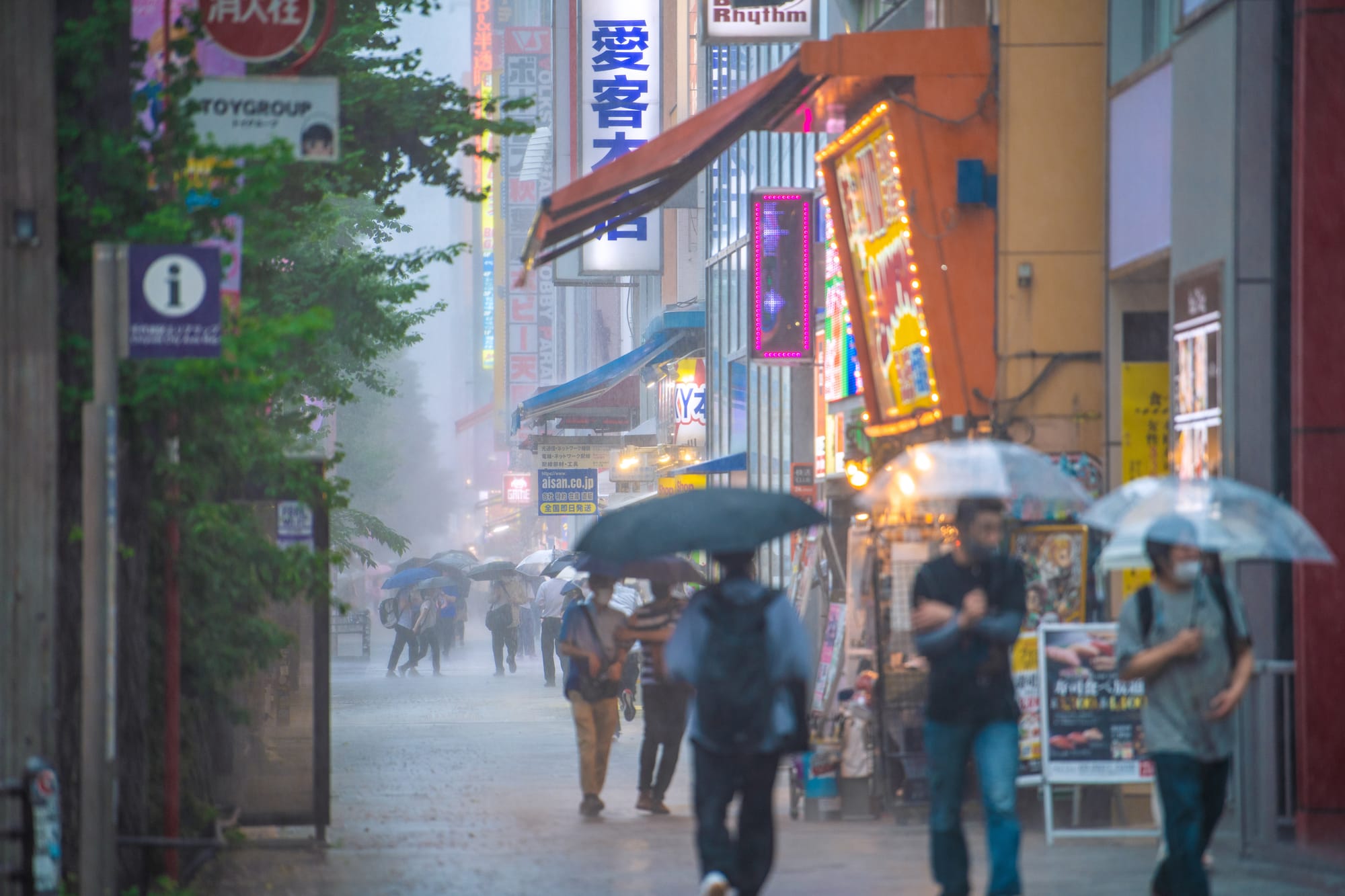
Tokyo receives 234.8mm of rain in October, more than in any other month of the year. More than the June rainy season, which brings 167.8mm. More than double its November figure of 96.3mm.
Twenty of the month's thirty-one days see no real rain, though. The JMA records rain on 10.5 days in an average October, so it arrives in fewer, heavier bursts rather than as constant drizzle. The days in between are exactly the clear, comfortable weather the month is known for.
It does mean two things, though:
- Bring proper rain gear rather than a token folding umbrella.
- Build an itinerary that includes indoor options.
Kansai has an easier time with the wet weather: On average, Kyoto sees 143mm and Osaka 136mm, both well below Tokyo.
Is October Still Typhoon Season?
Technically yes. In reality, the risk is low.
The JMA's 1991–2020 figures are clear about this. An average of 3.4 typhoons form in October and 1.7 come within 300km of Japan, but only 0.3 make landfall, against 1.0 in September. In plainer terms, from September onward, storms increasingly trace a curve out over the Pacific rather than driving straight into the Japanese coast.
Where you are matters too. Okinawa sees around 1.1 approaches in an average October. Hokkaido sees 0.2.
If one does arrive, expect it to be handled in advance rather than improvised. Since 2019 Japan's railway operators have worked to a national framework for keikaku unkyu, planned suspension: when a major storm is forecast, they announce that services will stop before it hits, rather than risking trains stranded between stations.
Typhoon tracks, foliage timings and festival dates all move. Check the JMA forecast in the week before you fly, and again the night before any long-distance travel day.
Will the Autumn Leaves Have Turned?
In much of Japan, yes. In the big cities, not quite yet.
Autumn color starts up near the mountain peaks of Hokkaido in late September and works south and downhill from there. By mid-October it has reached the Hokkaido lowlands, the higher ground of Tohoku and the Japan Alps. Nikko, Kamikochi and Shirakawa-go are usually at their best in the second half of the month.
The cities run later. On the 30-year average, the maples are fully turned by 28 October in Sapporo, 28 November in Tokyo, 1 December in Osaka and 5 December in Kyoto. Color builds through the weeks before those dates, which is when most people go.
So if red maples around a temple gate are the whole reason you are coming, October rewards altitude and latitude: go north, and go up.
And if your dates are fixed and your destination is Kyoto, you are not missing autumn. You are simply arriving for a different part of it. October brings red spider lilies giving way to cosmos fields, harvest festivals across the country, seasonal menus turning over to chestnut and sweet potato, and the most comfortable walking weather of the year. The leaves are one chapter of a three-month season, and they are not the only reason to come.
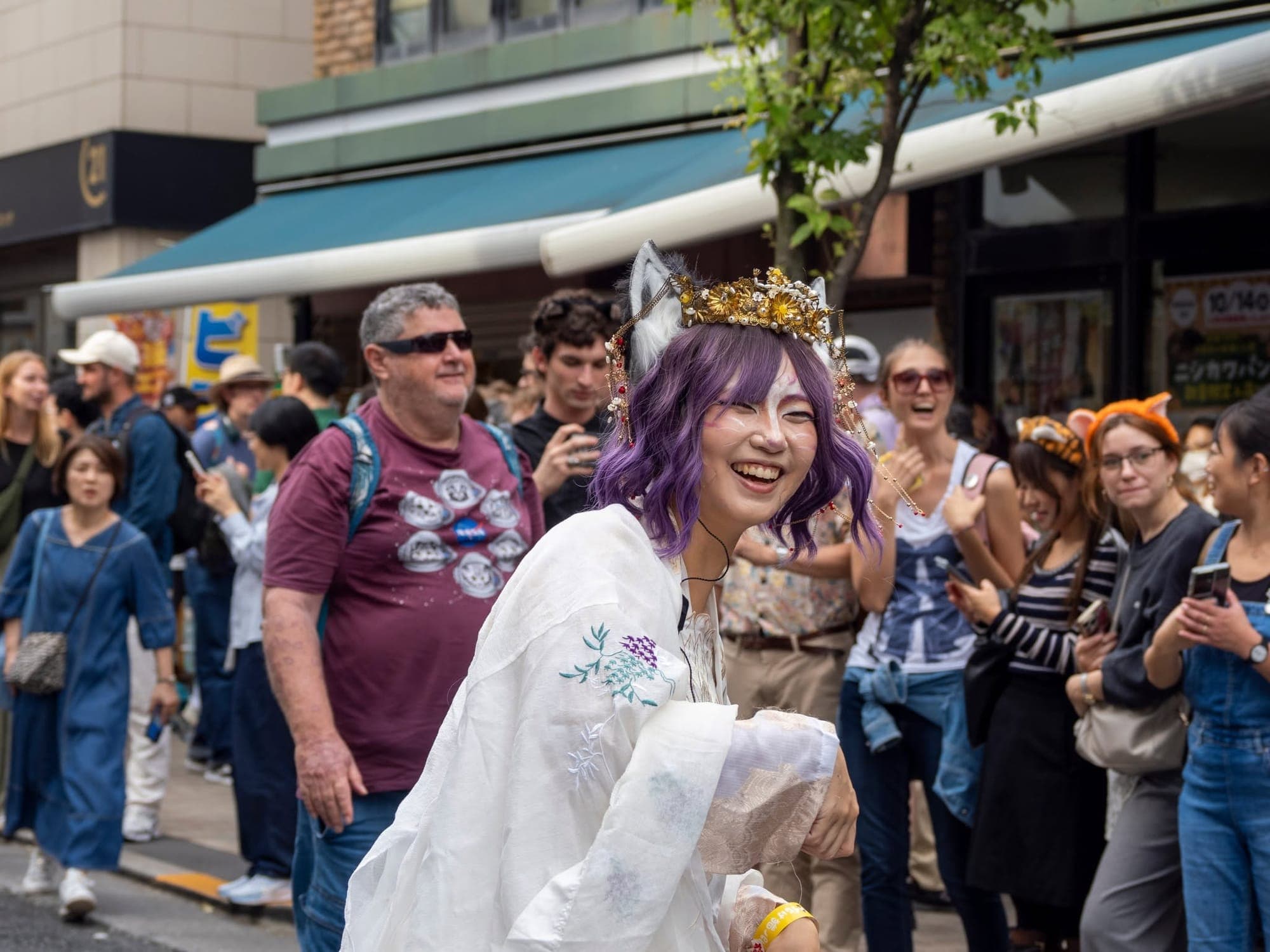
If you are curious about what else the season has in store, our Autumn in Japan guidebook covers the rest — harvest festivals, moon viewing, and a parade of people dressed as cats.
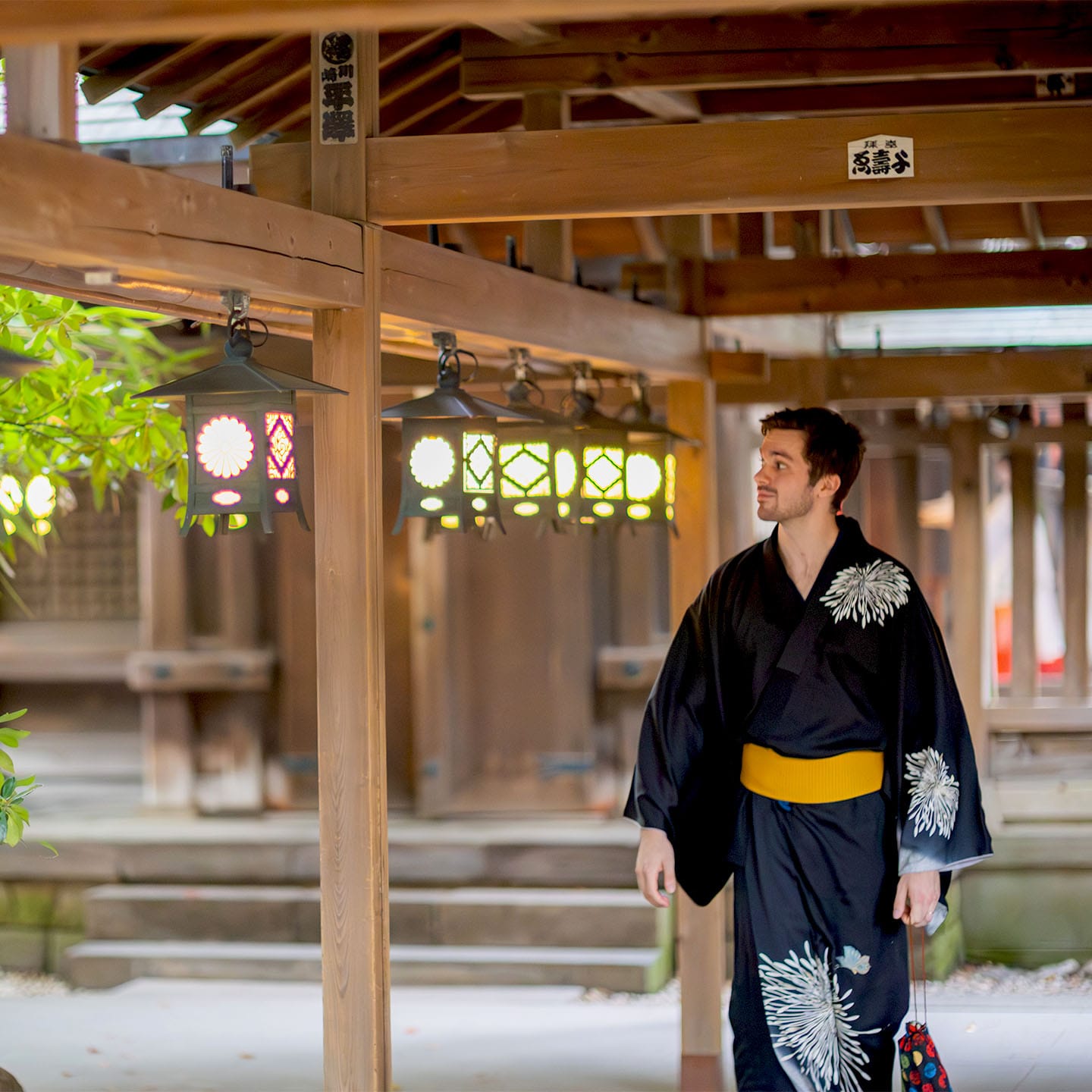
October is festival season, and Kawagoe does it properly.
Explore the Edo-era warehouses, hidden alleys and street food, with someone who knows which turning to take when the crowds arrive.
Early October vs Late October
Treating the month as one block is the most common packing mistake.
Early October still carries part of summer with it. Tokyo afternoons climb above 22°C (72°F), Kyoto feels warm in direct sun, and short sleeves are fine in the middle of the day. Hokkaido is already properly autumnal.
Late October acts like a different month. Tokyo daylight shortens from 11 hours 51 minutes on the first to 10 hours 46 minutes on the thirty-first, with sunset moving from 5:26pm to 4:47pm. Plan long sightseeing days around that. Evenings need a real layer, and in northern Hokkaido puddles start freezing overnight.
One more thing worth knowing: recent Octobers have run warm. October 2024 was the warmest in Tokyo since records began in 1875, averaging 20.6°C (69°F) against a normal of 18.0°C (64°F). October 2025 came in close to normal at 18.5°C (65°F). Nationally, the three warmest autumns in a 128-year record have all fallen in the last three years. Pack for the average, then check the forecast in the week before you fly.

What to Wear in Japan in October
Layers, and the ability to take them off.
- Daytime: long sleeves or a light top. Short sleeves work in early October in the south.
- Evenings: a light jacket, cardigan or shirt-jacket. Not a winter coat.
- Hokkaido or the mountains: a proper jacket, plus a scarf late in the month.
- Okinawa: summer clothing, sunscreen, and something light for the evening.
- Rain: a real waterproof, not a novelty umbrella. Think rain ponchos and wind-resistant umbrellas. Tokyo in October earns it.
- Feet: comfortable walking shoes you can slip off easily. You will take them off at temples, in some restaurants and at any ryokan, so socks without holes matter more here than at home.
That covers the October half of the bag. For the rest — adaptors, laundry, and what to leave at home — our Japan packing list runs through all four seasons and finishes with a checklist you can print.
October in Japan, Packed For Properly
You now know what the month of October actually does in Japan.
Mild afternoons and cool mornings, a nine-degree swing between them in Kyoto, more rain in Tokyo than any other month of the year, a typhoon far more likely to pass by than land, and autumn color that is already spectacular in the mountains while the cities are still waiting.
So yes, bring a light jacket. Yes, bring a proper waterproof. And no, the maples will not have turned in Kyoto, but something else will have.
What the forecast will not tell you is which garden is quiet at eight in the morning, which festival is setting up two streets from your hotel, or where the color has actually reached this week. That part is what our Local Experts are for.

You have the month figured out. Now for the days.
Every TOMOGO! tour is private and led by a Local Expert who actually lives here. Autumn dates fill up early, particularly around peak color.
FAQs we get about October in Japan
What is the weather like in Japan in October?
Mild and comfortable in most of the country. Tokyo averages 18.0°C (64°F) with daytime highs around 22°C (72°F) and overnight lows near 15°C (59°F). Kyoto and Osaka run slightly warmer, Sapporo considerably cooler at 12.1°C (54°F), and Naha stays close to 25.5°C (78°F).
Is Japan cold in October?
Not in the main cities. Tokyo, Kyoto and Osaka all sit in the low twenties by day, which is jacket-optional in the afternoon and jacket-required after dark. Hokkaido is another matter, with Asahikawa averaging 9.4°C and overnight lows near four. The mountains are colder again.
Does it rain a lot in Japan in October?
In Tokyo, yes. It averages 234.8mm, the wettest month of the year there, though spread across only about 10 days of rain. Kansai is drier, with Kyoto at 143mm and Osaka at 136mm. Bring a proper waterproof rather than assuming autumn means clear skies.
Is October typhoon season in Japan?
It is the tail end of it. An average of 1.7 typhoons approach Japan in October but only 0.3 make landfall. Okinawa sees more activity than the mainland, and Hokkaido very little.
Can you see autumn leaves in Japan in October?
Yes, if you go north or up. Hokkaido, Nikko, Kamikochi and the Japan Alps are usually at their best in October, and Sapporo's average peak is 28 October. Tokyo, Kyoto and Osaka average late November into early December.
What should I wear in Japan in October?
Layers. Long sleeves and a light jacket handle most of the country, with something warmer for Hokkaido and the mountains, and summer clothing for Okinawa. Add a waterproof, comfortable walking shoes you can slip off at temples, and lip balm for the dry air.