
Autumn in Japan: The TOMOGO! Guidebook
So, you’ve got the time off, your favorite clothes are packed, and you’re standing in line at the airport with tickets to Japan this autumn.
What’s next?
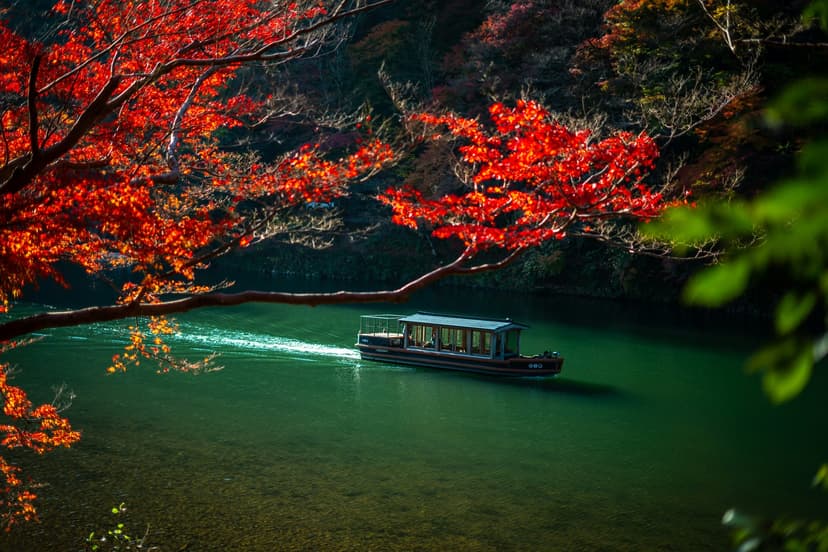
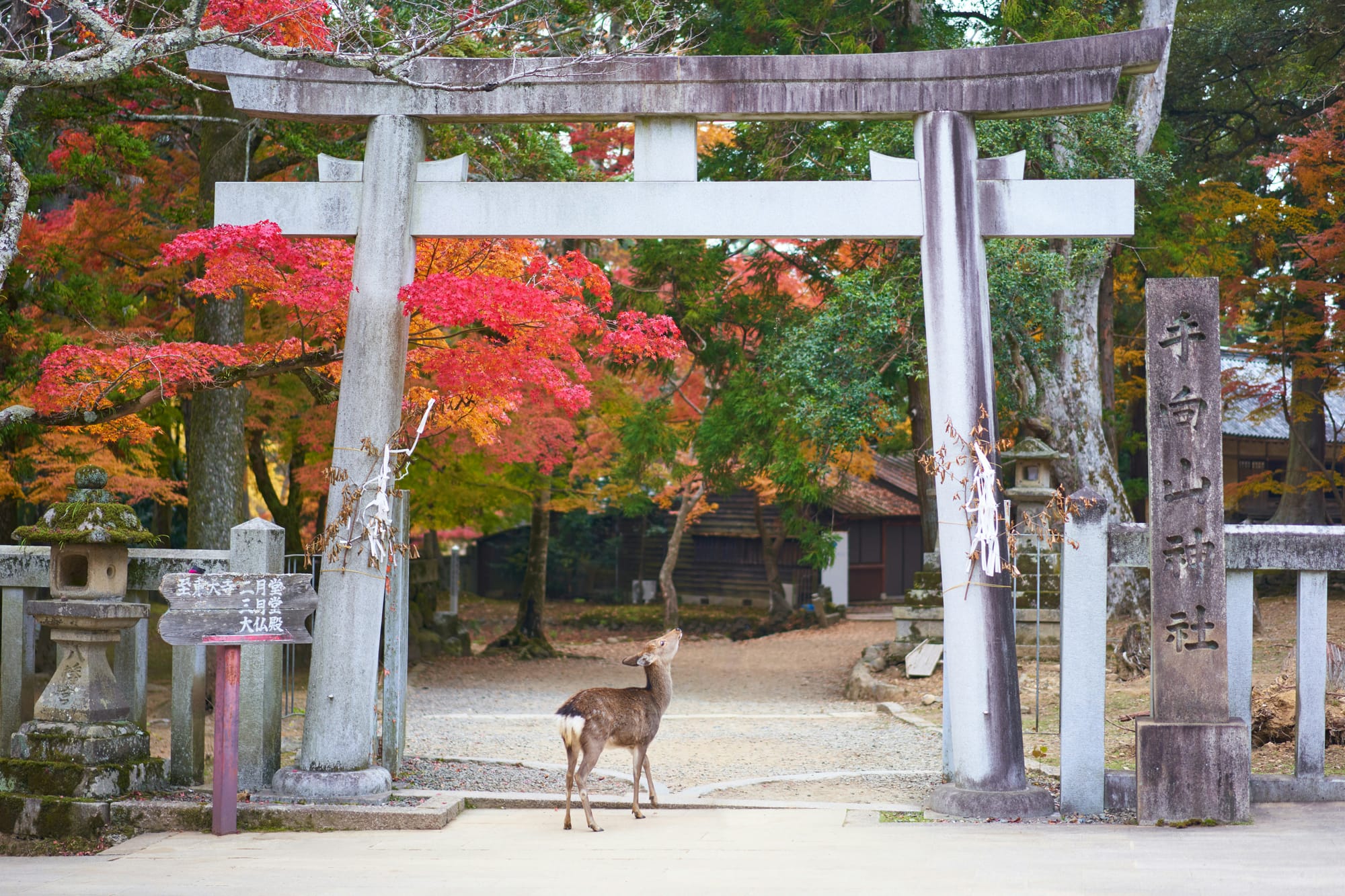
Like much of the world, Japan’s autumn arrives in bursts of red, orange and gold. Mountainsides change color. Japanese Maple leaves turn crimson. Ginkgo trees light up the streets in yellow.
But we’d be doing you a huge disservice if we told you that’s where the season ends.
There’s much more to autumn in Japan than the leaves.
Its festival floats rumbling through the streets. Bowls of seasonal food appearing on menus. Fields of red spider lilies. Halloween celebrations, moon viewing, crisp mountain walks and centuries-old traditional Japanese customs that only come around at this time of year.
And because Japan stretches more than 3,000 kilometers from north to south, autumn doesn’t arrive everywhere at once. While Hokkaido might already be deep into fall, Tokyo could still be waiting for its first real splash of color.
That’s good news for your itinerary.
Miss peak foliage in one place? You might catch it somewhere else. Arriving before the leaves change? There are plenty of other ways to experience the season.
So rather than building your entire trip around one elusive week of peak autumn colors, consider this your guidebook to autumn in Japan, from when and where to catch the leaves to the festivals, flowers, food and traditions that make the season worth traveling for.
But First, Here’s the Fall Forecast
Autumn doesn’t sweep across Japan overnight. It travels gradually down the country, beginning in the mountains and cooler north before making its way towards the warmer south.
| Region | Where? | When? | Autumn Leaves Locations | Other Events |
|---|---|---|---|---|
| Kanto | Tokyo | November – December | Rikugien, Meiji Jingu, Showa Kinen Park | Shinagawa Shukuba-matsuri Festival, Oeshiki Festival, Bakeneko parade |
| Kanto | Nikko | October – November | Kegon Falls, Chuzenji Lake, Senjogahara Marshland | Nikko Toshogu Shrine Autumn Grand Festival |
| Kansai | Kyoto | November – December | Tofukuji, Eikando, Kiyomizudera | Kurama Fire Festival, Jidai Matsuri, Uzumasa Yokai Village |
| Hokkaido | Kamikawa | September – October | Daisetsuzan | Sapporo Autumn Fest, Baked Sweet Potato Festival |
| Chubu | Nagano | Early October – November | Kamikochi, Hakuba | Karuizawa Momiji Festival |
| Chubu | Gifu | Mid-October – November | Shirakawa-go | Gifu Takayama Festival, Gifu Nobunaga Festival |
See Autumn
So, About Those Leaves…
Okay, we know. You still want the leaves.
We can hardly blame you.
For a few short weeks each year, Japan swaps its summer greens for fiery maples, golden gingko trees and mountainsides brushed with red, orange and yellow.
This is koyo 紅葉, which literally means “crimson leaves”, though in practice it’s used to describe the entire autumn colors show, from deep reds to brilliant yellows. The act of going out in search for autumn colors even has its own name: momijigari 紅葉狩り, which means “maple hunting”. This has actually been a national pastime in Japan since the Heian era (794-1185 CE), and is just as popular today.
Autumn leaf viewing has its own place in Japan’s seasonal calendar, with travelers heading to parks, mountains, gardens and temples as the colors gradually make their way south through the country.
The trick is knowing where to look.
Where to Catch The Color
Tokyo: Golden Streets and City Escapes
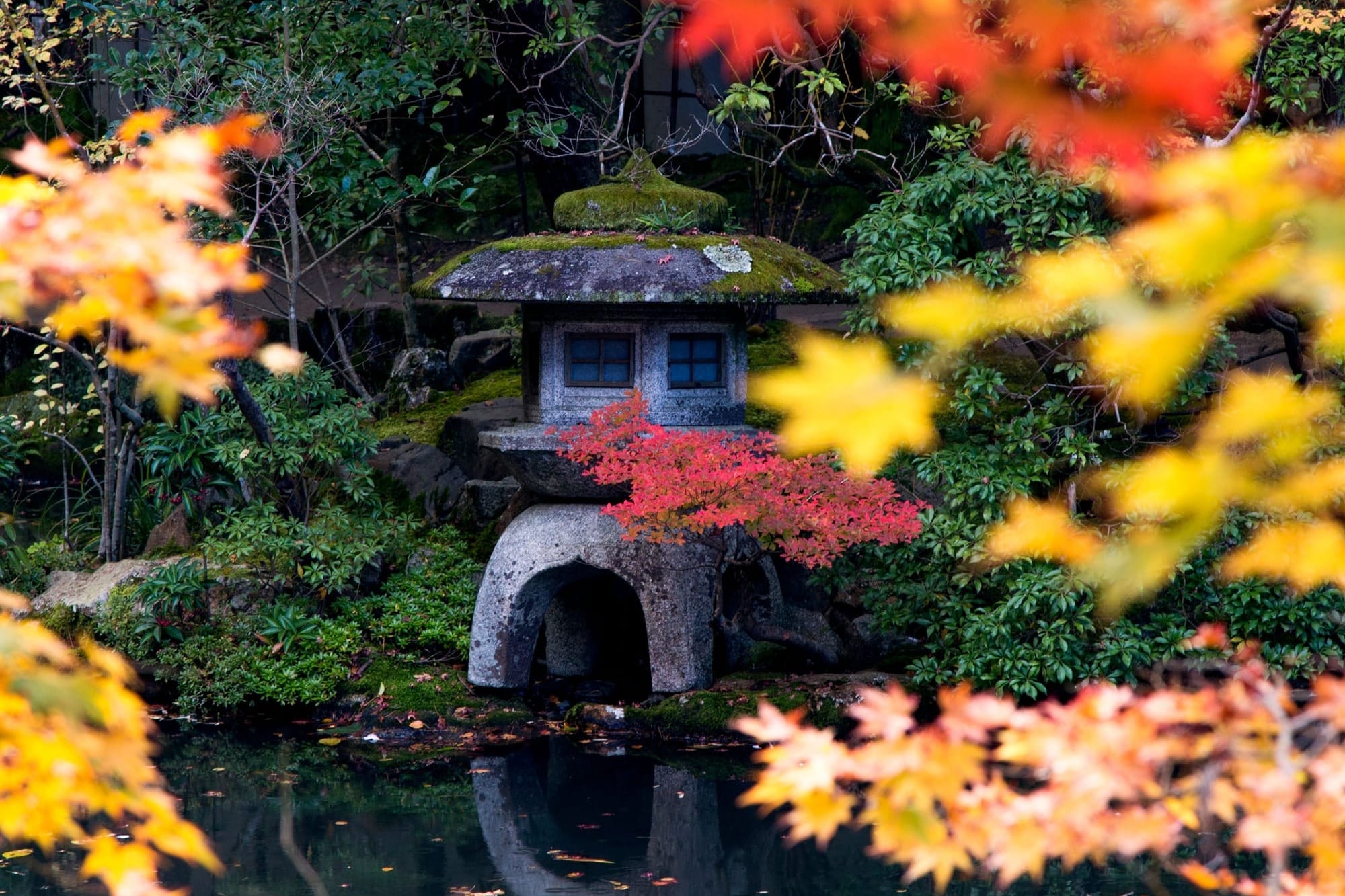
You don’t necessarily have to leave Tokyo to find autumn color. Gingko-lined avenues turn brilliant yellow, traditional gardens take on warmer shades, and a short trip toward the city’s western edges can put you among mountains and maple trees.
- Rikugien
- Meiji Jingu
- Showa Kinen Park
Kyoto: Autumn with a temple backdrop
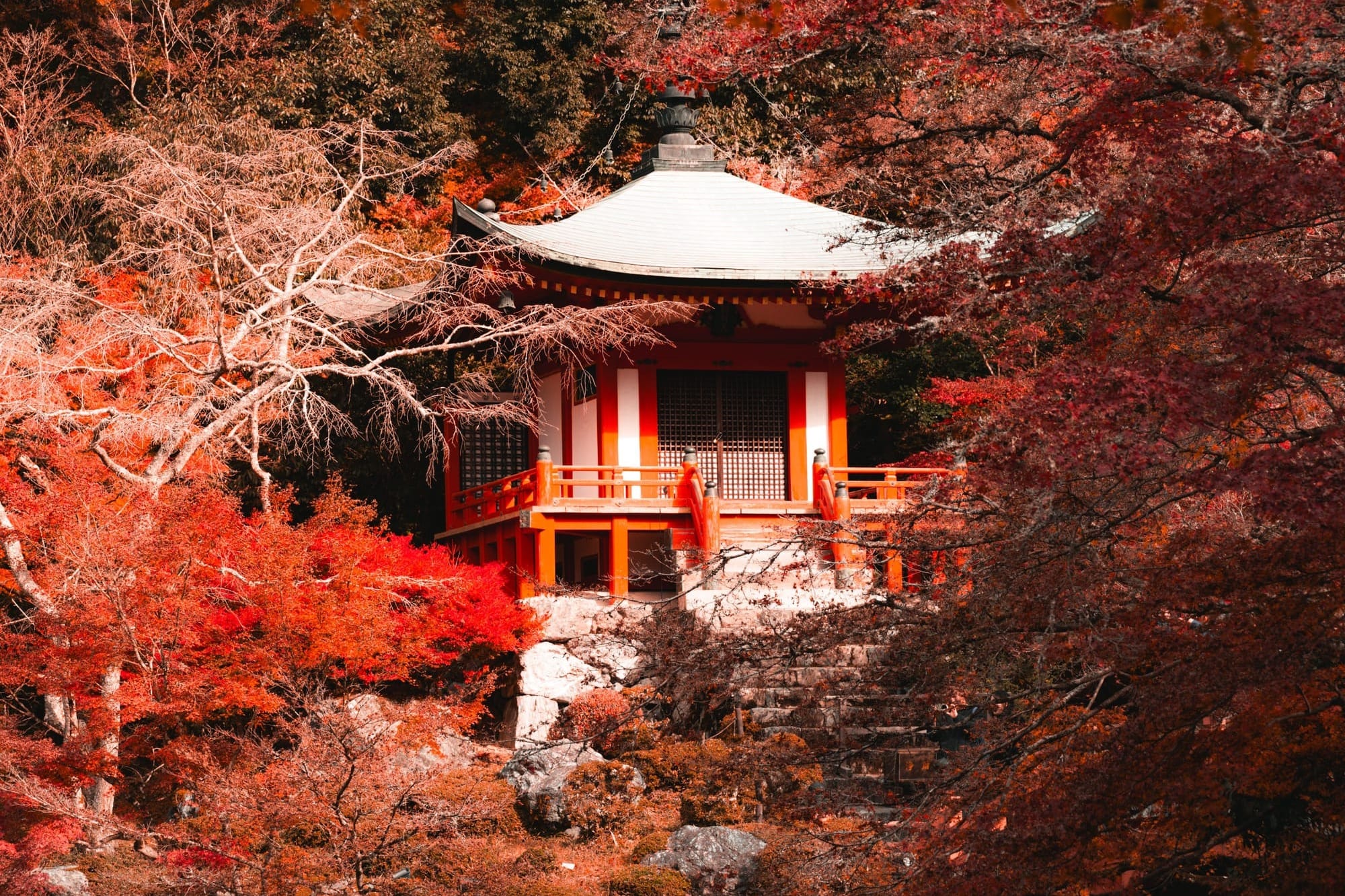
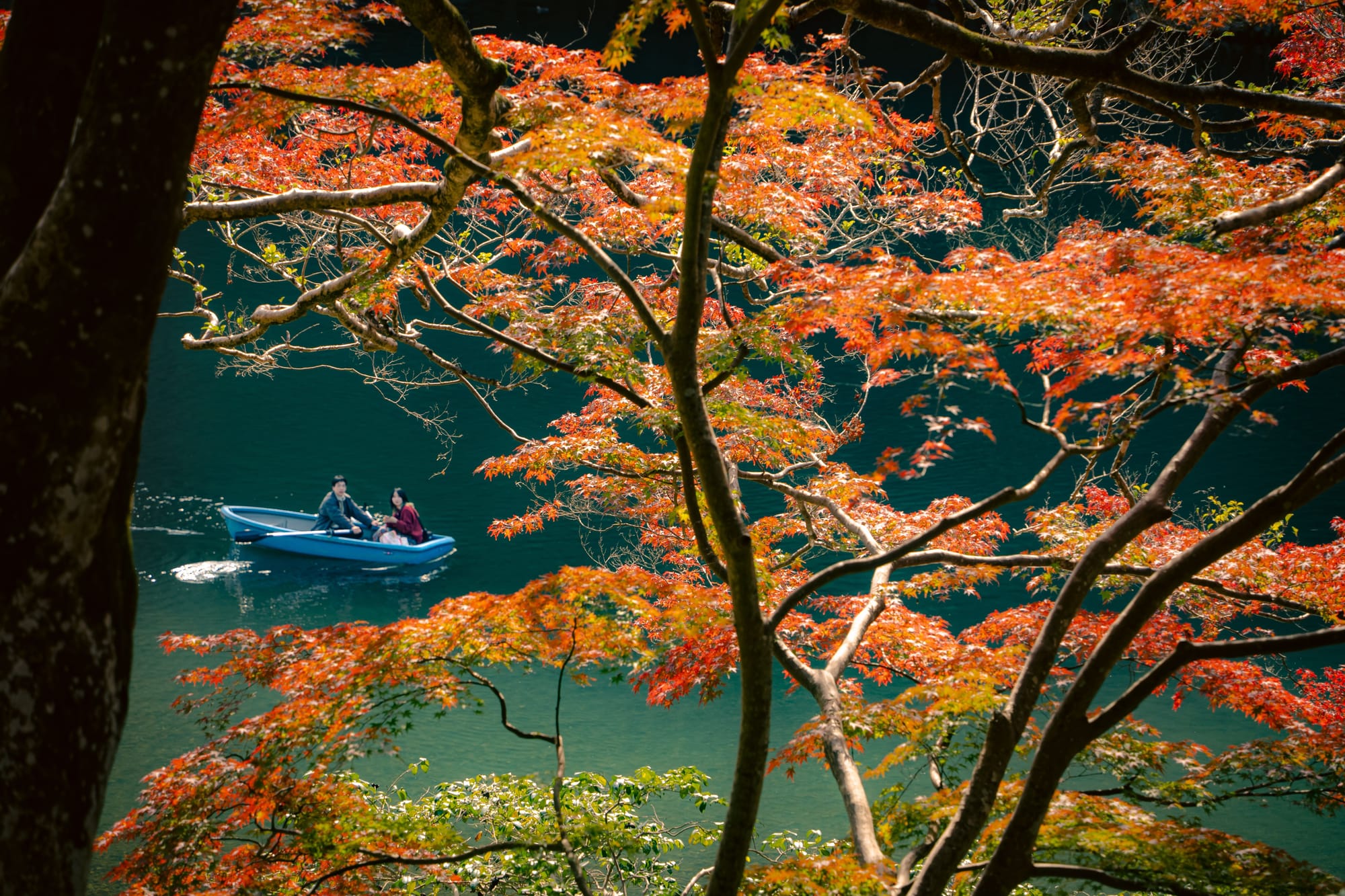
Kyoto may steal a fair bit of the autumnal attention, and for good reason. Come autumn, red maple leaves frame temple gates and gardens across the city. From famous temple corridors to quiet moss gardens glowing with seasonal color, Kyoto is where koyo often feels most iconic.
- Kiyomizudera
- Tofukuji
Osaka: City color and riverside walks
Osaka might be better known for food and nightlife, but autumn still finds its way into the city. Riverside parks, castle grounds, and wide green spaces turn into easy-access spots for seasonal color without leaving the urban core.
- Osaka Castle
- Minoh Park
- Katsuo-ji
Nara: Deer, temples, and quiet autumn hills
Just a short train ride from both Kyoto and Osaka, Nara offers a slower, more open version of autumn. Ancient temples sit beside wide parkland where deer wander beneath turning maples, and forested hills provide a peaceful backdrop to the season.
- Nara Park
- Murou-ji Temple
- Wakakusayama Hill
Go a Little Further
If your itinerary allows it, autumn is a good excuse to leave the biggest cities behind. Northern, central and western Japan each offer a very different version of the season, from forested mountain roads to some of the earliest autumn colors in the country.
- Nikko National Park
- Kamikochi
- Takachiho Gorge
But Don't Forget to Look Down
Japan’s autumn color palette doesn’t belong exclusively to the trees.
Arrive too early for Tokyo’s maple leaves and you haven’t necessarily arrived too early for autumn. Some of the season’s most spectacular colors appear much closer to the ground.
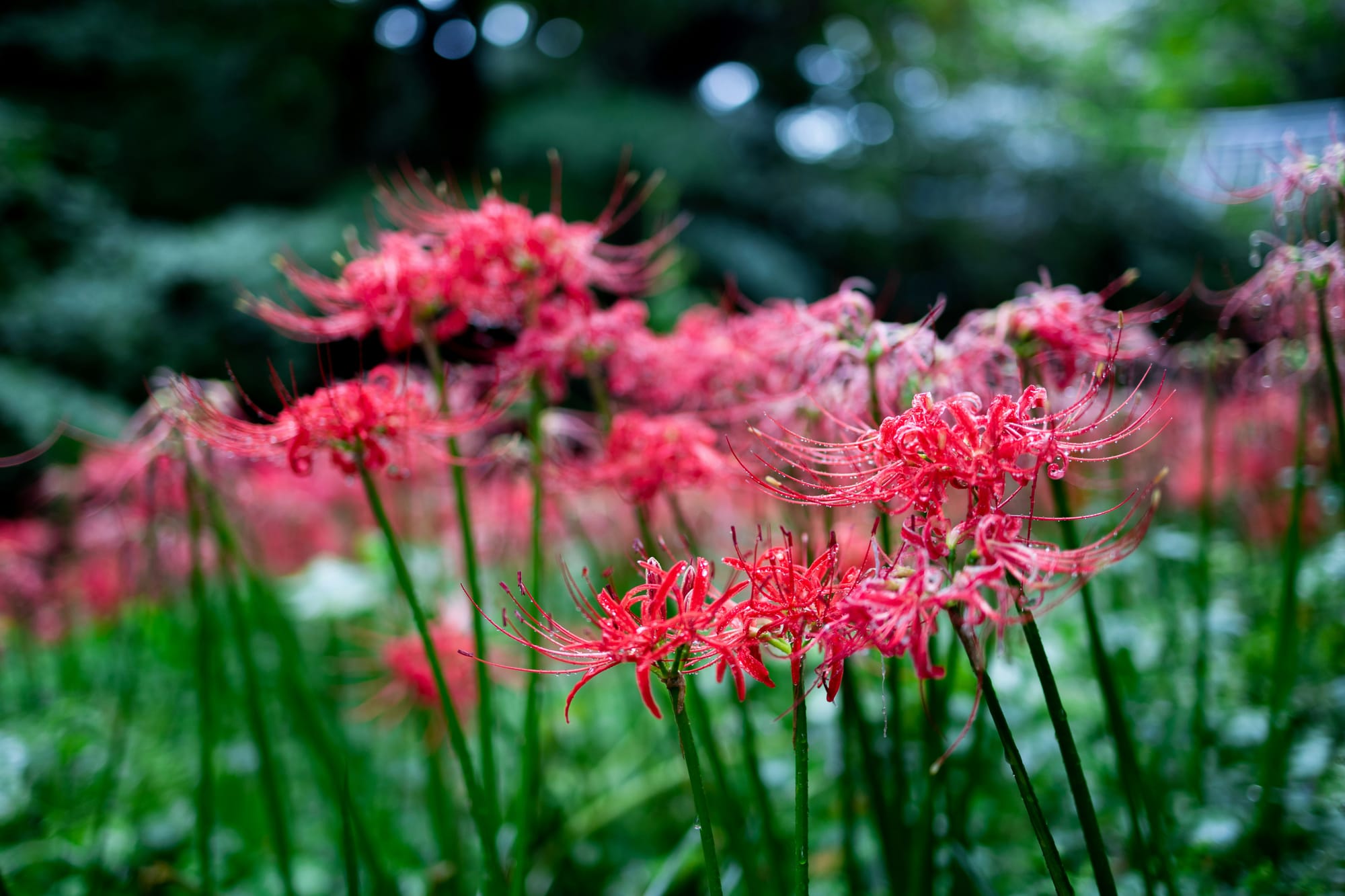
In September, clusters of higanbana, or red spider lilies, erupt along riverbanks, rice fields, and countryside paths. Their strange, spindly flowers are one of the earliest signs that the seasons are beginning to shift.
Then comes the cosmos. Fields fill with pink, white, and crimson flowers through September and October, while hillsides of fluffy green kochia gradually turn deep red.
Later in the season, susuki, Japanese pampas grass, trades bright color for something softer. Its silver-gold plumes catch the low autumn sun, transforming entire grasslands as they move in the wind.
So if the maple trees aren’t cooperating with your travel dates, don’t write autumn off just yet.
Hear Autumn
Hear That? Follow the Sound of the Matsuri.
Japan’s festival calendar doesn’t disappear with the summer fireworks. As the weather begins to cool, autumn brings a different kind of matsuri season to towns and cities across the country.
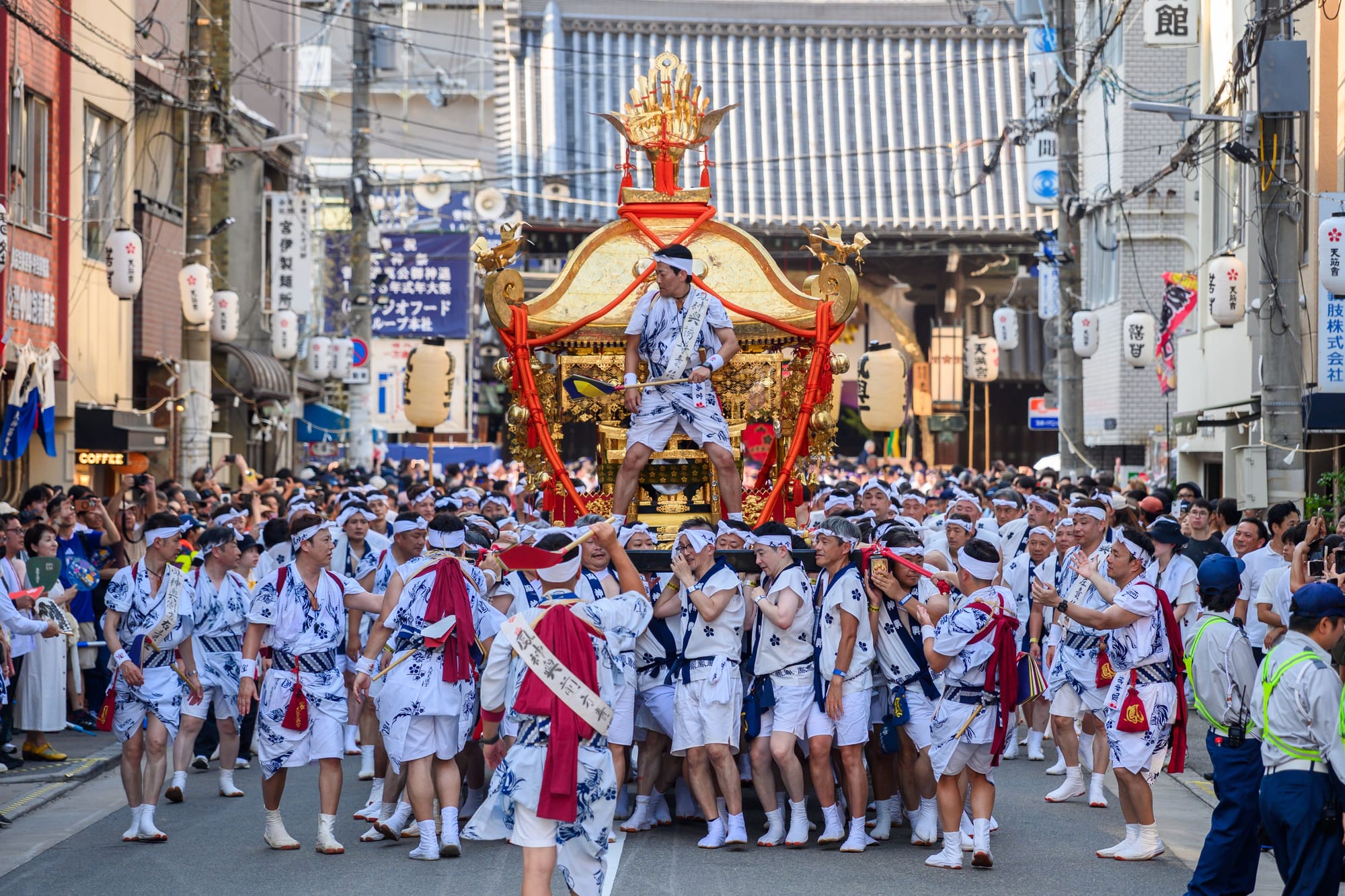
Many have roots stretching back hundreds of years, with autumn traditionally marking the harvest season and a time to give thanks, pray for prosperity, and bring communities together. Today, that means enormous floats pulled through narrow streets, elaborate processions, traditional costumes, and entire neighborhoods coming together to take part.
And no two festivals in Japan are quite the same.
In Kanto:
Oeshiki Festival, Tokyo
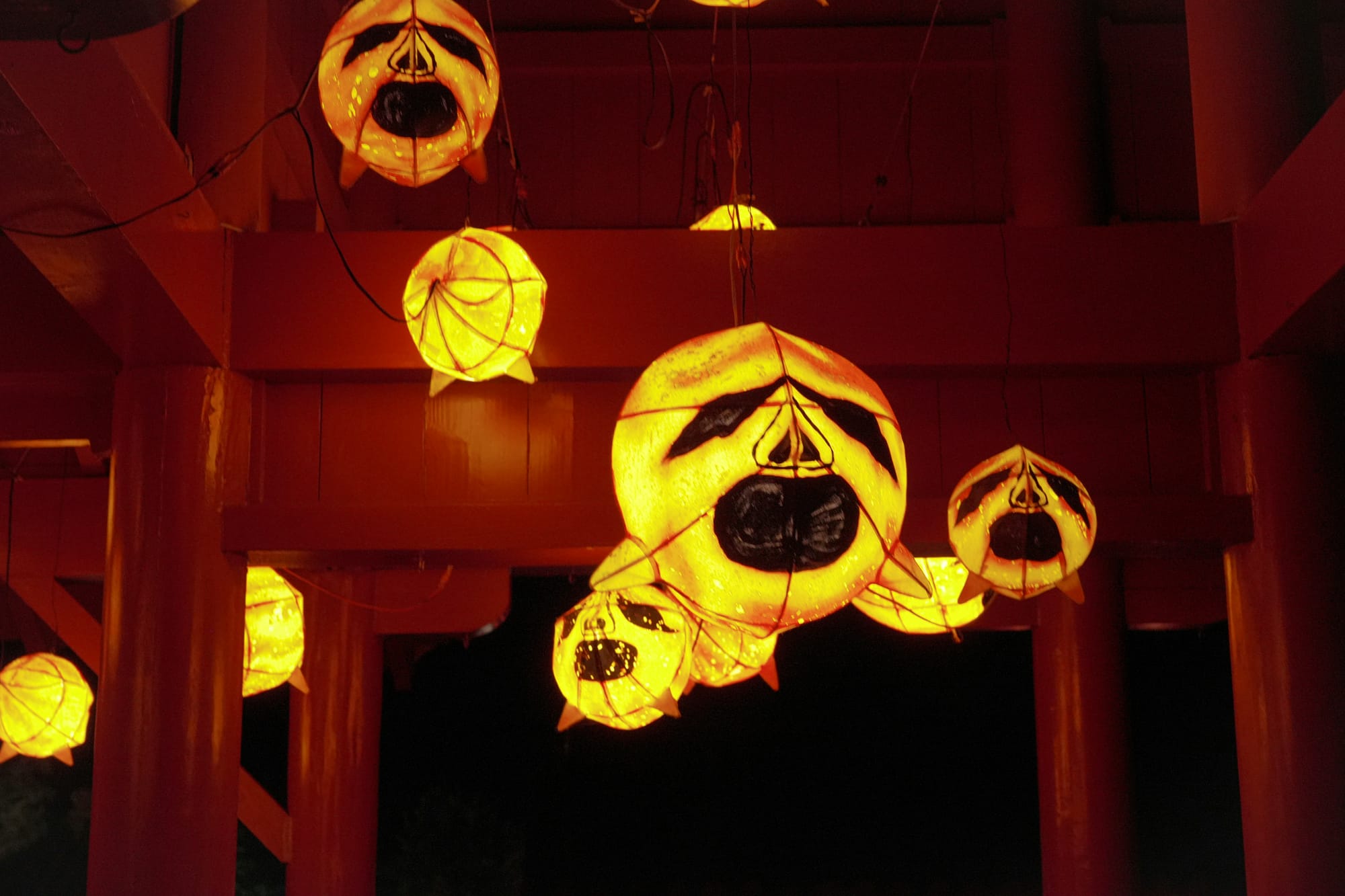
Each October the streets around Ikegami Honmonji take on a very different glow. Groups carry illuminated lantern towers decorated with flowers through the neighborhood, accompanied by flutes and drums.
When: October 11 - 13 2026 (Sunday, Monday, Tuesday)
Where: Ikegami Honmon-ji Temple, Tokyo
Admission: Free
Kawagoe Festival, Saitama
Just outside Tokyo, Kawagoe’s historic streets fill with towering festival floats for one of the Kanto region’s biggest autumn celebrations. As evening falls, lanterns light the floats and musicians aboard them face off in lively musical performances.
When: October 17 - 18 2026 (Saturday & Sunday)
Where: Kawagoe City Warehouse District, Kawagoe City
Admission: Free
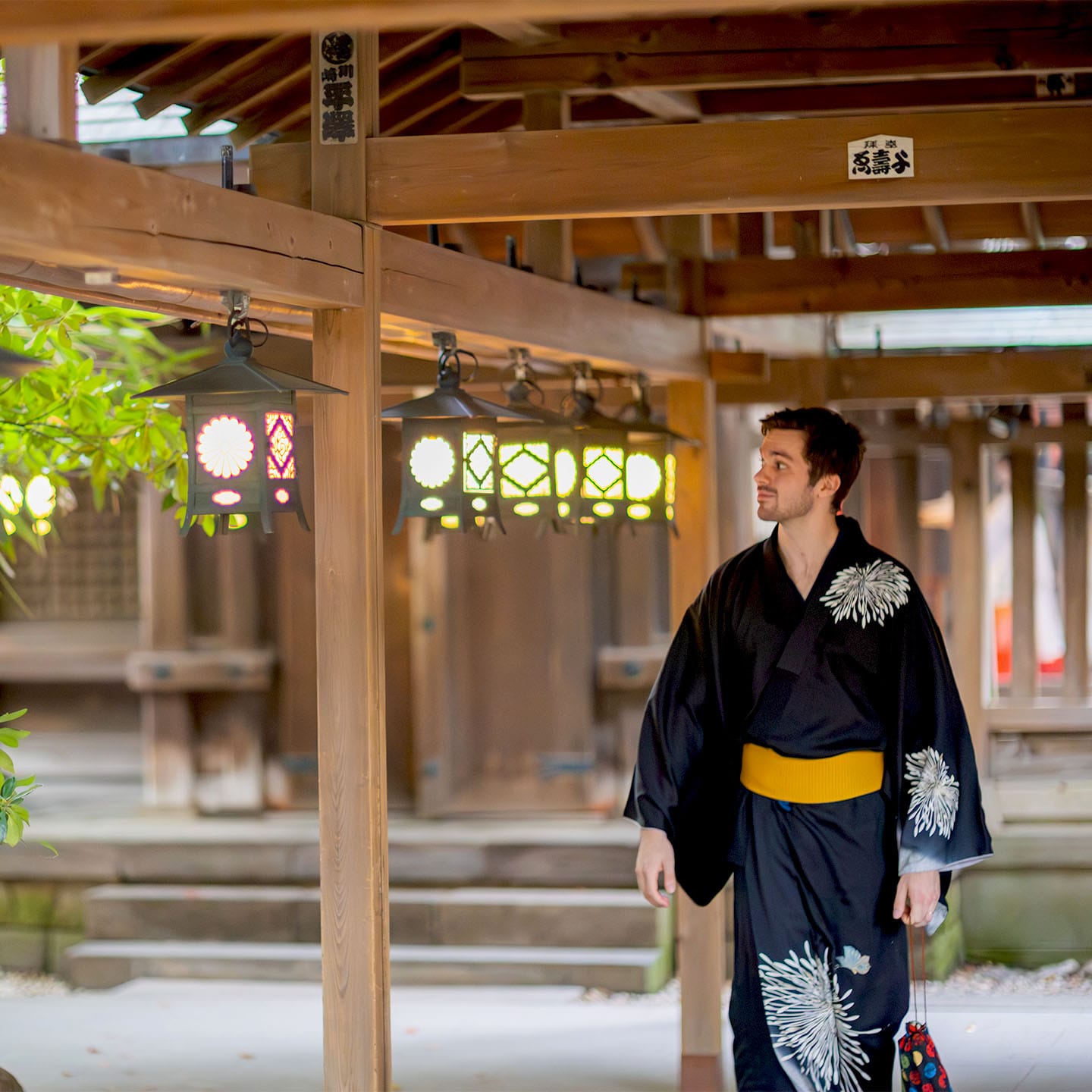
Festival crowds can be intense.
Join TOMOGO! on a guided Kawagoe tour and let someone else handle the navigating.
In Kansai:
Kishiwada Danjiri Matsuri, Osaka
This one isn’t exactly subtle.
Huge wooden floats weighing several tonnes are hauled through the streets of Kishiwada at speed, with teams racing them around tight corners while a performer dances on the roof.
When: September 19 - 20, October 11 - 12 2026
Where: Kishiwada Hamate in September, Kishiwada Yamate in October
Admission: Free
Jidai Matsuri, Kyoto
Kyoto turns its history into a procession during Jidai matsuri, or the Festival of the Ages. Around 2,000 participants travel through the city dressed in costumes representing different periods of Japanese history.
When: October 22 2026
Where: Kyoto Imperial Palace to Heian Shrine
Admission: Free
Sometimes, Getting Lost Is the Plan
Of course, you don’t need to build your itinerary around one of Japan’s famous festivals to stumble across a matsuri.
Some of the best are much smaller.
A neighborhood shrine might be preparing for a celebration you’ve never heard of. Lanterns might suddenly appear along the street. Food stalls might be setting up beside your station.
If you see something happening, make sure to take a look.
Taste Autumn
Come Hungry. It’s Shokuyoku No Aki.
In Japan, autumn comes with an appetite. There’s even a phrase for it: shokuyoku no aki (食欲の秋), or “the autumn of appetite.”
After the heat and humidity of summer begin to fade, the season brings with it a new harvest and a whole new calendar of seasonal food. Fish gets fattier, rice fields are harvested, fruit ripens, and suddenly chestnuts and sweet potatoes seem to find their way into just about everything.
For travelers, that means autumn isn’t only something you can see on the calendar.
You’ll find it on the menu too.
Start With the Harvest
Some autumn flavors have been associated with the season in Japan for generations.
There’s kuri (chestnut) tucked into rice and traditional Japanese sweets, freshly harvested shinmai (new rice). Then there’s earthy matsutake mushrooms, a prized autumn ingredient with a price tag to match.
Not forgetting satsumaimo, Japanese sweet potato.
Roasted until soft and steaming, baked into desserts, turned into ice cream, or simply sold piping hot, sweet potato is one of those flavors that seems to announce that cooler weather has arrived.
Autumn Comes From the Sea, Too
Not everything on Japan’s autumn table grows from the ground.
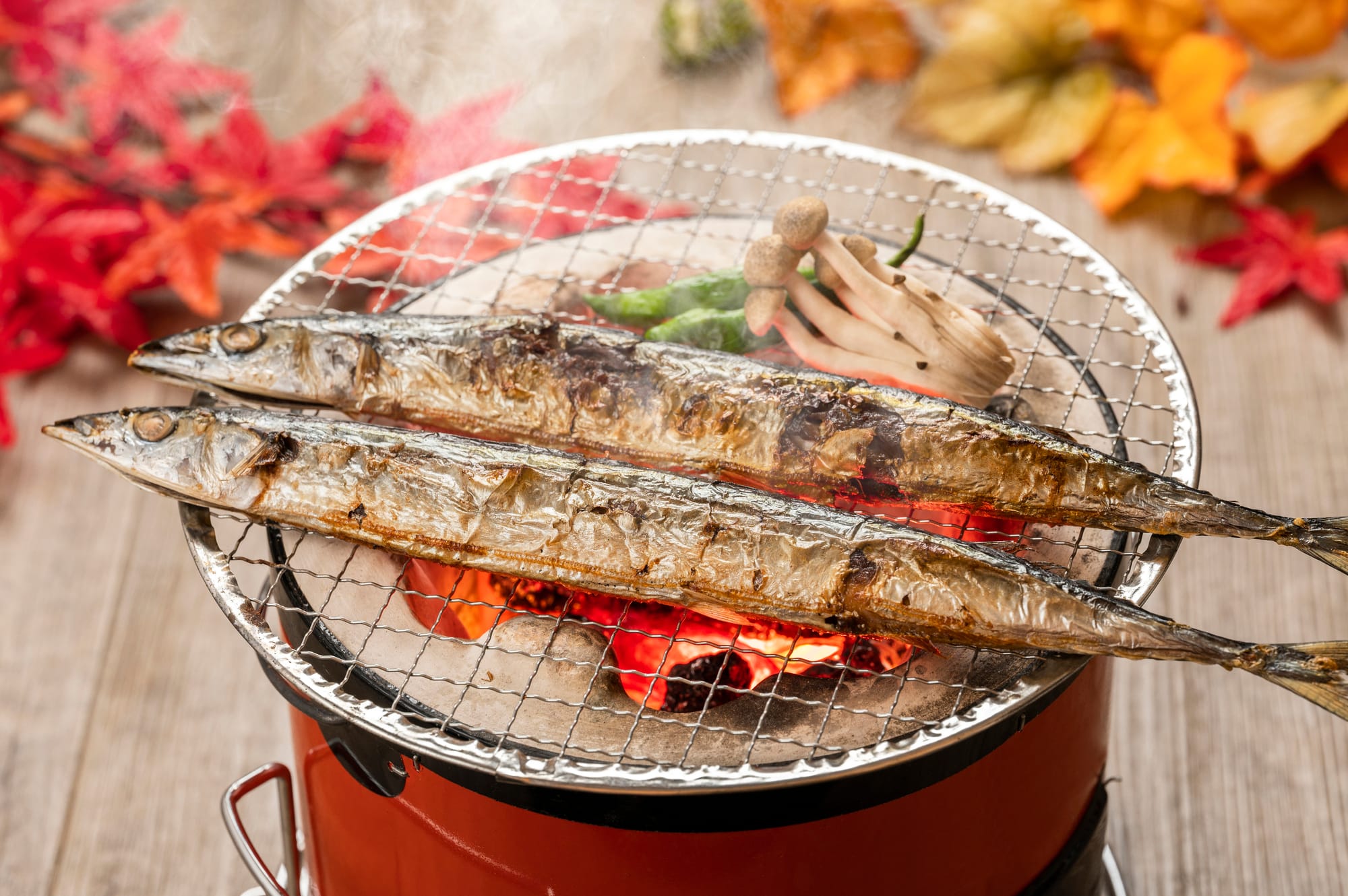
Sanma, or Pacific saury, has long been one of the season’s most recognizable fish. Its Japanese name can even be written with the characters 秋刀魚, which literally means “autumn knife fish,” a reference to both its season and its long, slender shape.
Grilled whole with salt and served with grated daikon, it’s the kind of simple dish that has become closely tied to the arrival of autumn.
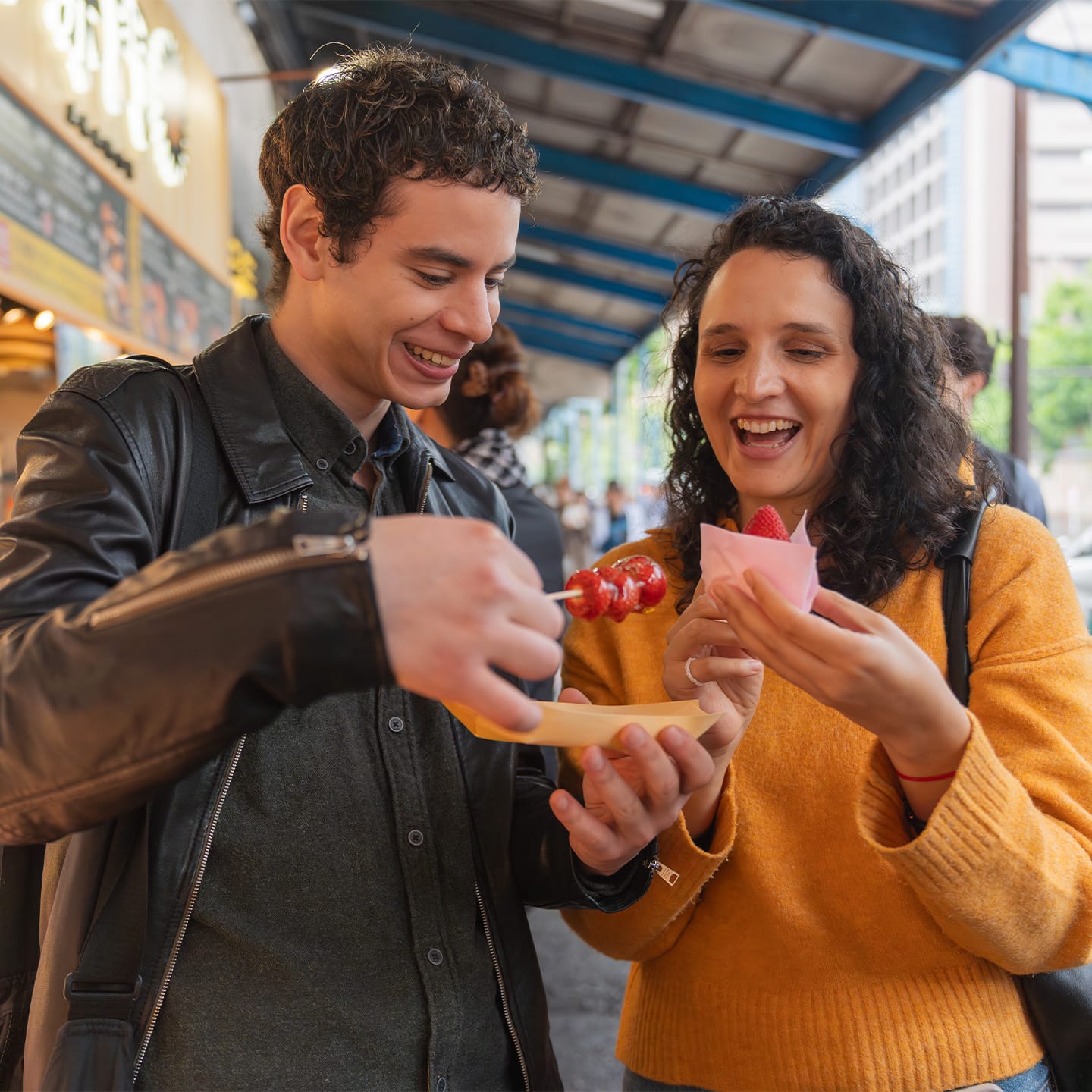
Tsukiji's offerings change with the seasons. Discover Tsukiji’s Autumnal Catch with a Local.
Save Room for Something Sweet
Autumn is also very good at finding its way into dessert.
Chestnuts become mont blanc cakes and filling for traditional Japanese sweets known as wagashi. Persimmons appear fresh, dried, and tucked into treats. Apples and grapes reach their peak in many growing regions.
And then the seasonal menus arrive.
Walk into a café, convenience store, bakery, or department store food hall and you’ll quickly notice Japan’s enthusiasm for turning the season into limited-edition everything.
Sweet potato ice cream? Probably.
Chestnut latte? Quite possibly.
An autumn-only snack you’ve never seen before and may never see again? Put it in the basket.
Eat It While You Can
Japan loves seasonality, and many of the foods, sweets, drinks, and flavors you encounter in autumn won’t stick around for long.
So if something catches your eye, this probably isn’t the trip to tell yourself you’ll try it next time.
Autumn has a habit of disappearing from the shelves almost as quickly as it arrived.
Experience Autumn
Things Are Getting a Little Spooky
By October, Japan has pumpkins in shop windows, limited-edition Halloween snacks on convenience store shelves, and more than a few opportunities to pull out a costume.
Halloween is a recent addition to the country's autumn calendar, but the supernatural is not.
Strangely enough, Japan’s traditional season for spooky stories is summer, when tales of ghosts and spirits were said to send a welcome shiver down the spine during the hot and humid months. But that doesn’t mean the supernatural disappears once autumn rolls around.
Ghosts, monsters, shapeshifters, and strange things lurking in the dark have been part of Japanese culture for centuries. Collectively, many of these supernatural beings are known as yokai (妖怪), and their stories have inspired everything from traditional Japanese art and local legends to the anime and games you’ll find today.
So while Halloween itself came from elsewhere, Japan already had plenty of things that go bump in the night.
Halloween, Japan-Style
Halloween in Japan is less about knocking on doors for candy and more about dressing up and heading out.
Theme parks put on seasonal events, shops fill with Halloween treats, and costume celebrations pop up around the country. In major cities, October can bring everything from family-friendly events to elaborate cosplay.
But if you want something that feels a little less imported, there are stranger ways to spend an autumn afternoon.
Calling All Cats, Ghosts, and Monsters
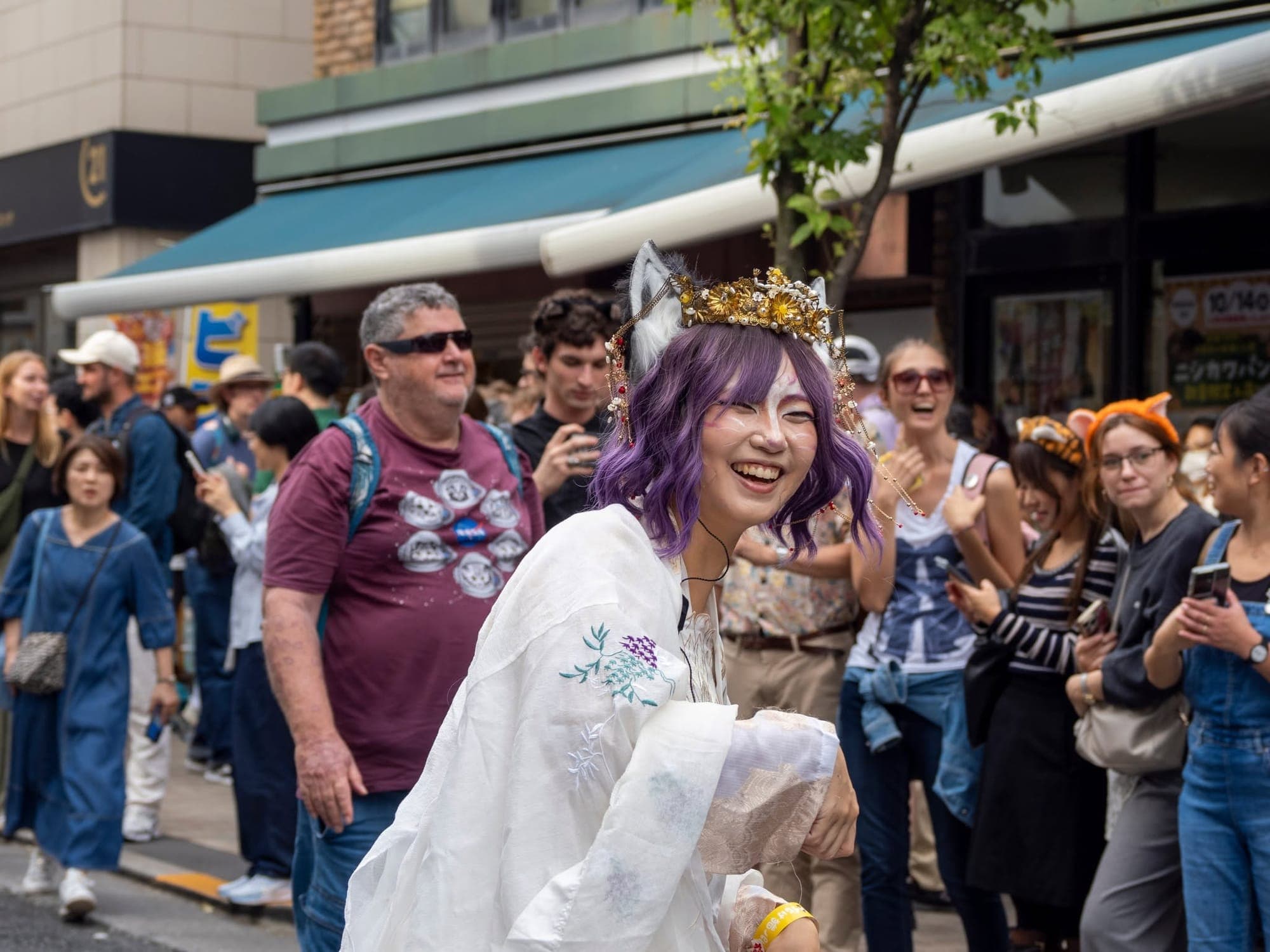
Once a year, the usually refined streets of Kagurazaka get a supernatural makeover.
The neighborhood’s Bakeneko Festival celebrates the bakeneko, a cat from Japanese folklore said to gain supernatural abilities as it grows older.
Naturally, the best way to celebrate that is with a parade full of cat people.
Participants transform themselves with whiskers, ears, face paint, elaborate costumes, and occasionally creations that are considerably harder to explain. Cats of every shape, size, and a degree of creepiness take to the streets.
It’s playful, peculiar, and a very different way to experience autumn in Tokyo.
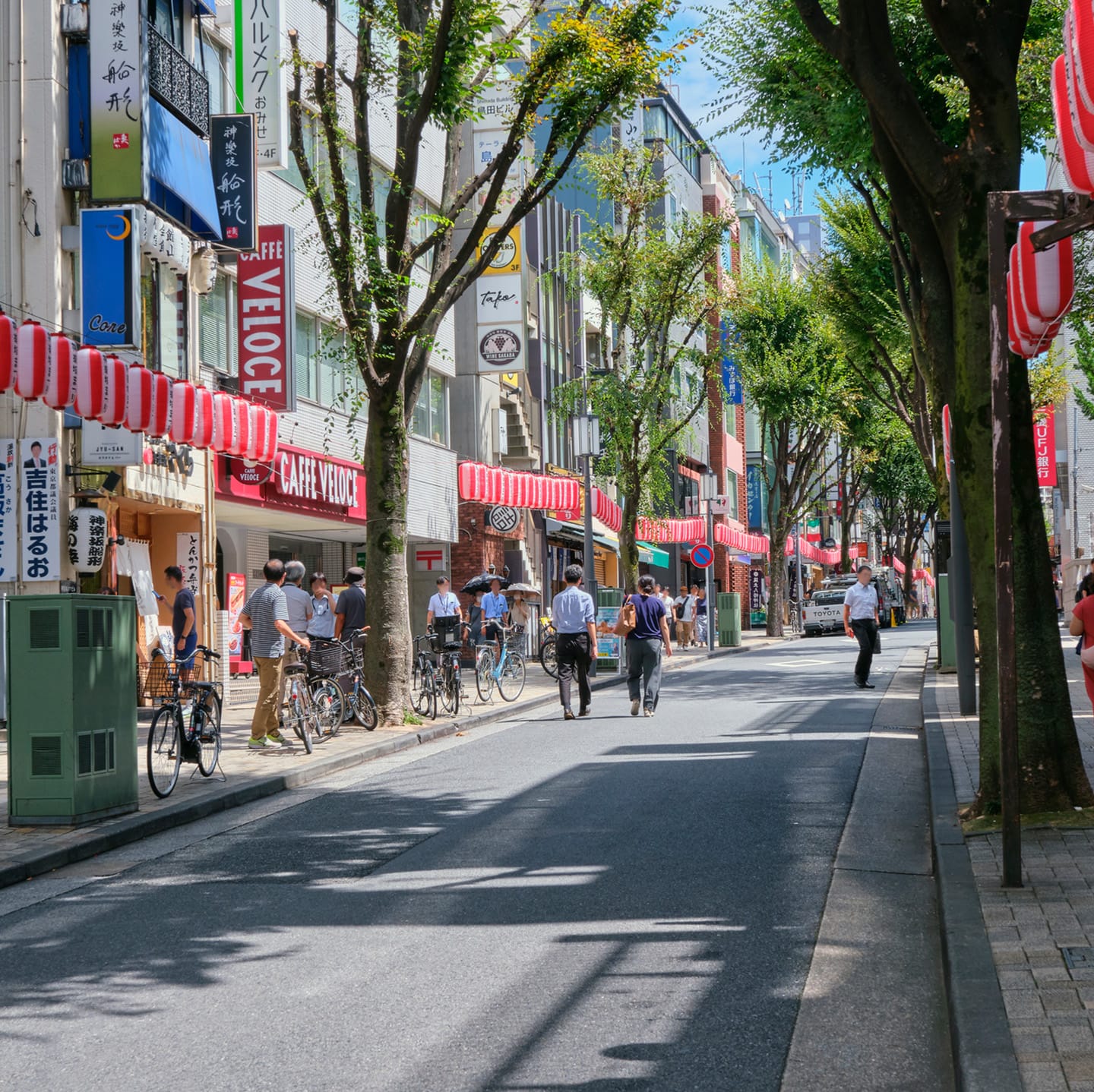
The cats only take over once a year.
Come with us and discover the Kagurazaka they call home.
Not Every Autumn Night Needs a Costume
Autumn nights have something a little more peaceful to offer, too.
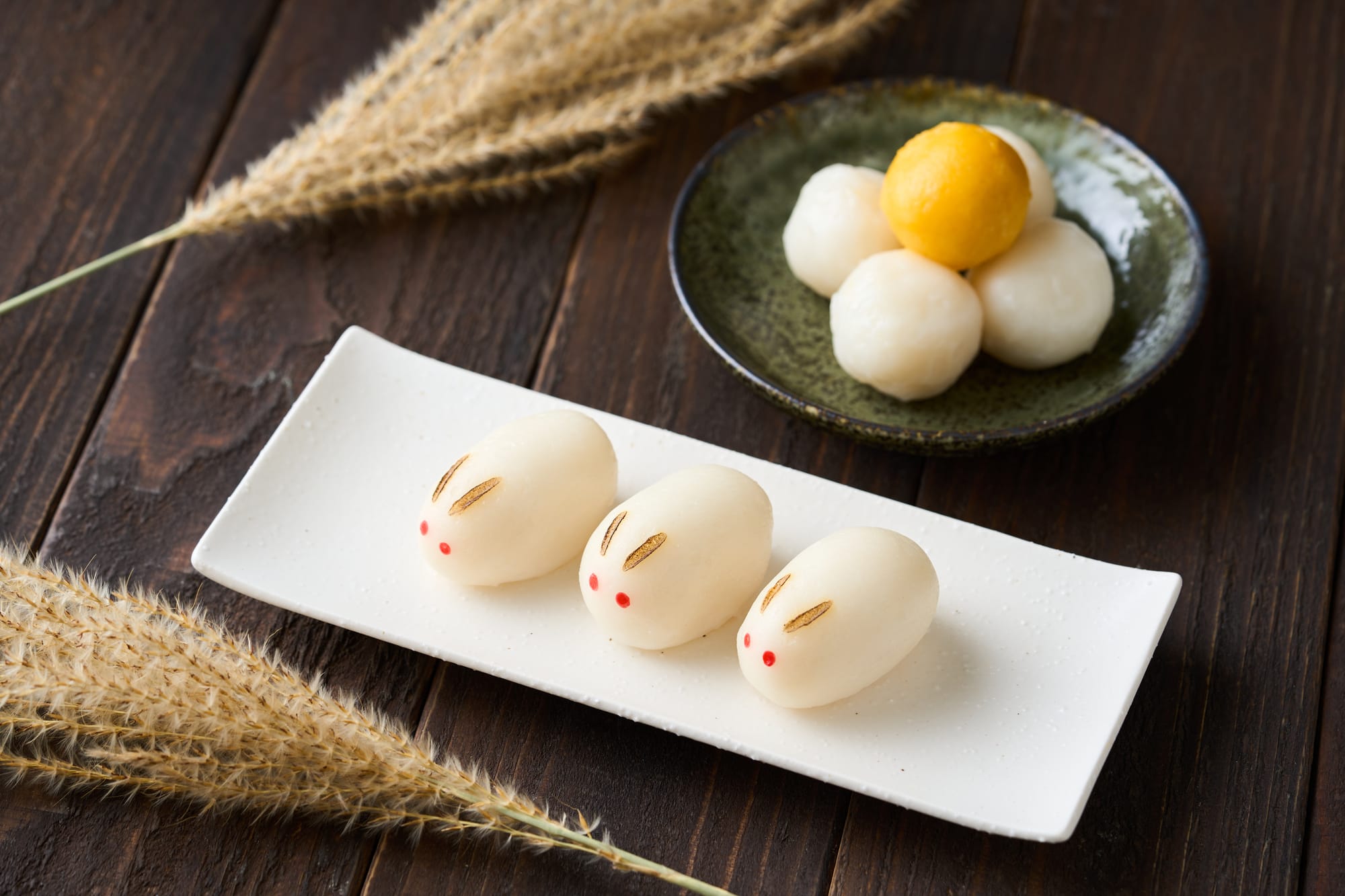
Tsukimi (月見), literally “moon viewing,” is a traditional Japanese custom of admiring the autumn moon. The tradition stretches back centuries, when aristocrats gathered to appreciate the moon through poetry, music, and celebrations that gradually developed into the customs still recognized today.
You might spot displays of susuki, or Japanese pampas grass, alongside small round tsukimi dango (a type of chewy rice cake) said to resemble the full moon. And if you look closely at seasonal menus, you’ll notice the moon popping up there too.
What’s That on the Moon?
Depending on where you grew up, you might have been taught to look for a man on the moon.
In Japan they see something else.
Look closely enough and you might spot a rabbit pounding mochi.
The moon rabbit, or tsuki no usagi, comes from folklore shared across parts of Asia. In Japan, the shapes visible on the moon are traditionally imagined as a rabbit using a mortar and pestle to make mochi.
Plan Autumn
So, Which Autumn Are You Coming For?
There isn’t really one Japanese autumn.
What you find depends on when you arrive and which region of Japan you visit. Hokkaido can be showing off its autumn colors while Tokyo is still wondering when summer will leave.
So rather than asking for the best time of year to visit, ask yourself what you want your autumn to look like.
September: First signs of change
Summer still lingers across much of Tokyo and Kyoto, so don’t expect red maple leaves just yet. Instead, look for red spider lilies, autumn festivals, new seasonal food, and the first changing leaves in Japan further north.
Come for: Early autumn flowers, festivals, food, and fewer expectations about foliage.
October: A little bit of everything
Cooler weather arrives, festivals fill the calendar, Halloween gets underway, and autumn leaves begin appearing in higher elevations and cooler parts of the country.
Come for: Comfortable exploring weather, festivals, Halloween, and early foliage.
November: Come for the leaves
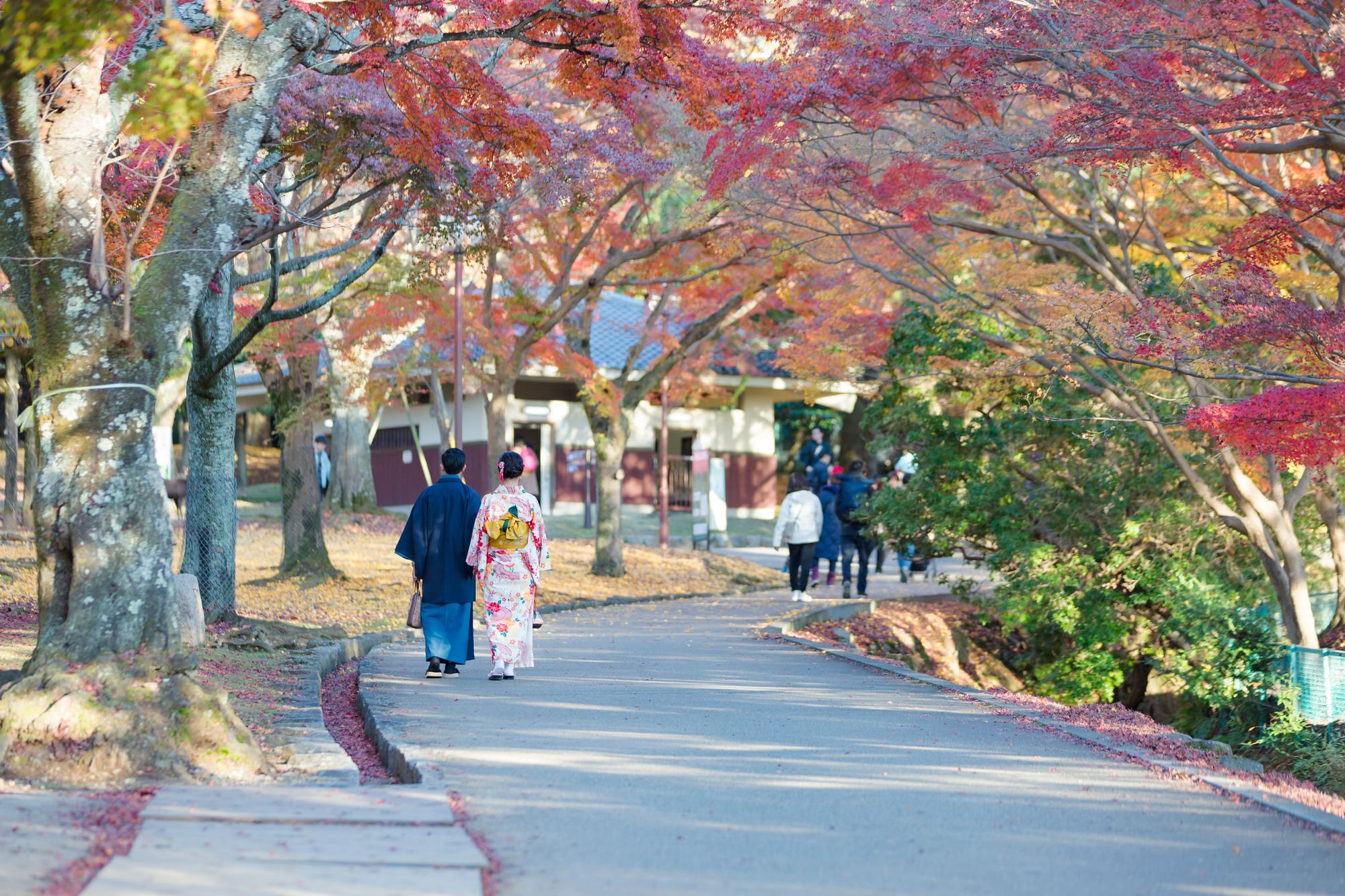
This is when the classic autumn scenes arrive in many popular destinations. Japanese maple trees turn red, ginkgo trees turn gold, and Japanese gardens like Shinjuku Gyoen become prime spots for momijigari.
Come for: Peak foliage, autumn colors, and Japan looking very much like the postcards.
Early December: The encore
Winter may be approaching, but pockets of autumn leaves can linger into early December around Tokyo, Kyoto, and other warmer areas.
Come for: Late foliage, cooler weather, and one last glimpse of autumn.
Whatever You Choose, Pack Layers
September can still call for breathable summer clothing, while November evenings may have you reaching for a jacket. Head into the mountains or a national park, and temperatures can drop considerably compared with the city.
Comfortable walking shoes are useful at any time of year, but especially when your autumn plans involve temples, gardens, hiking trails, and long days exploring neighborhoods.
Find Your Autumn With TOMOGO!
There’s a temptation to plan a Japan trip down to the smallest detail. And autumn makes that particularly difficult.
The seasons don’t follow itineraries. Leaf peak dates shift, forecasts change, and sometimes the thing you traveled across the world hoping to see simply isn’t ready yet.
That doesn’t mean you came at the wrong time.
Leave a little room in your plans for what’s happening while you’re actually here. Take the side street. Follow the crowd gathering outside the shrine. Ask what’s good right now. Japan tends to reward a little curiosity.
That’s where TOMOGO! comes in.
Our local guides aren’t here to march you through a checklist. They’re here to help you experience the Japan that’s happening around you, and maybe introduce you to a few things you didn’t know to look for.
You’ve already booked the flight. Where shall we go once you arrive?

There's so much more to Autumn in Japan than the leaves.
FAQs We Get Asked About Autumn in Japan
- When is Autumn in Japan?
Autumn in Japan runs from September through November.
Japan splits the year into neat three-month seasons, so autumn officially covers September, October and November, with the autumn equinox landing around 22 - 23 September.
In practice, the season stretches a little at both ends. Early September can still feel a lot like summer in Tokyo and Osaka, and autumn leaves often hang around into early December in warmer parts of the country. - What marks the beginning of Autumn in Japan?
Officially, 1 September.
For travelers, though, the real signal is much easier to spot than any date. Red spider lilies appearing along the rice fields. The first festival floats being pulled through the streets. Sanma showing up on menus.
That's usually how you'll notice the season has arrived, well before the leaves get involved. - How long is Autumn in Japan?
Around three months in any one place, and closer to four across the country as a whole.
Because Japan stretches more than 3,000 kilometers from north to south, autumn reaches Hokkaido weeks before it arrives in Kyushu. That's good news for your itinerary, because it means the season is happening somewhere in Japan for most of September, October and November.
Peak autumn leaves are far shorter. In any single spot, you're looking at one to two weeks. - What is Autumn like in Japan?
Comfortable and clear.
Summer's heat and humidity start easing off through September. October brings some of the best walking weather of the year. November is crisp and bright, with reliably sunny days in much of the country.
It's also one of Japan's most active seasons. Harvest festivals fill the calendar, seasonal food takes over every menu, and gardens, temples and mountainsides gradually shift from green to red and gold.
The golden rule: autumn is a season you can plan around, not just look at. - What is unique about Autumn in Japan?
Japan turns autumn into something you actively go and do.
Momiji-gari (紅葉狩り), or "maple hunting," is the custom of traveling specifically to see the autumn leaves, and it's been a national pastime since the Heian era (794 - 1185 CE). People still do it today, in exactly the same spirit.
The season even has its own vocabulary. Koyo (紅葉) for the autumn colors. Shokuyoku no aki (食欲の秋), "the autumn of appetite," for the food. Tsukimi (月見) for moon viewing.
Add harvest festivals, limited-edition seasonal everything, and a foliage forecast tracked as closely as the weather, and you get a season that's genuinely built around itself. - How do you say Autumn in Japanese?
Autumn in Japanese is aki (秋), pronounced "ah-kee."
A couple more worth taking note of before you travel:
- Koyo (紅葉) means the autumn colors.
- Momiji-gari (紅葉狩り) means going out to see them, which is very likely what you'll be doing.
- When do the leaves change in Japan?
Anywhere from late September in the north to early December in the south.The color travels gradually down the country, and down from higher elevations, so timing depends entirely on where you are:
Hokkaido: late September to late October
Tohoku and mountain areas: October to early November
Tokyo, Kyoto and Osaka: mid-November to early December
Kyushu: late November to early December
Peak dates shift every year with the weather, so it's worth checking a foliage forecast a week or two before you fly. - What to pack for Autumn in Japan?
Layers, comfortable shoes, and a light waterproof jacket.
September still calls for breathable summer clothing, while November evenings will have you reaching for a jacket. Packing for both is easier than it sounds.
A practical autumn list:
- Short and long sleeves you can layer
- A light jacket or cardigan, plus something warmer for November
- Comfortable walking shoes, because temples, gardens and long neighborhood days add up fast
- A compact umbrella or rain jacket, especially in September
- Slip-on shoes and clean socks, since you'll be taking them off at temples and some restaurants
- Something warmer again if the mountains are on your list
- Is Autumn cold in Japan?
Mild rather than cold, for most of it.
In Tokyo, September highs sit around 28°C, October around 23°C, and November around 18°C, with November nights dropping to roughly 10°C. By late November you'll want a jacket, but not a winter coat.
It does vary by region. Hokkaido and Tohoku cool down considerably earlier than the rest of the country. - Is the Mid-Autumn festival celebrated in Japan?
Japan has its own version, called tsukimi (月見), meaning "moon viewing.
"It shares roots with the Mid-Autumn Festival celebrated elsewhere in Asia, but the customs here are distinctly Japanese, and it isn't a public holiday.
Instead of mooncakes, look for tsukimi dango, small round rice cakes stacked to resemble the full moon. Moon-themed seasonal items also appear at cafés, restaurants and, yes, fast food chains.
The main moon-viewing night, jugoya, falls on 25 September in 2026. There's a second traditional viewing night, jusanya, on 23 October. - Are TOMOGO! tours worth it?
Japan is famously easy to travel independently, so the value of a TOMOGO! tour isn't the logistics. It's the context.
Each of our tours is led by a local expert who can tell you why the shrine you just passed is setting up for a festival, order the seasonal dish that never made it onto the English menu, or take you to the quieter garden a few streets from the busy one. - How much are guided tours in Japan? TOMOGO! pricing explained
TOMOGO! tours are priced per person, and every tour is fully private.
Pricing starts from ¥11,250 per person, though this varies depending on the tour you choose. Each tour page lists its price, duration and what's included.
Entrance fees, food, drinks and transport aren't included unless stated at booking, so it's worth bringing some cash for anything you'd like to stop for along the way. - How to hire a tour guide in Japan: booking with TOMOGO!
Booking a TOMOGO! tour is done online and takes about five minutes. Choose your tour, pick your date and group size, and you'll get your meeting point and timings straight away.
Autumn tours fill up quickly, particularly around peak foliage in November, so reserving a few weeks ahead is best.
If you have dietary needs, accessibility requirements or specific things you're hoping to see, make sure to share them when you book and your local expert will build the day around them. - Can you visit Japan without a tour guide?
Yes you can! Japan is one of the easiest countries in the world to travel independently, with excellent public transport, good English signage in major cities and stations, and a very well-earned reputation for safety.
TOMOGO! isn't here to get you around, but to help you connect more deeply with the places you're already going.
Most of our travelers explore on their own for the bulk of their trip and book a tour or two for the days that benefit from a local, whether that's a food neighborhood, a festival, or a region they've never visited. Booking one early tends to shape the rest of the trip, as you come away with the questions worth asking and a better sense of what you're looking at. - How to pick a tour guide in Japan: choosing your TOMOGO! tour
Start with the kind of day you want rather than the landmark you feel you should see.
You might choose by appetite if the food is the point, by neighborhood if you'd rather go deep in one area, or by season for the tours built around what's actually happening while you're here.
And because every tour is private, your local expert can adapt on the day, which matters in autumn when leaves run late or a festival appears two streets over. Have a look at our day tour page to see what's running during your dates.