
What Is a Bakeneko? Inside Tokyo’s Bakeneko Festival 2026
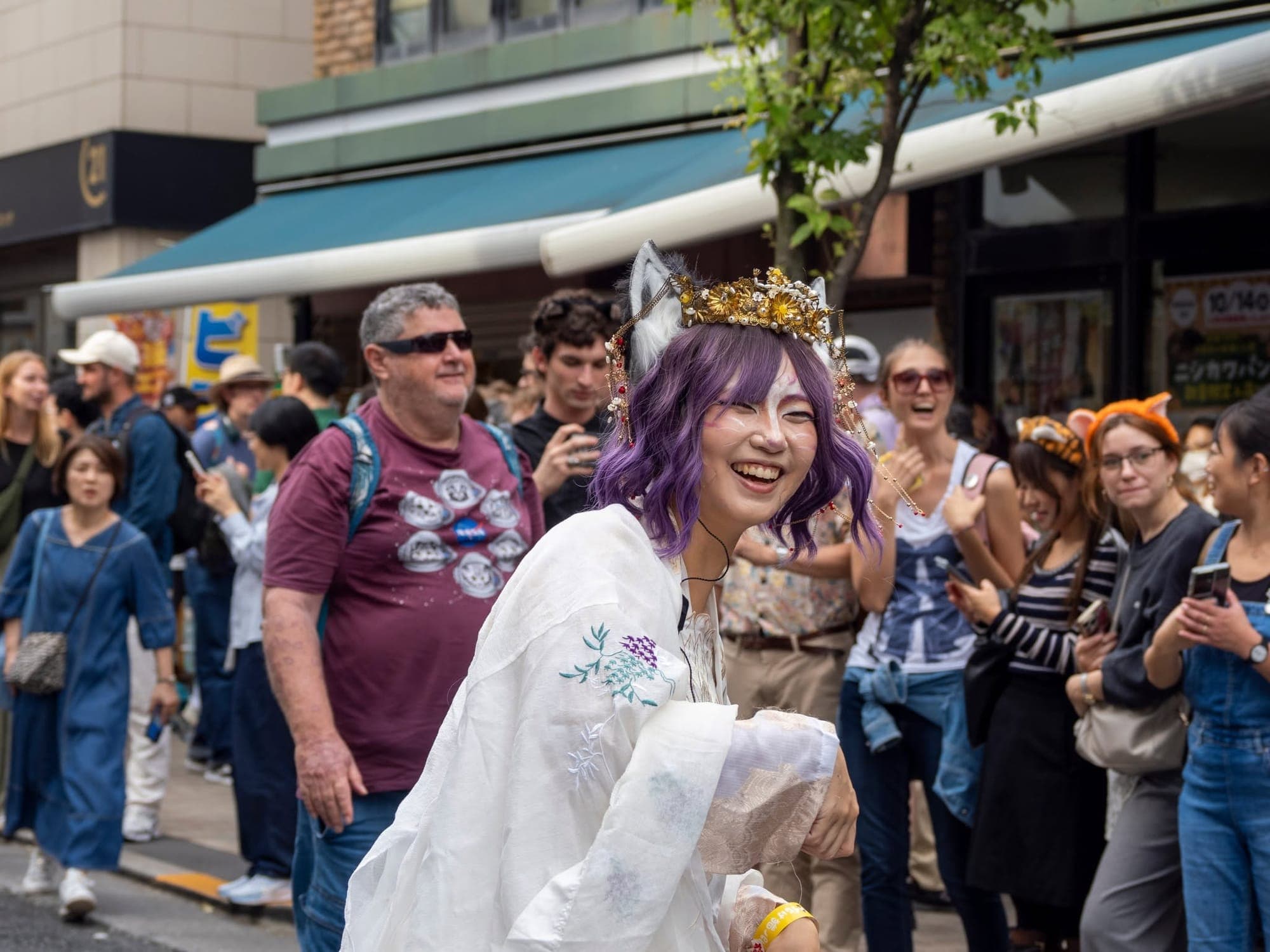
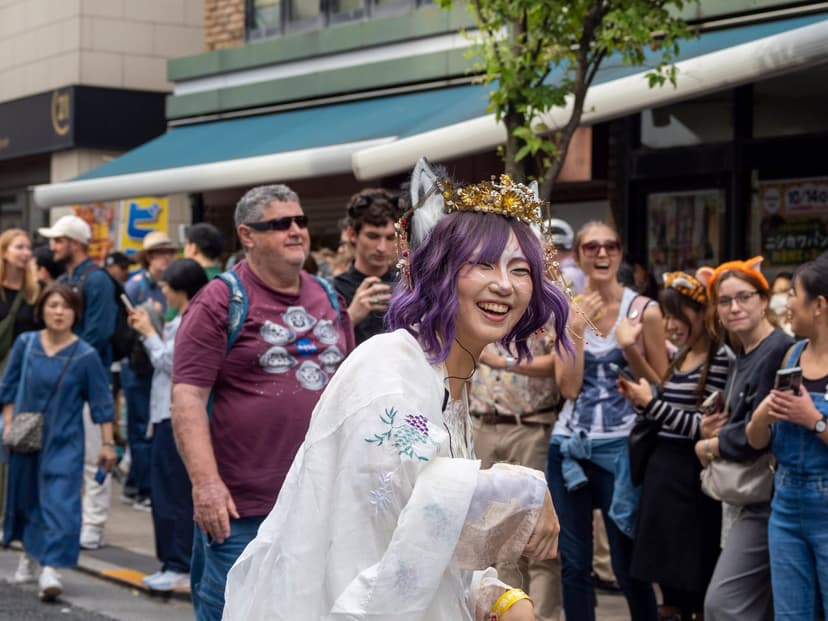
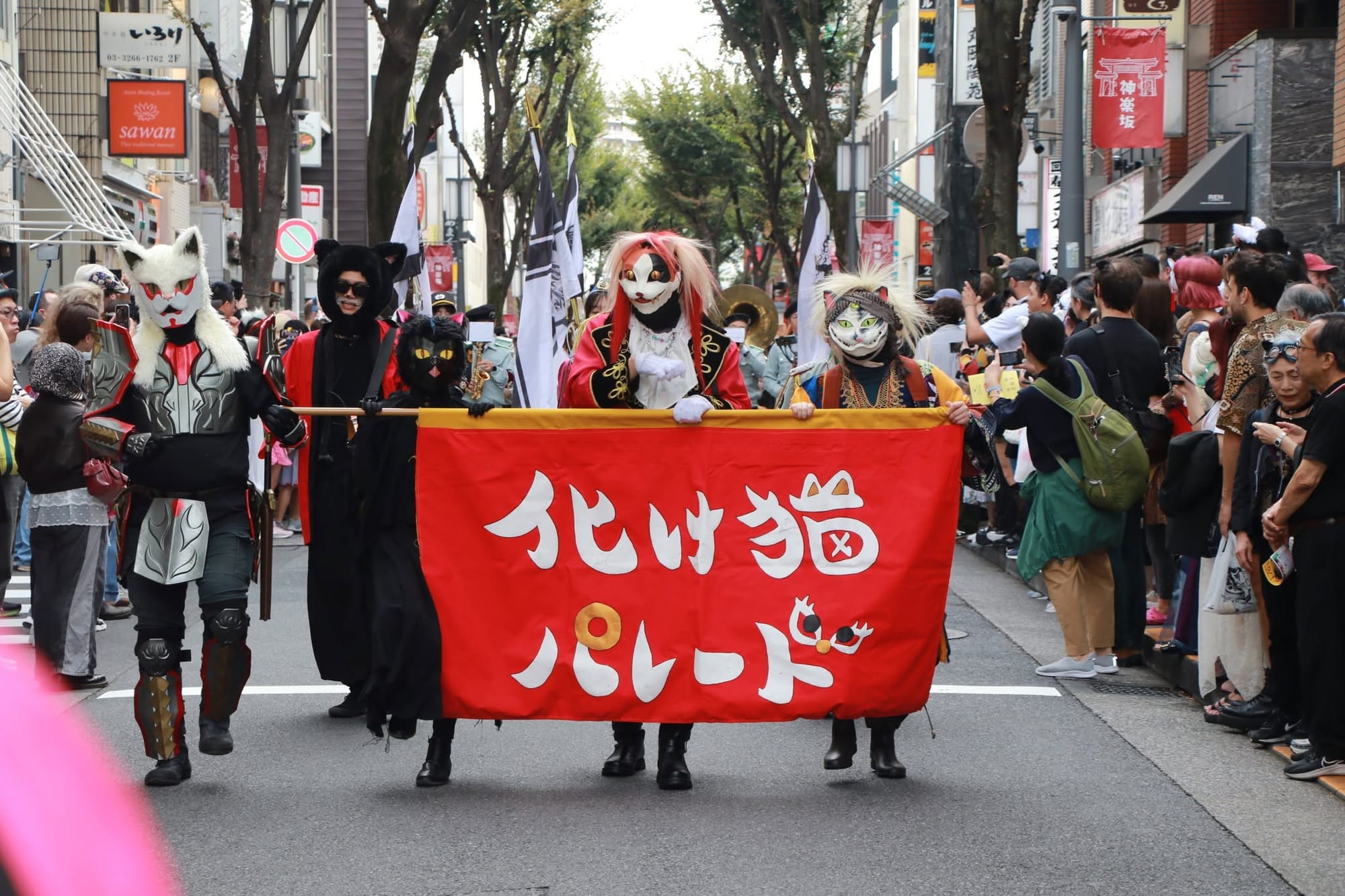
One Sunday in October, a hillside in Tokyo fills up with cats. Most of them are walking on two legs.
If you are traveling to Japan in autumn, you have probably packed a certain set of expectations along with the layers. Back home, October is when the ghosts come out: pumpkins on doorsteps, skeletons in shop windows, a general agreement that this is the spooky end of the year. Japan does not work that way. Here, the season for ghost stories is summer, when families welcome their ancestors home during Obon and old ghost stories get told to cool everyone down by sending a shiver down their spine.
So what is left for autumn? More than you would think.
The season has its own peculiarities, and one of the best of them happens on a single slope in Shinjuku, where a neighborhood spends one day a year turning itself into a kingdom of cats. It is called the Kagurazaka Bakeneko Festival, and it has been running since 2009.
What Is a Bakeneko?
A bakeneko, literally “changed cat,” is a type of yokai, the broad family of Japanese spirits, shapeshifters and strange phenomena that fills the country’s folklore. More precisely it is a kaibyo, a supernatural cat. Its close cousin the nekomata gets confused with it constantly, and the simplest way to tell them apart is the tail: the nekomata’s is forked in two, the bakeneko’s is not.
What a bakebeko actually does depends on who is telling the story. Some tales cast it as a creature of revenge. Others have it quietly protecting the household it lived in. The one constant is that it was an ordinary cat first, and then something changed it.
In some tales, that change comes with age. In Ibariko and Nagano, a cat raised for twelve years was said to turn. In Okinawa, it was thirteen years. In Hiroshima, the belief was darker and far more specific: a cat kept for seven years or longer would eventually kill the person who raised it. The fear went beyond stories and affected how people treated real cats, too. Folklore records from several parts of Japan describe people avoiding keeping cats into old age. In Ishikawa Prefecture, owners were said to set a limit on how long they would keep a cat. What they would do with the cats when they reached the age limit before they were deemed to become dangerous, is up to speculation, but some rumors say that they were abandoned or killed.
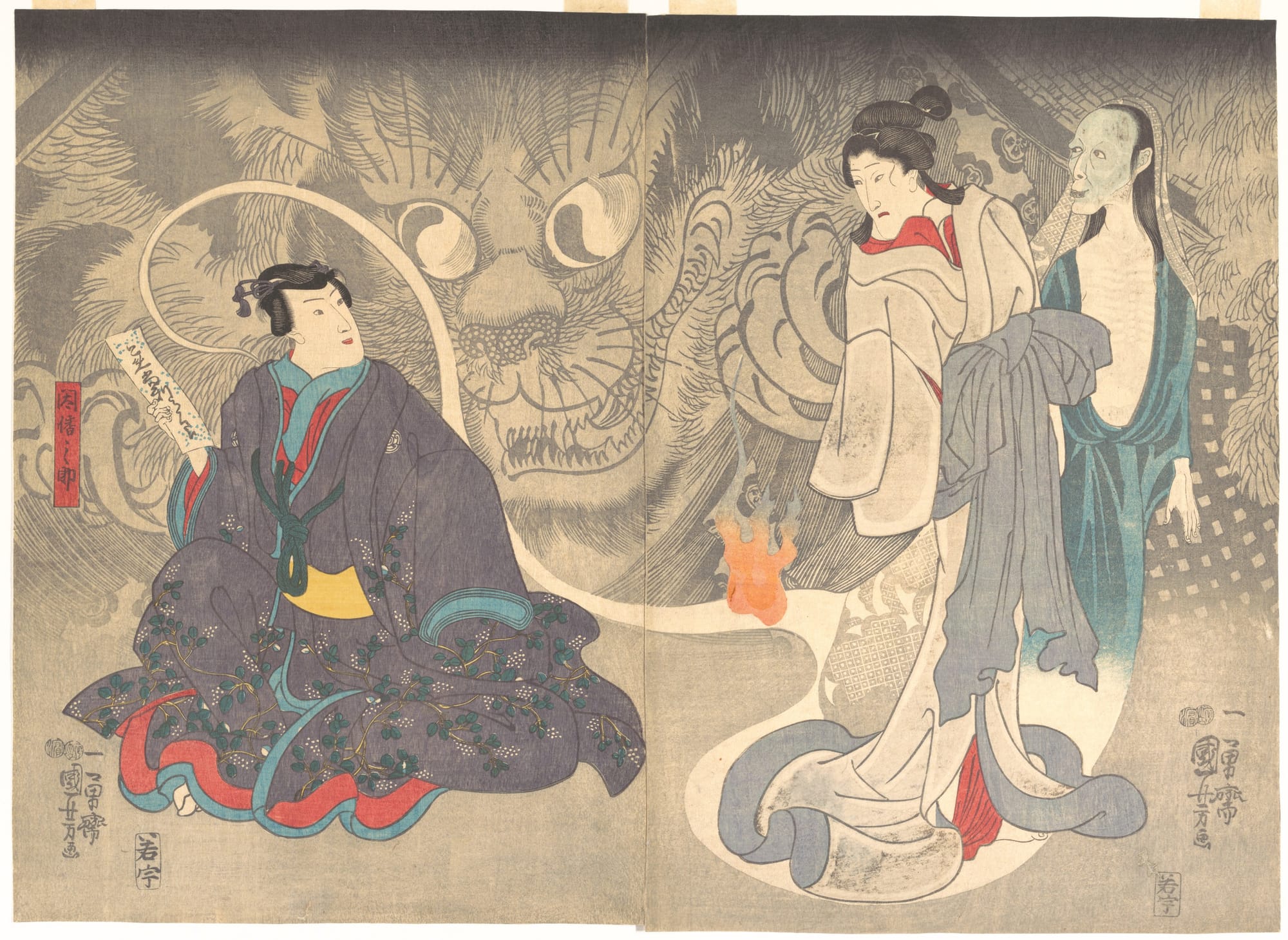
The second route into the folklore is grimmer still. A cat that licked the blood of a corpse could become a bakeneko, take the dead person’s shape, and settle their scores for them.
That version produced the Nabeshima Bakeneko Disturbance, one of Japan’s best-known bakeneko stories. In the telling, a retainer named Ryuzoji Matashichiro displeased the daimyo of the Saga domain — Nabeshima Mitsuhige — over a traditional game of Go and was put to the sword for it. Ryuzoji’s mother poured out her grief to the household cat and then took her own life. The cat licked her blood, became a bakeneko, walked into the castle, and tormented the daimyo night after night until a loyal retainer finally cornered and killed it.
Not every cat in Japanese folklore is out for blood, though. The maneki-neko, the famous beckoning cat sitting by the register of half the shops you will walk past in Japan, comes from the same imaginative world. In the best-known version of that story, a temple cat waves a traveler inside during a storm moments before lightning strikes the tree he had been sheltering under.
Japanese folklore has plenty of room for cats that bring luck as well as cats that bring trouble. Bakeneko stories sit on the stranger side of that relationship, shaped by centuries of people living closely with an animal they never quite managed to understand.
What Is the Bakeneko Festival All About?
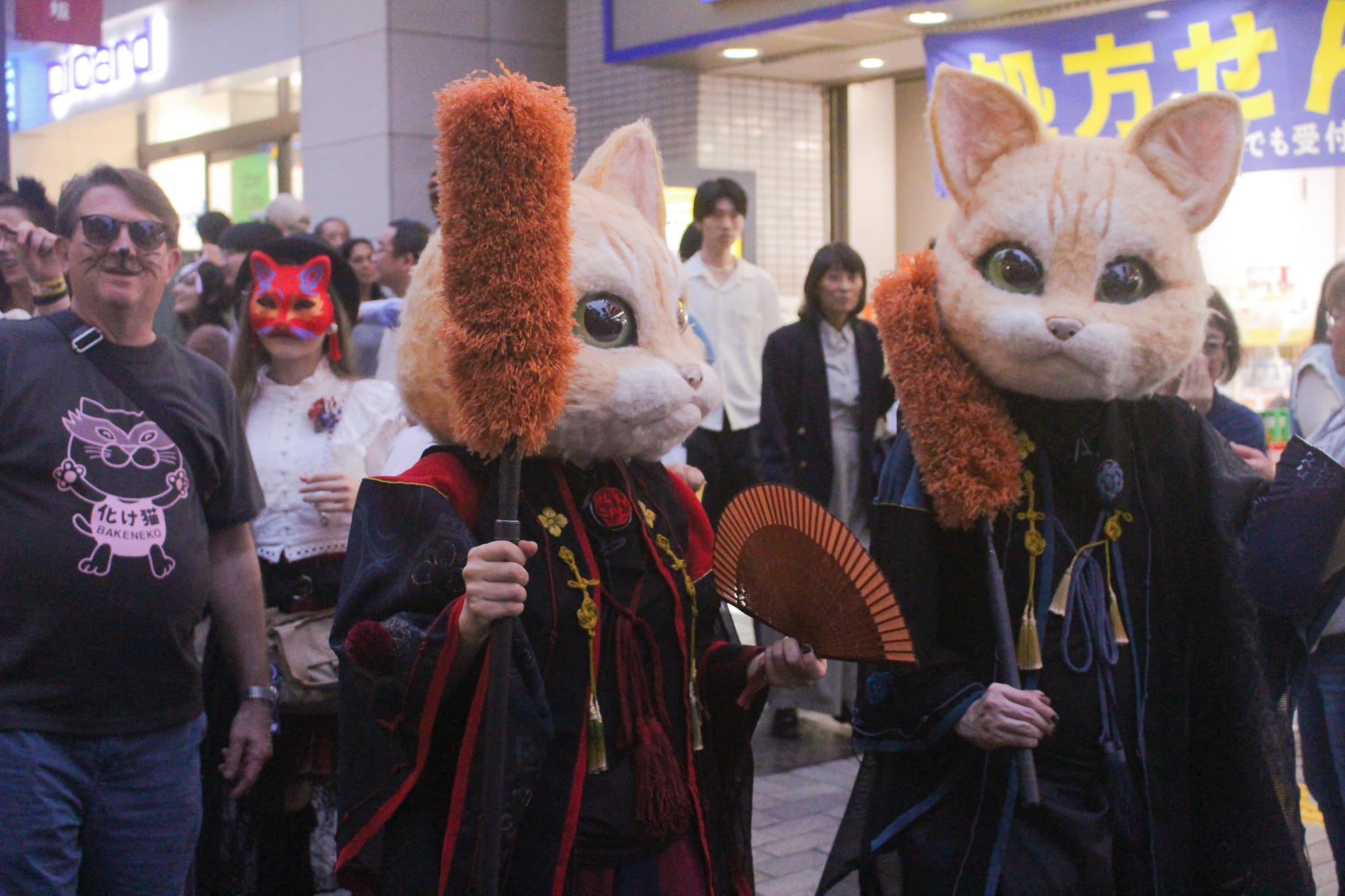
Given all of the above, you would be forgiven for expecting the festival to be macabre — it isn’t.
The Kagurazaka Bakeneko Festival has been held every year since 2009, and it grew from a simple, warm idea: a day to honor cats. Kagurazaka was the obvious place for it. The novelist Natsume Soseki knew these streets well, and his 1905 debut I Am a Cat, told from the perspective of a house cat watching and judging the humans around him, has given the neighborhood a feline literary claim ever since. The festival leans on it directly. Buy your badge and you are declaring, in the book’s own words, that you are a cat.
Entry is uncomplicated. There are two requirements to join the parade: be dressed as a cat, or arrive with “the heart of a cat,” and wear a badge. That is the whole list. No advance ticket, no age limit, no nationality requirement, and no expectation that your costume has to cost anything. Cat ears and drawn-on whiskers puts you in the same lane as the people who have been sewing a costume since August. And if you would rather just watch the parade go past, you can do that for free with no badge at all.
The badge money does real work. It funds the festival and feeds into the ongoing revitalization of the Kagurazaka shopping streets, which is another way of saying that the neighborhood puts this on for itself, and visitors are welcome to join in.
The festival also had an unexpected international moment this year. Rental Family, the Brendan Fraser film shot on location across Tokyo, includes a scene at the Bakeneko Festival itself. The film is available for streaming on Disney+, so you can watch the parade before you join it.
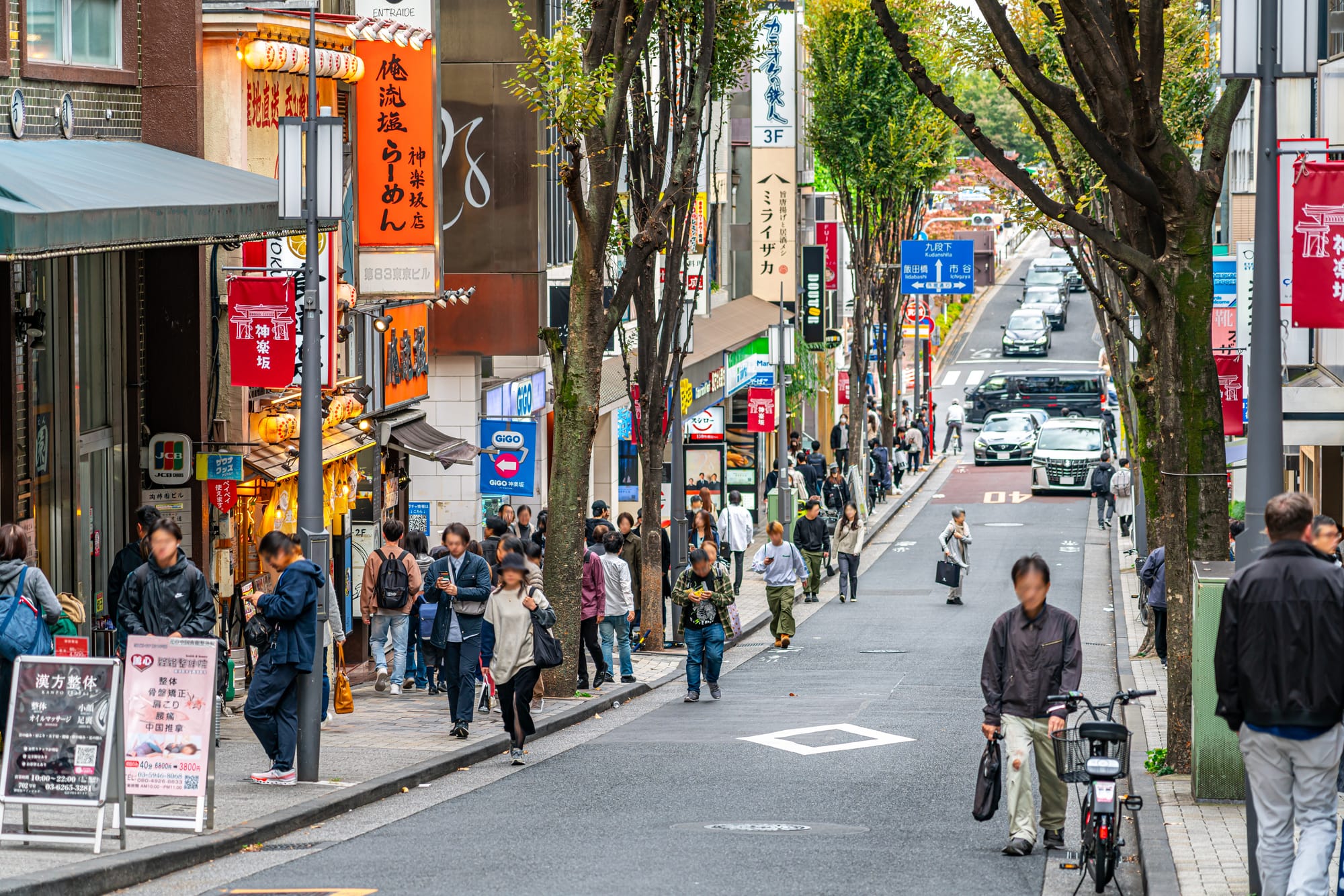
It helps to know what kind of neighborhood you are joining. Kagurazaka is one of Tokyo’s few surviving geisha districts, and the stone-paved alleys running off the main slope were laid out for that world: discreet, curving, lined with ryotei restaurants behind wooden gates.
Layered on top is an unlikely second identity: a long-established French community, the Institut Francais just up the hill, and enough boulangeries and bistros that people call the area Tokyo’s Little Paris.
That mix is part of what makes Kagurazaka unusual. Turn off the main street and a stone alley might lead past a traditional geisha ryotei; turn another corner and you are outside a French bakery. The festival doesn’t happen against a generic Tokyo backdrop. It takes over a neighborhood that already has a character of its own.
The festival is just one day. The neighborhood is there all year. Our Kagurazaka walking tour spends three hours in the backstreets with a Local Expert who can show you the places you would otherwise walk straight past; the traditional geisha ryotei, the shrine that rebuilt itself in glass and concrete, and the heart-shaped stone set into the pavement that most people never find.
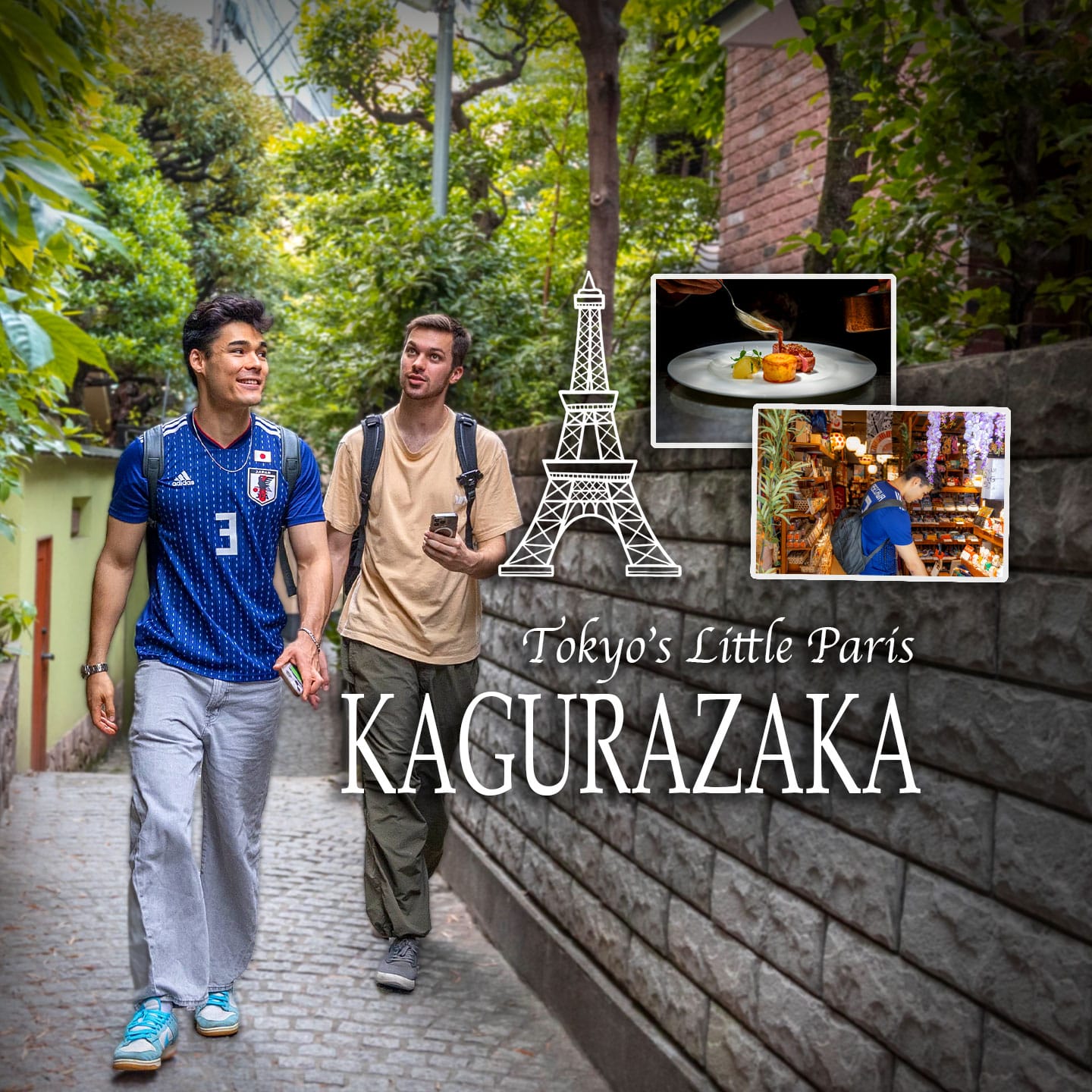
Come for the festival, stay for the streets it happens on.
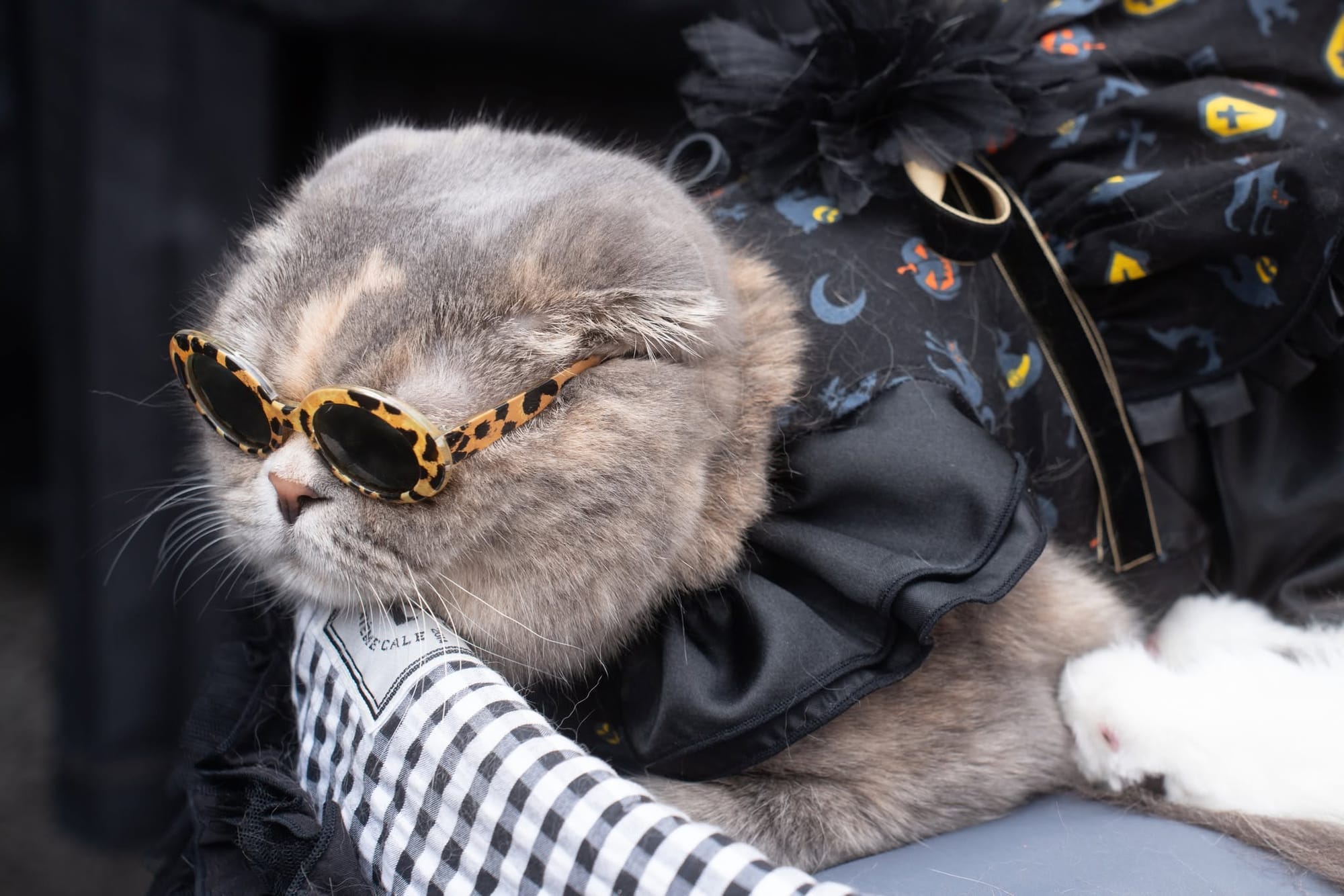
Bakeneko Festival 2026: Dates, Times and Prices
Here is everything you need to plan the day.
| Date | Sunday October 11, 2026 |
|---|---|
| Hours | 10:00am – 5:00pm |
| Where | Kagurazaka-dori and surrounding streets, Shinjuku, Tokyo |
| Price to watch | FREE |
| Price to participate | From ¥500 |
Bring cash. Payment across the whole festival is cash or PayPay only. No credit cards, IC cards or other e-money.
The Badges
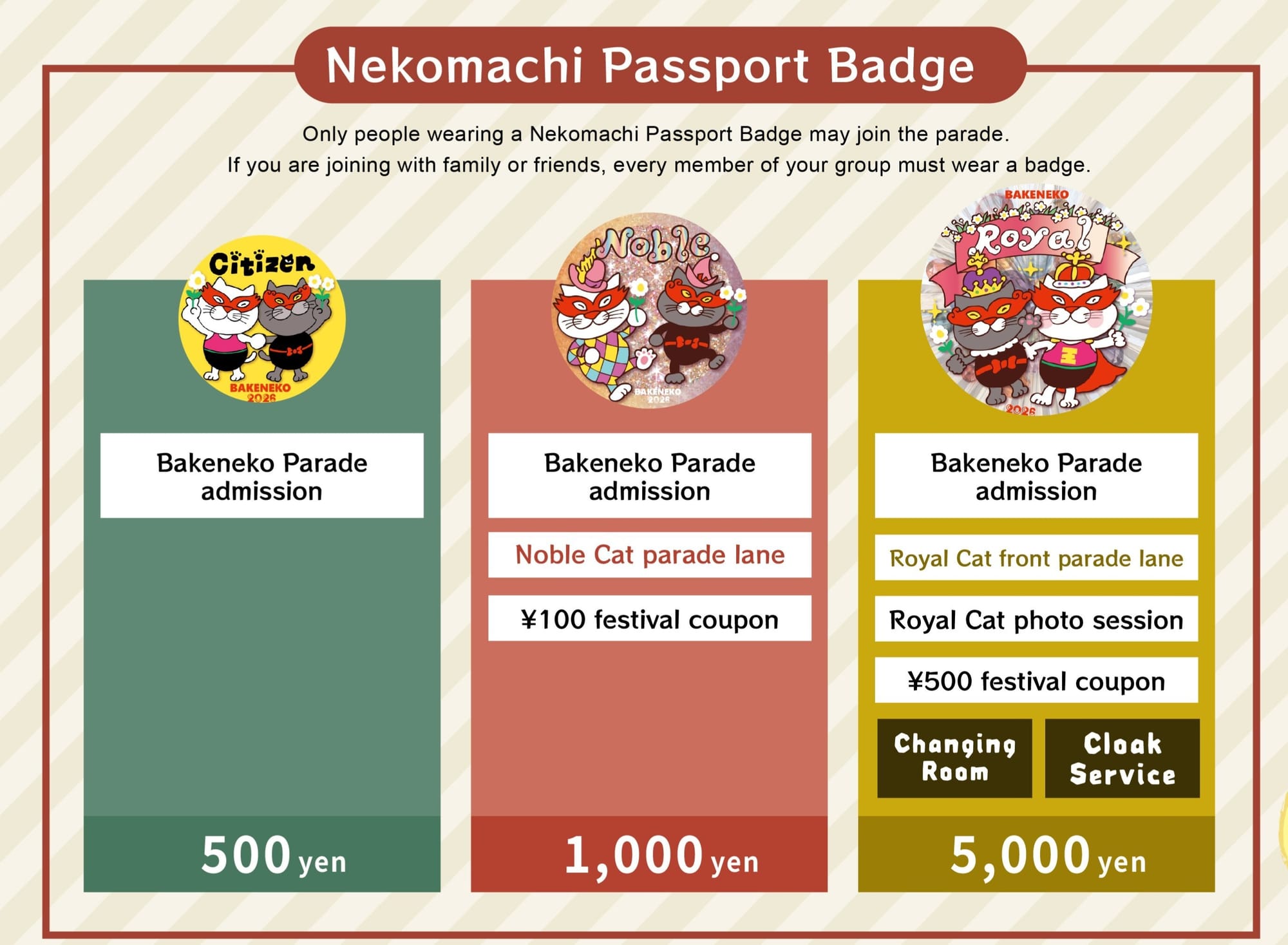
Only cats wearing a Neko-machi Passport Badge can enter the parade lanes, and everyone in your group needs their own, children included. There are three tiers:
- Citizen Cat, ¥500: parade entry. Sold at merchandise points around the festival.
- Noble Cat, ¥1000: parade entry, the Noble Cat parade lane, and a ¥100 festival coupon. Also sold at merchandise points.
- Royal Cat, ¥5000: parade entry, the front Royal Cat parade lane, use of the changing room and baggage storage, a ¥500 festival coupon, and a Royal Cat photo session. Sold at the festival HQ main booth only.
The Schedule
| Time | What |
|---|---|
| 12:00pm – 12:20pm | Oni Kenbai, first performance |
| 12:20pm – 12:50pm | Bakeneko Parade, Brass Band Version |
| 1:30pm – 2:00pm | Dance performance and a-Nya Odori |
| 2:00pm – 2:20pm | Oni Kenbai, second performance |
| 2:30pm – 3:00pm | Bakeneko Parade, Samba Version |
| 3:20pm – 3:40pm | Bakeneko Parade, early European Instruments Version |
| 4:00pm – 4:20pm | Oni Kenbai, third performance |
| 4:30pm – 5:00pm | Bakeneko Parade, Finale |
Two of those deserve a special mention:
The a-Nya Odori is a cat version of Awa Odori, produced by the dancer Yoshihiro Fujita of dance group CAT-A-TAC. You can watch the professionals dance it first, then join in the procession through Kagurazaka yourself: no experience needed, no signup, any age.
Oni Kenbai comes from a very different tradition. Originating in the Kitamkami area of Iwate Prefecture, the sword-and fan folk dance is performed to drive off evil spirits and pray for a good harvest. It is designated an Important Intangible Folk Cultural Property of Japan and inscribed on UNESCO’s Intangible Cultural Heritage list. During the Bakeneko Festival, you can see it performed three times without even leaving Tokyo.
The Kagurazaka Bakeneko Festival's official step-by-step guide to the Anya Odori, the group cat dance performed along the parade route.
Getting Into Costume on the Day
You can arrive fully transformed, and plenty of people do. If riding the subway in whiskers is not how you want to start your morning, though, the festival is set up for that too. Everything below happens on site, for a fee and mostly on a first come basis.
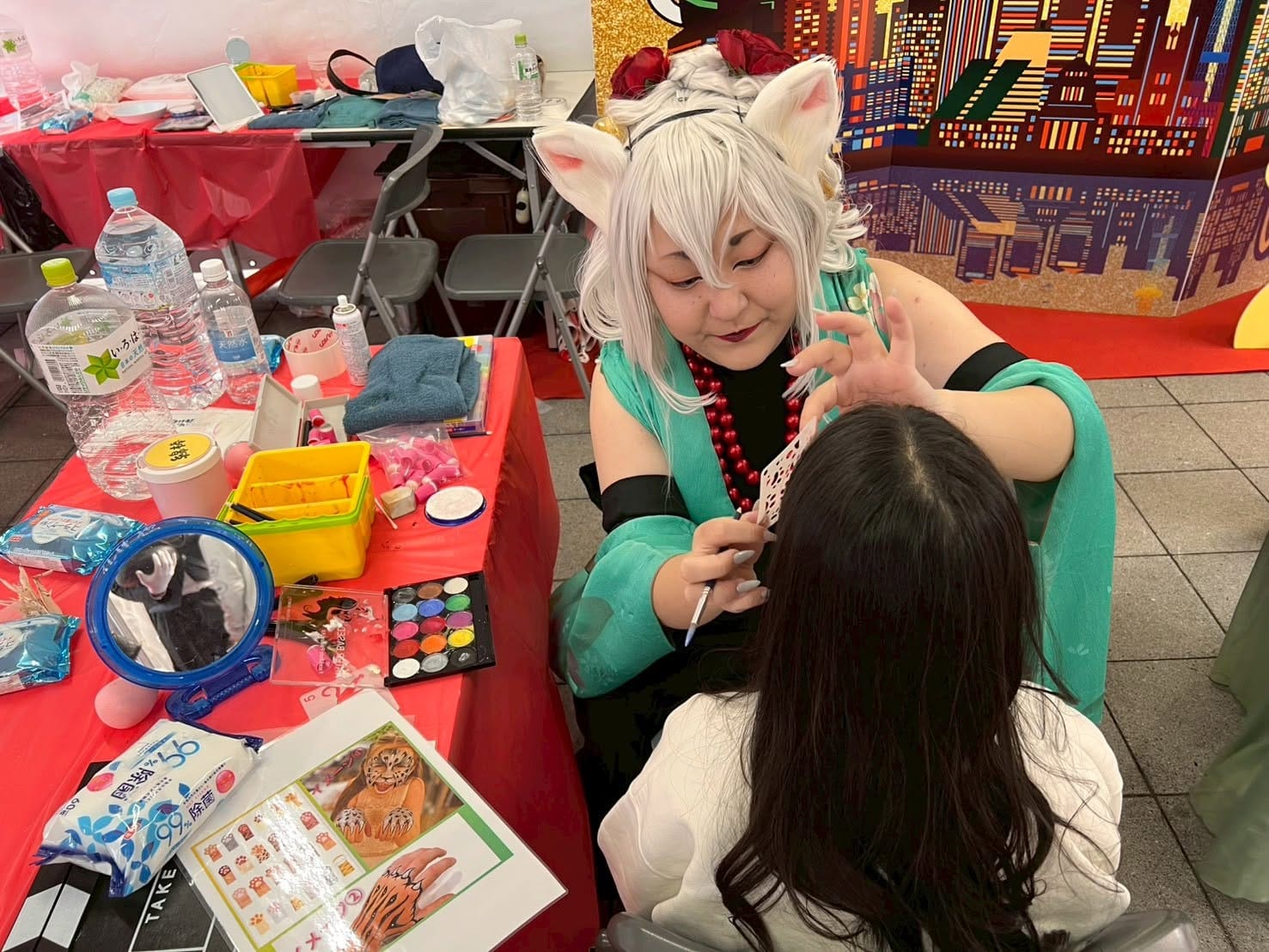
- Kids cat makeup, ¥500: elementary school age and under. Numbered tickets from 9:30am, 100 available; makeup runs 10:00am – 2:00pm at festival headquarters.
- Full cat makeup by professional artists, ¥2,000 : same ticket system, same 100-ticket limit, same hours.
- Changing room, ¥500 per person: 10:00am – 5:30pm. Shared rather than private, with separate men's and women's rooms.
- Cloakroom, ¥300: 10:00am – 5:30pm, at the tent by the entrance.
- Kimono rental and dressing, ¥3,300: located at Fukunekodo. Book online in advance — this one is capped at the first twelve people.
What Else Is Happening
Beyond the parade, the whole street becomes a program. The Bakeneko Marche sells cat bread, cat snacks and costume supplies, with a cat mask workshop running alongside it. The Bakeneko Base is the day's clubhouse: scratching-post coffee, a glowing cat art exhibition, a tea ceremony and cat jewelry workshops. A long-established soba restaurant opens a one-day sweet shop serving cat themed red-bean flavored treats. A goshuin stamp rally sends you around seven stamp points in the neighborhood, starting at Bishamonten Zenkokuji: free to join, with a prize for finishing. There is a Bakeneko car photo booth. And from midday until six, street performers work the corners.
There are a few house rules worth knowing, especially because the festival takes place in the middle of a living neighborhood rather than inside an event venue.
- Change clothes and do your makeup only in the designated areas, never in station or shop bathrooms.
- No drinking before or during the parade.
- Children of elementary school age and under need an adult with them.
- Pets are welcome along the route but must travel in a stroller or cart rather than walking on the road.
- Take your trash home with you.
Several thousand people live and work around Kagurazaka, so following the festival rules helps keep the day enjoyable for the people joining it and the people whose neighborhood it takes over.
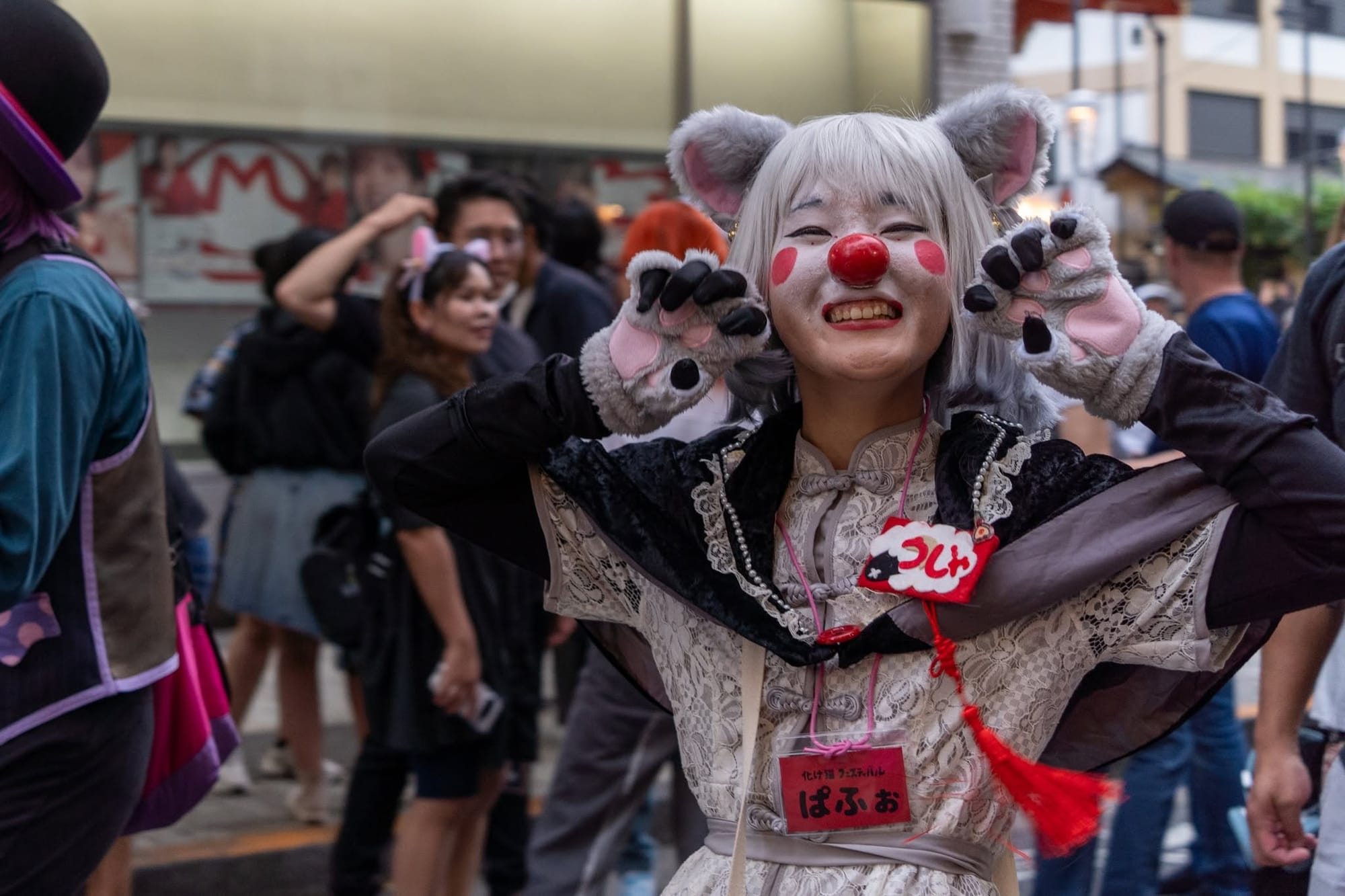
Come as You Are, Leave as a Cat
For one Sunday in October, Kagurazaka transforms into a different world. The ryotei are still behind their gates, the French bakeries are still baking, and the same stone alleys still run off the main slope. There just happen to be several thousand cats walking between them.
The festival itself is easy enough to plan. Pick your badge, bring some cash, arrive early if you want your cat makeup, and find a place along the parade route. Kagurazaka is the part that rewards those who choose to spend a little more time getting to know it. Its old geisha quarter, temples, shops and backstreets are still here once the ears come off and the road opens again.
Our Kagurazaka walking tour spends three hours exploring those streets with a Local Expert who knows the history behind the gates, the stories that go with it, and where you should eat afterwards. Visit around festival weekend and you can see Kagurazaka in two very different ways: once when everyone is pretending to be a cat, and once when the neighborhood is simply itself.
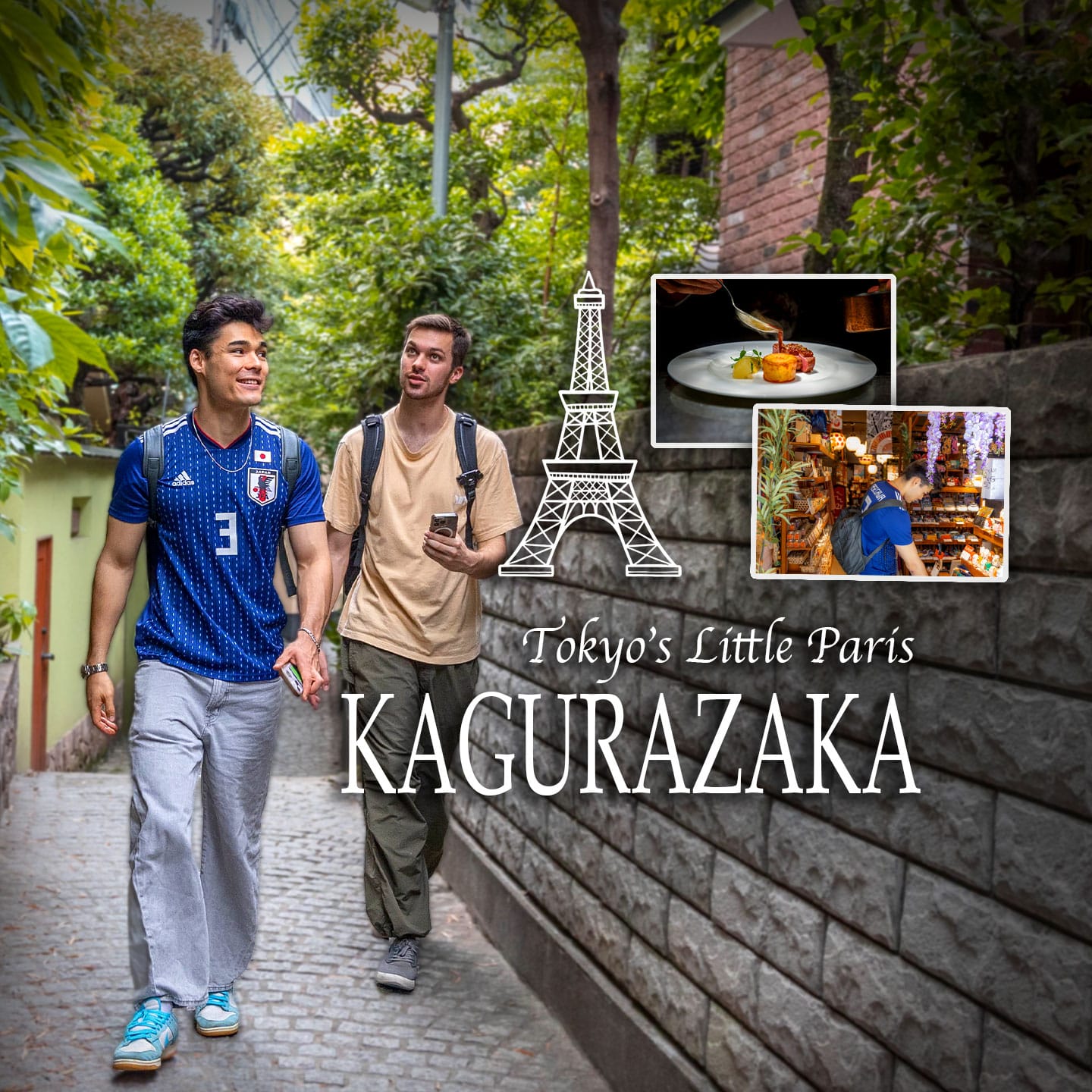
The festival is for just one day of the year, but the streets are here every day.
Discover more of Kagurazaka with a local who knows it.
FAQs We Get About the Bakeneko Festival
When is the Kagurazaka Bakeneko Festival 2026?
Sunday, October 11, 2026, from 10:00am to 5:00pm. It runs along Kagurazakadori and the surrounding streets, with Shirogane Park as a second hub. The parade goes four times across the day, starting at 12:20pm and finishing with the finale at 4:30pm.
Do you have to wear a costume?
No. Watching is free and open to anyone, in whatever you happen to be wearing. To join a parade lane you need a cat costume, or you must at the very least have “the heart of a cat,” and a Neko-machi Passport Badge. Cat ears and drawn-on whiskers count.
Where can you buy a cat costume in Tokyo?
Most people sort this out locally, and plenty leave it to the day itself. At the festival, the Bakeneko Marche sells cat costume goods and runs a mask-making workshop, and there is kimono rental at Fukunekodo for 3,300 yen if you book ahead. Before the day, Don Quijote and 100-yen shops carry cat ears and face pens for pocket change, and Okadaya in Shinjuku, a few stops away, is where Tokyo's cosplayers go for fabric, wigs and costume parts.
How much does it cost to join the Bakeneko Festival?
Spectating is free. Parade badges start at 500 yen for Citizen Cat, 1,000 yen for Noble Cat with its own lane and a 100 yen coupon, and 5,000 yen for Royal Cat, which adds the front lane, changing room and baggage storage, a 500 yen coupon and a photo session. Makeup, changing rooms and kimono rental are priced separately.
Is the Bakeneko Festival a Halloween event?
The organizers describe it as a cat version of Halloween, and that is a fair summary: costumes, a parade, and a whole street given over to it. A few things set it apart. It runs in daylight, from 10:00am to 5:00pm in mid-October rather than on Halloween night, on a residential shopping street rather than in a nightlife district, and the neighborhood puts it on itself. Alcohol is kept out of the parade and families make up a large share of the crowd.
Is the Bakeneko Festival suitable for children?
Very much so. This is a daytime neighborhood event rather than a night-time street party, and families are part of the crowd. Children of elementary school age and under need an adult with them, and every child walking in the parade needs their own badge. Kids cat makeup costs 500 yen and takes about five minutes.
Can you bring your cat?
Yes, along the parade route, with one condition: pets travel in a pet stroller or cart rather than walking on the road, so a lead alone will be turned away. Pets cannot come inside the headquarters building, and staff are unable to look after them. Assistance dogs are exempt from these rules.
What happens if it rains?
The program can be shortened or called off depending on the weather and conditions on the day. The organizers post updates to the official website and their social channels, so check bakeneko.oops.jp on the morning before you set out.
How do you get to Kagurazaka?
Kagurazaka Station on the Tozai Line, Exit 1, puts you at the top of the slope and a short walk from festival headquarters. Iidabashi Station sits at the bottom and is served by the JR Chuo-Sobu, Tozai, Yurakucho, Namboku and Oedo lines. Both are a few minutes from Shinjuku and Tokyo Station.
Can you take photos at the festival?
On the street, yes, and it is a large part of the day. Anyone in cat costume should expect to be photographed, including for the festival's own website and social channels, which is one of the participation conditions. Photography inside the headquarters facility, or pointed at it, is prohibited, as are drones. Tripods and large equipment need clearance in advance.