
Weather in Japan in November: Temperatures, Foliage and What to Wear
Two travelers land in Japan this November. One arrives on the third, the other on the twenty-fifth.
The first finds mild afternoons, light jackets, and trees that have barely started to turn. The second wants a proper coat, catches the maples at their best, and watches it get dark before five.
Same month, same city, and one number on a weather site that covers them both.
So this is a guide to the weeks rather than the month: what the temperature actually does between the first and the thirtieth, where the rain goes, when the color arrives, and what all of it means for your suitcase.
Japan's November Weather, Region by Region
| City | Average | Daily High | Daily Low | Rainfall |
|---|---|---|---|---|
| Tokyo | 12.5°C (54°F) | 16.7°C (62°F) | 8.8°C (48°F) | 96.3mm |
| Osaka | 13.8℃(57°F) | 17.8℃(64°F) | 10.2℃(50°F) | 72.5mm |
| Kyoto | 12.5℃(54°F) | 17.3℃(63°F) | 8.4℃(47°F) | 73.9mm |
| Kobe | 14.2℃(58°F) | 17.5℃(64°F) | 10.9℃(52°F) | 62.4mm |
| Sapporo | 5.2℃(41°F) | 8.7℃(48°F) | 1.6℃(35°F) | 113.8mm |
| Asahikawa | 2.3℃(36°F) | 6.2℃(43°F) | -1.5℃(29°F) | 114.5mm |
| Hiroshima | 12.9℃(55°F) | 17.7℃(64°F) | 8.9℃(48°F) | 69.3mm |
| Sendai | 9.8℃(50°F) | 14.1℃(57°F) | 5.6℃(42°F) | 58.7mm |
| Fukuoka | 14.2℃(58°F) | 18.2℃(65°F) | 10.6℃(51°F) | 91.4mm |
| Nagoya | 12.6℃(55°F) | 17.3℃(63°F) | 8.6℃(47°F) | 79.1mm |
| Kanazawa | 11.9℃(53°F) | 15.9℃(61°F) | 8.1℃(47°F) | 250.8mm |
| Takayama | 7.1℃(45°F) | 13.1℃(56°F) | 2.9℃(37°F) | 94.4mm |
| Nikko | 4.4℃(40°F) | 8.6℃(47°F) | 0.2℃(32°F) | 97.6mm |
| Hakuba | 5.5℃(42°F) | 11.5℃(53°F) | 0.9℃(34°F) | 100.4mm |
| Naha | 22.5℃(72°F) | 25.0℃(77°F) | 20.4℃(69°F) | 119.1mm |
Every figure comes from the Japan Meteorological Agency, using the official 1991–2020 climate normals, averaged over 30 years of observation.
Read down that table and the country splits into three. Okinawa is still in shortsleeves at 22.5°C (72°F). Hokkaido and the high ground are into winter, with Asahikawa's average overnight low at -1.5°C ( 29°F), below freezing. Everything between Sendai and Fukuoka sits in a narrow, comfortable band of 10°C (50°F) to 14°C (57).
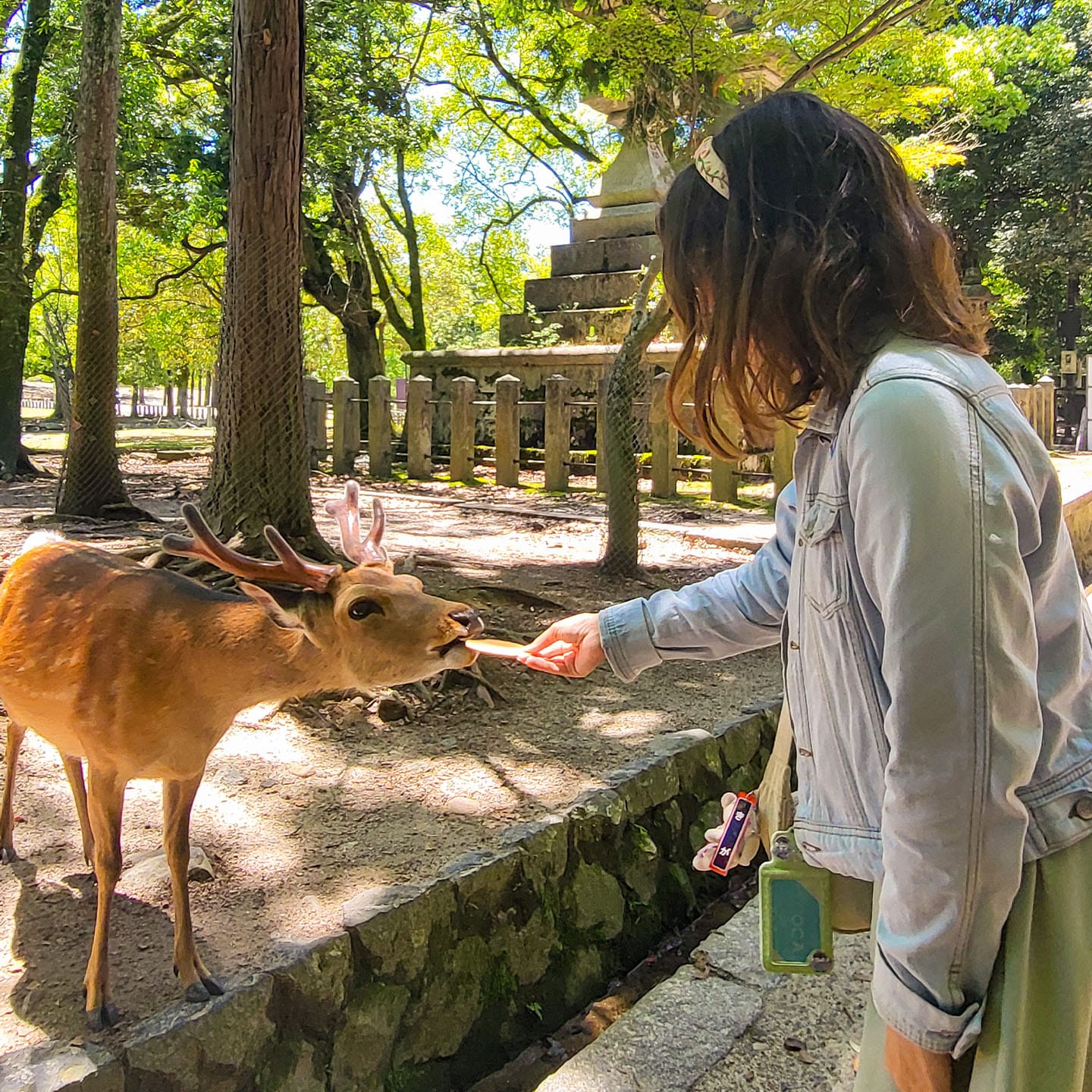
November is made for walking, and Nara is made for walkers.
Three hours through Japan's first capital, with the sacred deer wandering wherever they like.
The Month in Three Parts
November does not arrive all at once. It helps to think of it in three stretches.
The first ten days. Tokyo afternoons still reach the mid teens and the city trees are mostly green. The color is at altitude: Nikko, Hakone, Takayama and the Japan Alps are at or just past their best. If your dates land here, spend a day in the mountains rather than waiting for Kyoto to catch up.
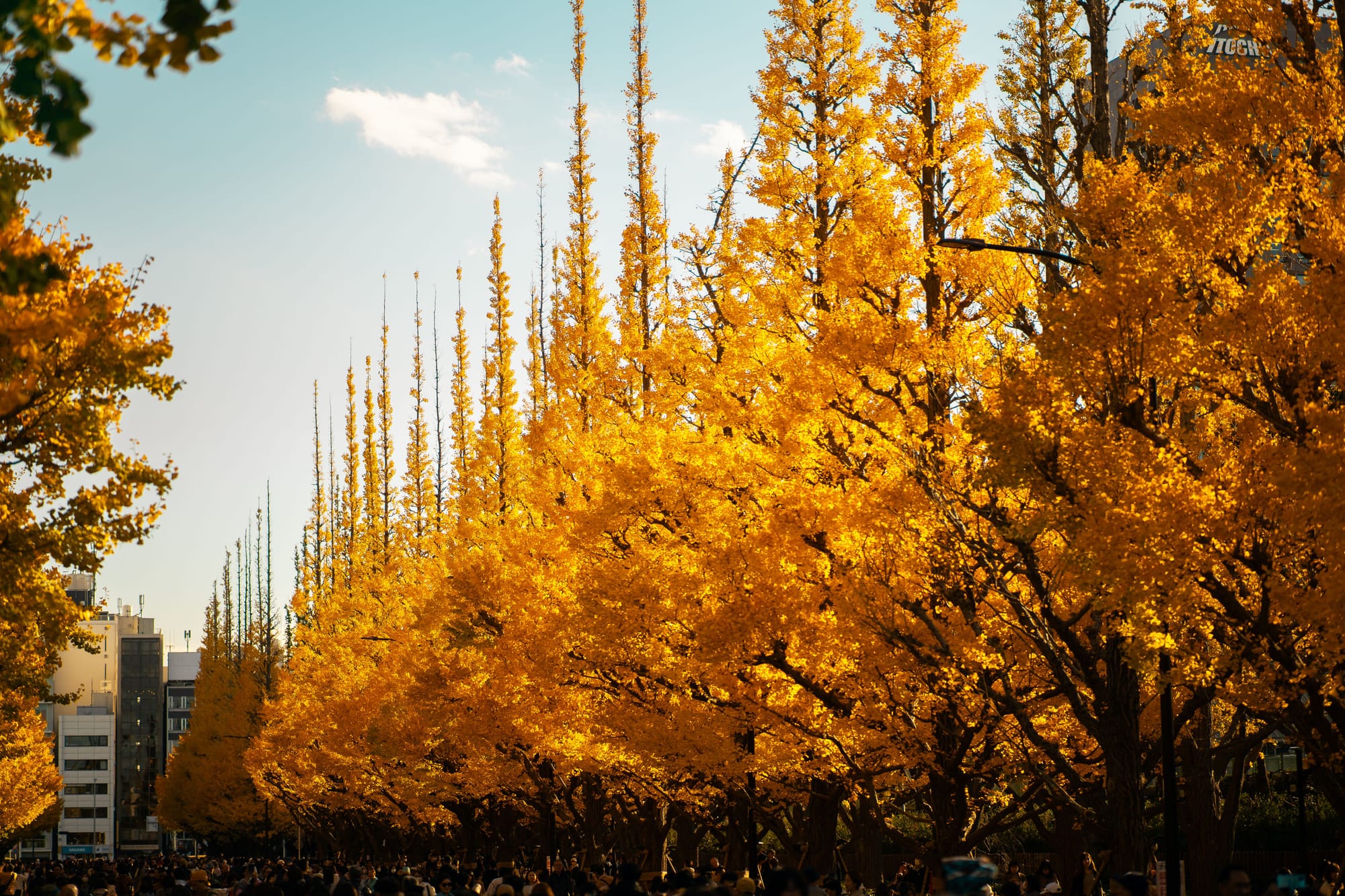
The middle third. The cities begin to turn, and ginkgo goes first. Tokyo's avenues run gold while the maples behind them are still coming. Afternoons hold up, evenings need a coat, and the garden illuminations start.
The last ten days. Peak leaves, and peak crowds. Tokyo and Sendai reach full color, Kansai runs a few days behind, and the sun sets before 4:30pm. This is the fortnight the entire country plans around.
Daylight is the part people underestimate. Tokyo sunset moves from 4:46pm on 1 November to 4:28pm on the thirtieth, leaving under ten hours of light. Sapporo is dark by 4:01pm. Japan does not use daylight saving, so those are the real clock times, and a temple that closes at four ends your day earlier than you planned.
The Rain Moves to the Other Side of the Country
Through autumn the wet weather sits on the Pacific coast. In November it crosses the mountains.
Tokyo drops to 96.3mm, one of its driest months, and the Pacific side generally clears up and stays bright. Kanazawa goes the other way, to 250.8mm — more than two and a half times Tokyo's figure.
This is the winter pattern beginning. Cold air crossing the warm Sea of Japan picks up moisture and unloads it on the western coast, while the mountains keep the Pacific side dry. It is the same mechanism that buries the Alps in snow a month later.
If your route crosses the country, pack for it. Kanazawa, Takayama and the Alps are worth the trip in November and considerably wetter than Kyoto, which sees only 73.9mm. For anyone staying on the Tokyo–Kyoto–Osaka line, November is a dry month with a lot of sun.
When the Color Actually Arrives
The Japan Meteorological Agency records the date each city's sample maple has fully turned. On the 30-year average it's: 21 November in Sendai, 22 November in Hiroshima, 28 November in Tokyo and Nagoya, 1 December in Osaka and Fukuoka, 5 December in Kyoto.
Its worth a mention, that those dates are more like the finish lines than the starting guns. Color in each area builds through the two or three weeks before each date, which is when people actually travel for it. So that means the second half of November for Tokyo, and late November into early December for Kyoto and Osaka.
Ginkgo runs on its own schedule, roughly a week ahead of maple: 15 November in Hiroshima, 20 November in Fukuoka, 22 November in Osaka, 24 November in Kyoto. It is why a street can be brilliant gold while the temple garden around the corner is still half green.
One thing to hold loosely. The three warmest autumns in a 128-year national record have all fallen in the last three years, and warm autumns push the color later rather than cancelling it. Kyoto's latest recorded full-turn date, 20 December, was in 2024. Treat the averages as a guide and check a current forecast before you commit to a date.
Where to Actually See It
Color moves south and downhill, so the right destination depends less on where you want to go than on when you land.
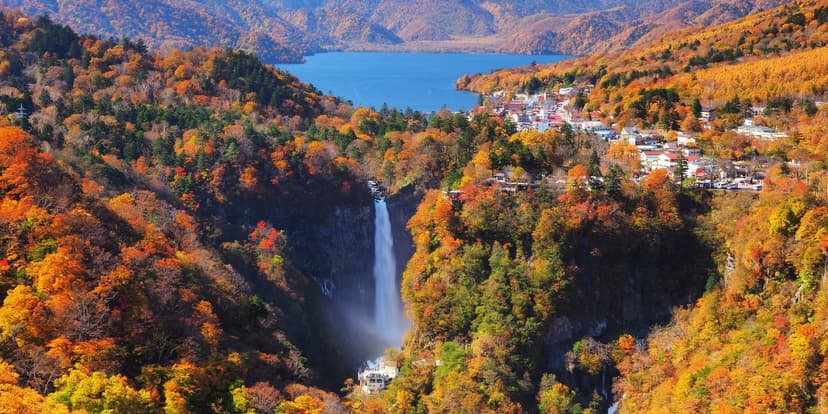
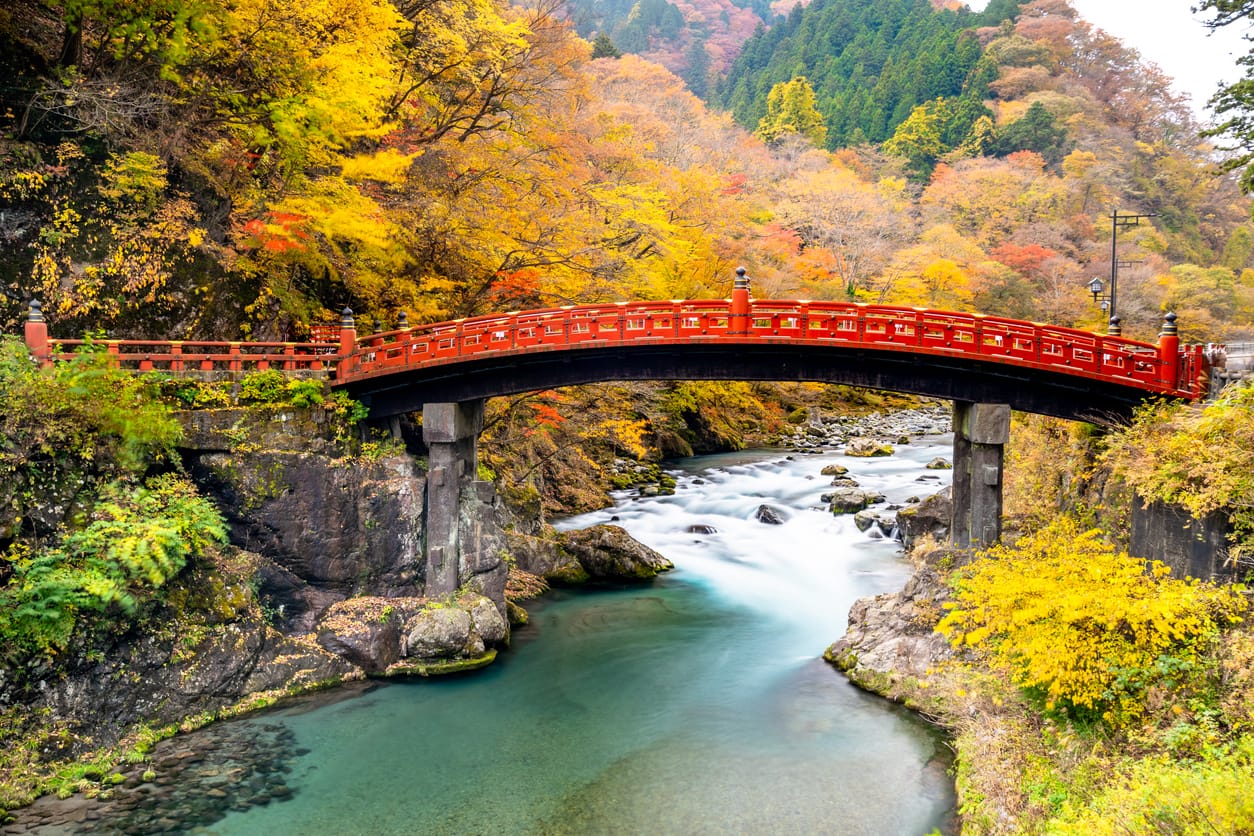
If you're arriving in the first ten days of November, head for height. Nikko around Lake Chuzenji, the Hakone highlands and the Japan Alps have already turned, and early November catches the last of it.
One thing to be wary of before you build an itinerary around it: Kamikochi is not a November destination. Its own foliage window is during October, and the valley closes for winter on 15 November 2026. From the sixteenth there is no bus, no taxi and nothing open above the Kama Tunnel until mid-April.
For those arriving in the middle of the month, this is when the lower ground starts to glow with red and gold. Mount Takao, an hour from Shinjuku, colors from the summit down through mid-November into early December.
In Kanazawa, Kenrokuen usually peaks mid-to-late November, and the garden is free to enter during its evening light-ups. The yukitsuri rope cones that shield the pines from snow go up from 1 November, so a late-November visit gets both at once.
If you are arriving in the last ten days of November, this is when Kyoto and Tokyo finally start to turn.
Tofuku-ji, which is famed for it's vast maple garden, runs its autumn viewing from 14 November to 6 December. Meanwhile, in Tokyo, Meiji Jingu Gaien ginkgo avenue turns from mid-November and is free to walk at any hour.
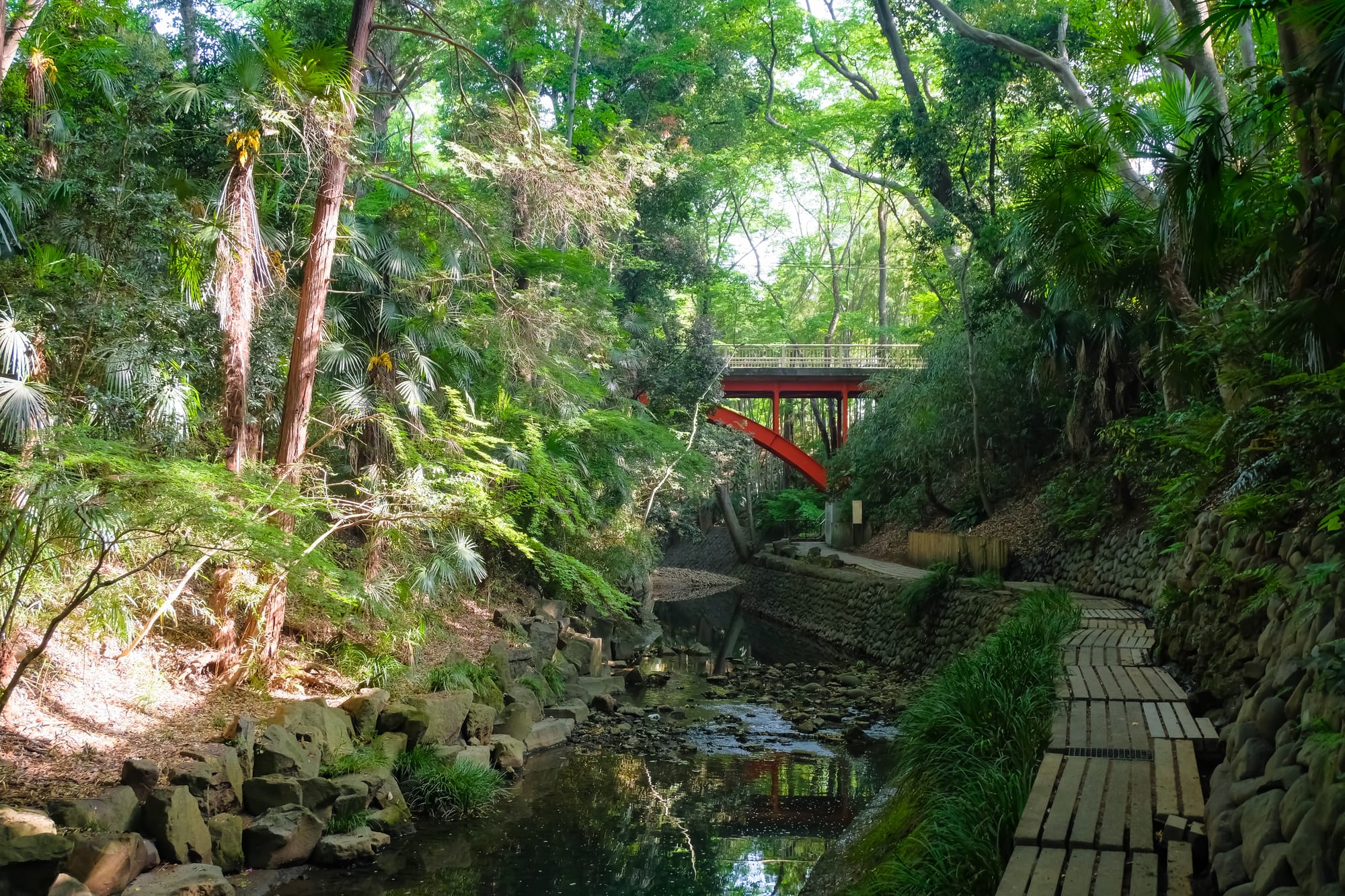
Tokyo has a maple ravine, and most visitors never hear about it.
Todoroki Valley is the only ravine in the city. Walk it with someone who knows which end to start from and where the quiet stretch is.
After Dark, the Gardens Open Again
The part of November that never shows up in a forecast is what happens after sunset.
Through the second half of the month, temples and gardens across the country light their maples in the evening. Because the sun goes down so early, this is not a late night out — a garden lit at 5:30pm still has you at dinner by seven. And the light does something the daytime cannot, throwing the color against a black sky and doubling it in whatever pond is underneath.
It is also the one part of an autumn trip that genuinely rewards planning ahead. Evening sessions usually run separately from daytime admission, often with their own ticket and a fixed entry window.
Some illumination events to look out for:
- To-ji Temple autumn light-up
Around two hundred maples lit around the five-story pagoda and doubled in the garden's pond, plus night entry to the Kondo and Kodo halls.
Dates: 31st October 2026 - 13th December 2026
Location: Minami ward, Kyoto
Price: ¥1,000 - Rikugien Garden Autumn Illumination
An Edo-era daimyo garden in Komagome. It closes at five and reopens at six for ticket holders only, with the maples and ginkgo lit around the central pond and reflected in the water.
Dates: dates TBC (typically late November - Early December)
Location: Komagome, Tokyo
Price: advance sales are ¥1,000, or it is ¥1,200 at the door
Daytime admission rarely covers the evening light-up. Check whether your garden runs a separate evening session, what time it starts, and whether it needs booking before you arrive. It is a short queue if you have a ticket and a long one if you do not.
The Best Weeks Are Also the Busiest
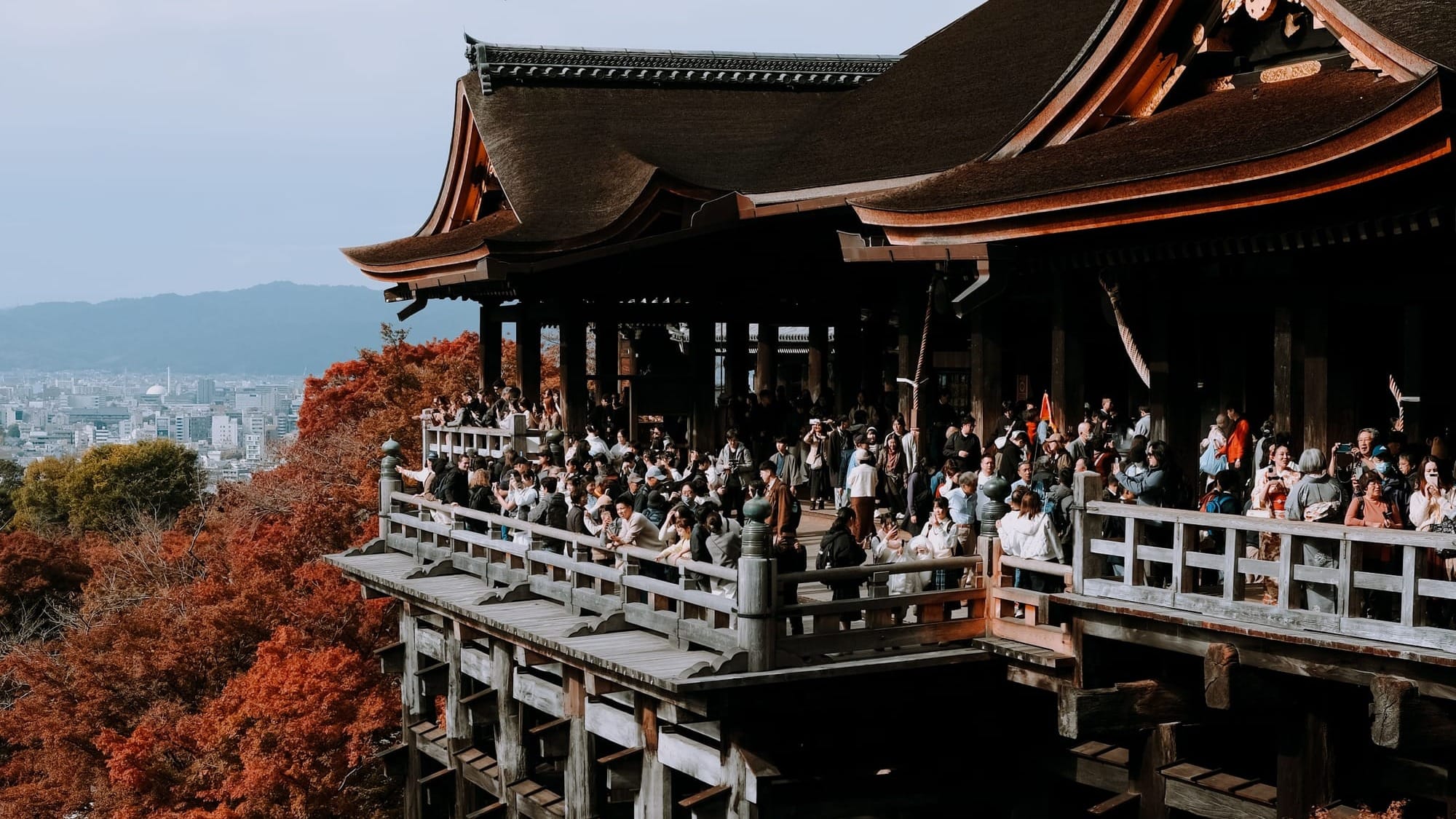
Two national holidays land inside November. Culture Day on the third and Labor Thanksgiving Day on the twenty-third both pull domestic crowds toward the same gardens you are heading for, and the final two weekends are the busiest of the entire season in Kyoto.
That should not move your dates. It should move your hours.
Most temple gardens open between 8:00am and 9:00am and stay quiet until mid-morning. The same garden at half eight and at one in the afternoon is not the same place. If you only manage one early start on your whole trip, spend it in Kyoto in the last week of the month.
It is also worth remembering what everyone is queueing for. Peak color is two weeks out of a three-month season. Our Autumn in Japan guidebook covers the other ten weeks: harvest traditions, seasonal food, and plenty that has nothing to do with maples.
What to Wear in Japan in November
The bag changes halfway through the month.
- First half: long sleeves, a sweater, and a light jacket over the top. Much like the end of October.
- Second half: the same, with a real coat instead of the jacket, and a scarf.
- Mornings and evenings: Tokyo sits near 8.8°C / 48°F outside the middle of the day. Whatever you would wear for that at home works here.
- Hokkaido and the mountains: proper winter clothing from day one. Asahikawa averages below freezing overnight, and Nikko is barely above it.
- Okinawa: summer clothes, with one layer for the evening.
- The Sea of Japan side: a waterproof, if Kanazawa or the Alps are on the route.
Evening light-ups happen after the temperature has dropped and involve a lot of standing about. Whatever you packed for daytime November, add one layer on top for the evenings, and put it in your day bag rather than leaving it at the hotel.
Everything above is November-specific. For the rest of the suitcase — adaptors, laundry, what not to bring at all — our Japan packing list covers all four seasons and ends with a printable checklist.
So, the Third or the Twenty-Fifth?
Both of our travelers had a good trip.
The one who landed on the third spent a clear, mild day among the maples at Nikko and walked Kyoto's gardens with room to breathe. The one who landed on the twenty-fifth saw the color everyone photographs, in the city where everyone photographs it, and queued a little for the privilege.
Neither was in Japan at the wrong moment. They were in Japan at different moments, which is the whole business of traveling in November.
What a forecast cannot tell you is which garden has actually turned this week, which light-up is worth the extra ticket, or which morning is worth setting an alarm for. That is the part our Local Experts carry in their heads.

Two weeks of peak color, and a very large country.
Every TOMOGO! tour is private, so your Local Expert can point the day at whatever has actually turned. Be quick, November books out fast!
FAQs we get about November in Japan
What is the weather like in Japan in November?
Cool, dry and often sunny. Tokyo averages 12.5°C / 54°F with daytime highs of 16.7°C / 62°F and overnight lows of 8.8°C / 48°F. Kyoto matches Tokyo, Osaka and Fukuoka run a degree or two milder, Sapporo is much colder at 5.2°C / 41°F, and Naha stays warm at 22.5°C / 72°F. All figures are JMA 1991–2020 normals.
Is Japan cold in November?
In the cities, cool rather than cold. Tokyo, Kyoto and Osaka reach the mid teens by day and drop to single figures overnight. Hokkaido is genuinely cold: Asahikawa averages 2.3°C / 36°F, with overnight lows below freezing.
Do I need a coat in Japan in November?
By the second half of the month, yes, in most of the country. The first half is still light-jacket weather in Tokyo, Kyoto and Osaka. For Hokkaido or the mountains, bring a winter coat for the whole month.
Does it rain a lot in Japan in November?
Not on the Pacific side. Tokyo sees 96.3mm, Kyoto 73.9mm and Kobe just 62.4mm. The Sea of Japan coast is the exception: Kanazawa averages 250.8mm, more than two and a half times Tokyo's figure.
When do the autumn leaves peak in Japan in November?
Color builds through the two or three weeks before each city's average full-turn date, which the JMA records as 21 November in Sendai, 28 November in Tokyo, 1 December in Osaka and 5 December in Kyoto. For most travelers that means the second half of November in Tokyo, and late November into early December in Kyoto.
Where can you see autumn leaves in Japan in November?
It depends when in the month you arrive. Early November is best at altitude, with peak colors in Nikko, the Hakone highlands and the Japan Alps. Mid-month suits Mount Takao outside Tokyo and Kenrokuen in Kanazawa, which is free to enter during its evening light-ups. The last ten days are when Kyoto and Tokyo arrive, including Tofuku-ji, Rikugien and the Meiji Jingu Gaien ginkgo avenue. Kamikochi is the one to avoid: it peaks in October and closes for winter on 15 November.
Is Japan busy in November?
Yes, particularly the final two weekends and the two national holidays, Culture Day on 3 November and Labor Thanksgiving Day on 23 November. Early mornings are the reliable way around it.
What should I wear in Japan in November?
Layers with a coat over them in the second half of the month, a light jacket in the first. Add a scarf, warm socks, winter clothing for Hokkaido and the mountains, summer clothing for Okinawa, and a waterproof for Kanazawa or the Japan Alps.