
How to Navigate Shinjuku Station
Tokyo’s Shinjuku Station is famously complicated. Learn why it got that way and how to get around it without the stress.
You've just stepped off the train. The doors slide shut behind you, and the carriage disappears into the tunnel. Around you, a river of people moves in every direction with the quiet confidence of those who have done this a thousand times. Signs hang from the ceiling, arrows pointing to exits on all sides, platform numbers that don't match anything on your map, and corridor after corridor disappearing into the unknown like a maze.
You look left. You look right. You look at your phone, and it has no idea where you are either.
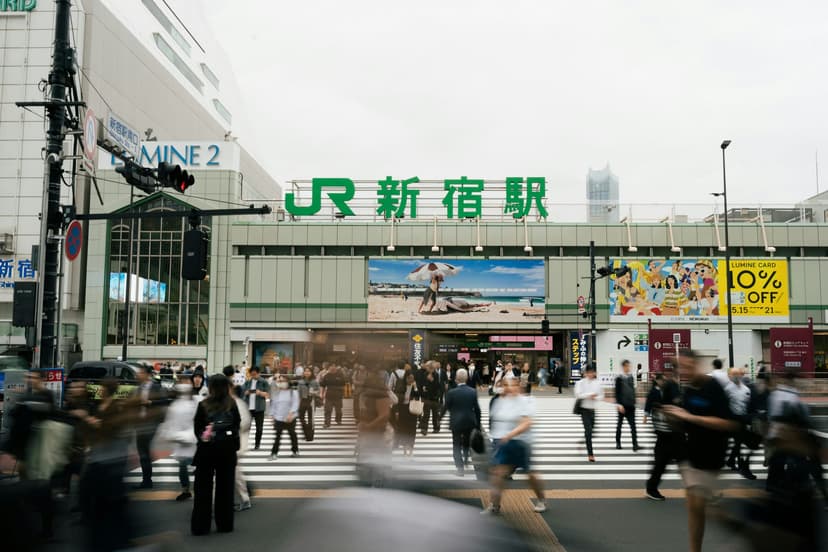
Welcome to Shinjuku Station, which is officially the busiest train station on the planet. It’s also the one place in Tokyo where even seasoned locals will occasionally admit defeat and reroute their journey just to avoid the whole thing.
And yet, the locals who know it well will also tell you this: Shinjuku Station has a logic to it. It doesn't reveal itself straight away, but once you understand how it's put together, the overwhelm fades fast. This guide will show you exactly how.
Why is Shinjuku Station so Famous?
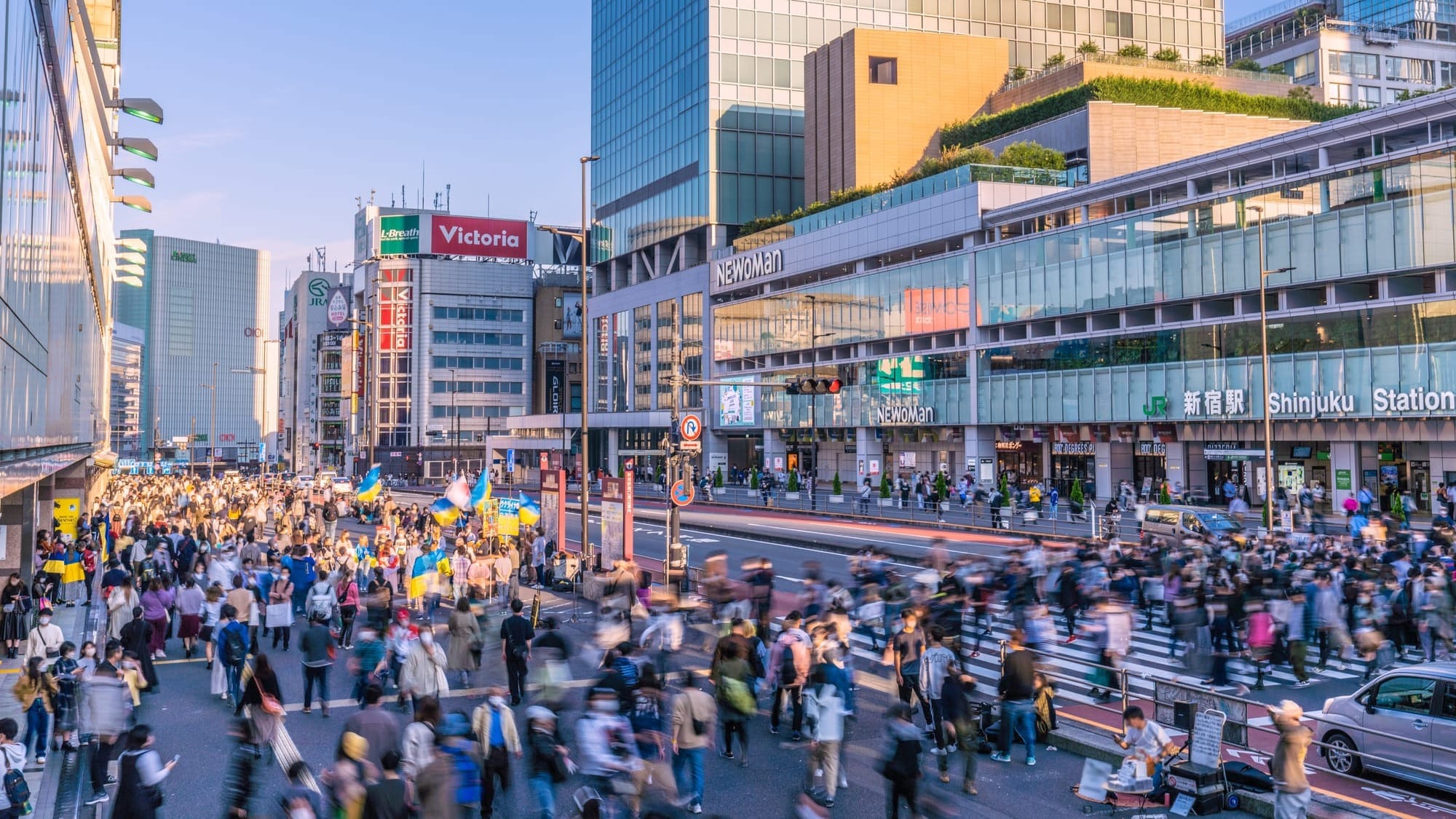
Shinjuku Station holds the Guinness World Record as the world's busiest railway station. On an average day, over 3.5 million passengers pass through it.
It has over 200 exits. Fifty platforms. Twelve train and subway lines operated by five different rail companies. There are underground shopping corridors, food halls, and connecting passageways that span multiple city blocks without ever surfacing above ground.
In short, there is no train station on earth quite like it.
How Did Shinjuku Station Get So Complicated?
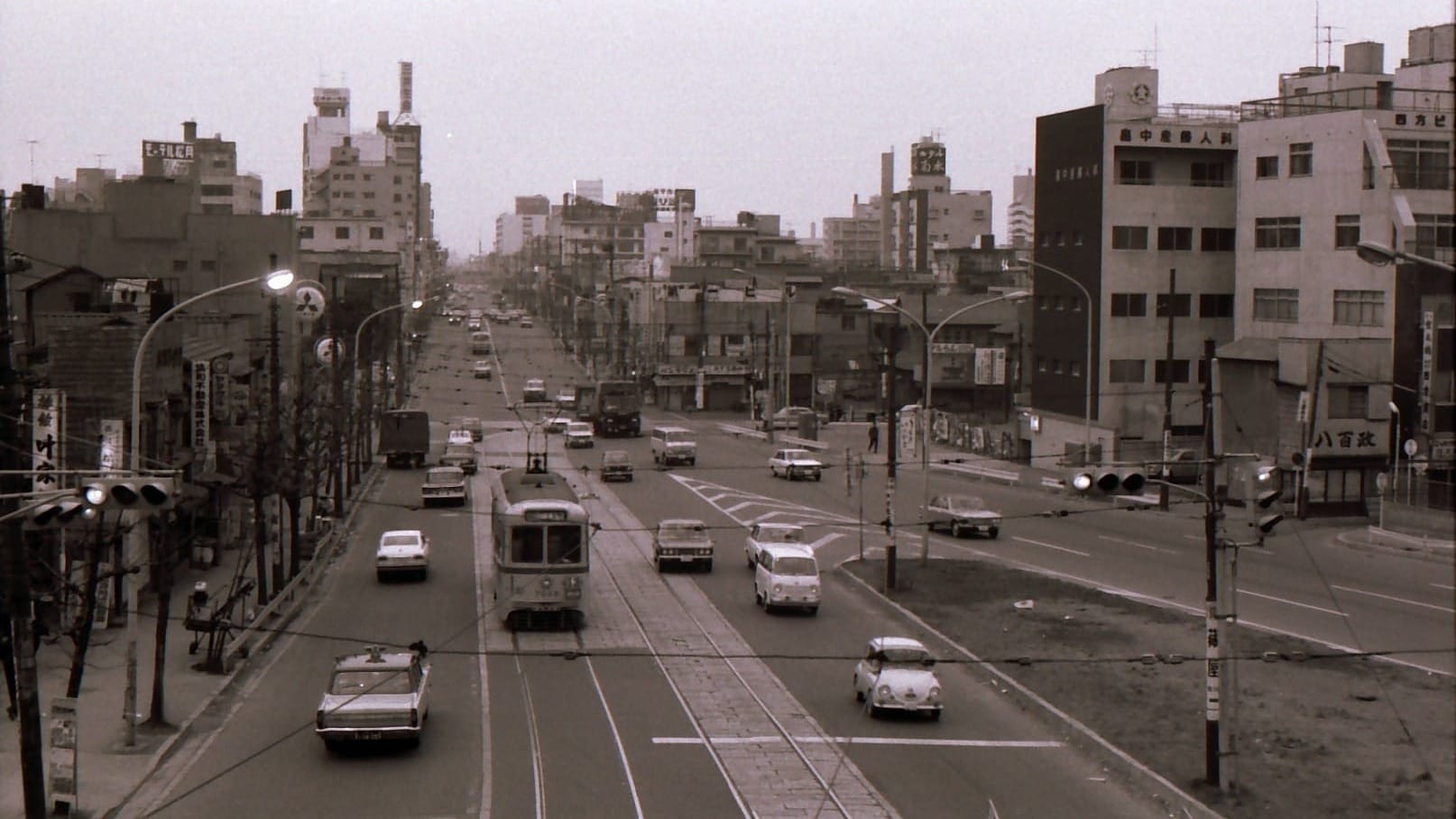
Shinjuku Station opened in 1885 as a single, unremarkable platform on what is now the Yamanote Line. Nobody standing there in the late nineteenth century could have imagined what it would eventually become. The chaos you experience today wasn't planned. It accumulated.
The story of Shinjuku Station’s evolution from quiet suburban stop to overwhelming tangle really begins in 1923. The Great Kanto Earthquake tore through central Tokyo, and areas like Nihonbashi took the worst of it. Shinjuku came through relatively unscathed, and people took notice. Businesses relocated. Residents followed. The neighborhood filled up fast, and the demand for transport connections came with them.
Then, after World War II, Tokyo rebuilt at a pace that was almost impossible to manage in an orderly way. Shinjuku, sitting at a natural crossroads between the western suburbs and the city centre, became a transit hub almost by accident. Each decade brought new demand. New demand brought new rail lines. New rail lines brought new operators.
And here is the detail that explains almost everything: those operators—JR East, Tokyo Metro, Toei, Keio, and Odakyu—each built their own infrastructure, with their own ticketing systems, and used their own signage logic. None of them were working from a shared blueprint. None of them were designing a unified station. Instead, they were each solving their own problem, in the same space, time and time again.
In a way, Shinjuku Station is like Tokyo in miniature: layered, alive and unapologetic.
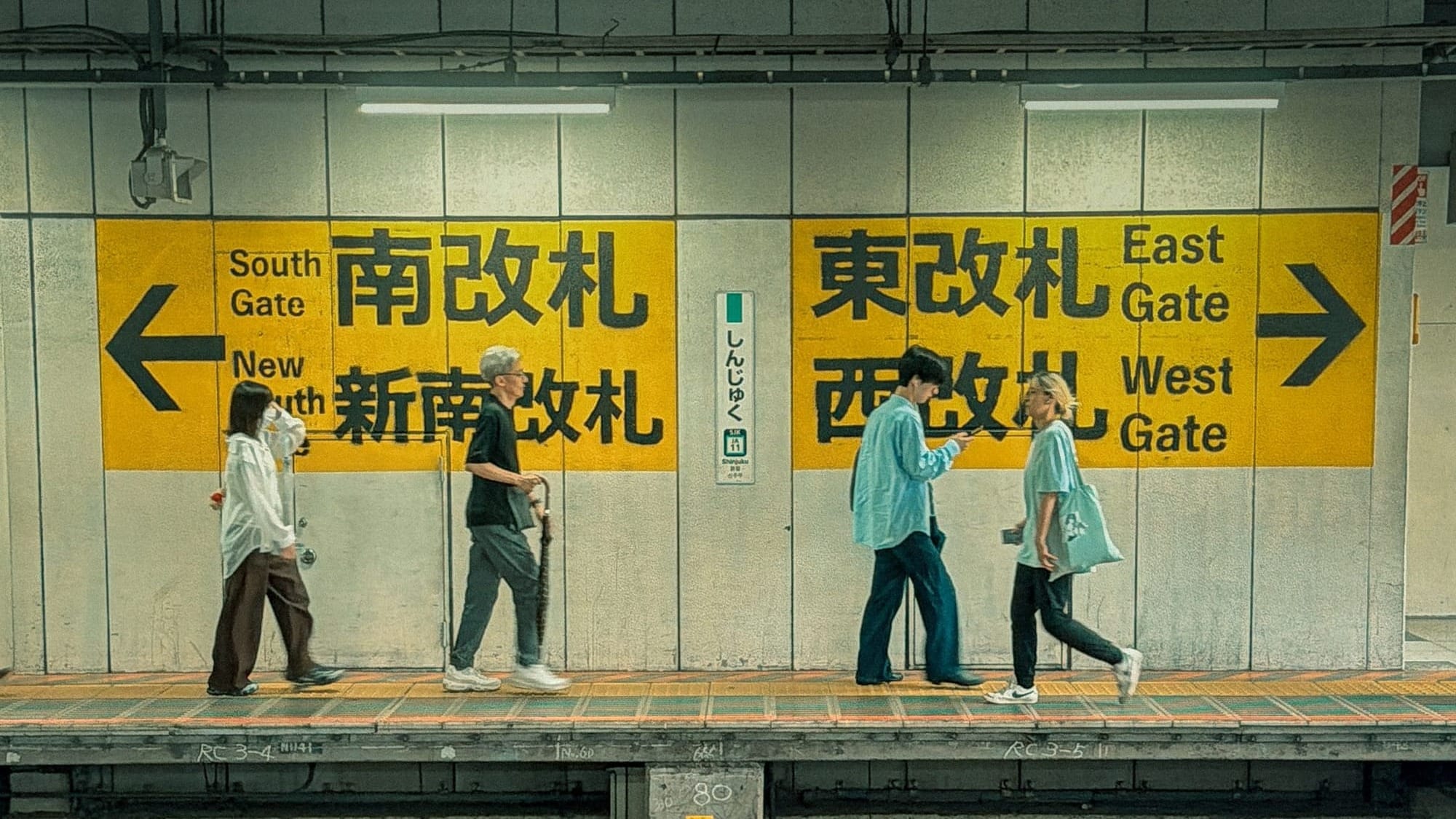
The Single Most Useful Tip for Shinjuku Station
Before any specific tips, you need to understand just one concept. This single idea will do more for your navigation than any map.
Shinjuku Station is split into two sides: East and West.
The JR train lines run through the middle of the station like a spine. Everything to one side is the East Exit area; everything to the other is the West Exit area. They are connected underground by a walking passageway, but functionally, they are two different worlds.
East Shinjuku is where you want to be for entertainment, food, and nightlife. Kabukicho, Golden Gai, and the bulk of Shinjuku's restaurants and bars are all on this side.
West Shinjuku is where you want to be for the skyscrapers, the Tokyo Metropolitan Government Building and the area’s major department stores.
Whenever you're heading somewhere in Shinjuku, the first question to ask yourself is simply: which side of the station is it on? Everything else follows from there.
We took our cameras to Shinjuku Station so you don't have to figure it out alone.
Check out our Instagram reel above for a ground-level look at what to expect.
Understanding the Different Lines at Shinjuku Station
Shinjuku is served by five operators running across a dozen lines. Understanding the difference between them will save you both time and confusion.
JR East runs the Yamanote Line, the Chuo Line, the Sobu Line, the Saikyo Line, the Shonan-Shinjuku Line and the Narita Express Line. These connect Shinjuku to the wider Tokyo rail network and are the lines that visitors use most often.
Tokyo Metro and Toei are the two subway operators. The Marunouchi Line (Tokyo Metro) and the Shinjuku, Oedo, and Fukutoshin Lines (Toei) all stop here. These connect you to the underground network that runs beneath central Tokyo.
Keio and Odakyu are private rail lines that terminate at Shinjuku, serving the western suburbs and areas such as Hakone and Kawagoe. Their platforms are located on the West Side and are separate from the JR and subway sections.
The most important thing to know when switching between operators is that you must exit the paid zone. If you're transferring from, say, a JR train to the Odakyu line, you can't simply walk between platforms. You'll tap out with your IC card, walk to the other operator's ticket gates, and tap back in. Make sure you build extra time into any journey that involves this kind of transfer.
How to Find the Correct Exit at Shinjuku Station
With over 200 exits, Shinjuku Station sounds like a nightmare to navigate. The good news? It’s surprisingly straightforward—if you know one simple trick.
Always search for the named exit, not just the station name.
Exits at Shinjuku have both numbers and names. The numbered exits (A1, B14, and so on) are useful once you're actually there, but the named exits (South Exit, East Exit, West Exit and New South Exit) are what to search for when you're planning your journey. Before you travel anywhere in Shinjuku, look up your destination on Google Maps and make a note of which named exit it recommends. Then, when you're inside the station, follow the signs for that name.
Knowing which exit you need determines which floor you go to.
One thing that catches most first-time visitors off guard is the floor layout. Once you step off the train, you are on the first floor. From there, the direction you need depends on where you are heading.
Heading to the East or West side of Shinjuku? You go down to B1F. Heading to the South Exit? You go up to the second floor. Remembering this single rule before you arrive will save you from heading in the wrong direction the moment you step off the train.
Extra tip: An underground station map is posted at all major decision points like junctions, transfer areas, and near the ticket gates. Take thirty seconds to find one when you arrive. Orienting yourself at the beginning of a walk through Shinjuku station will save you five minutes of retracing steps later.
For digital navigation, Google Maps works well in Japan and handles transit directions accurately. The Japan Official Travel App is also worth downloading before your trip. Both will give you exit-level directions rather than just station names.
Follow the Grand Loop signage inside the station to navigate around it, or use the South Exit as a straightforward alternative in the meantime.
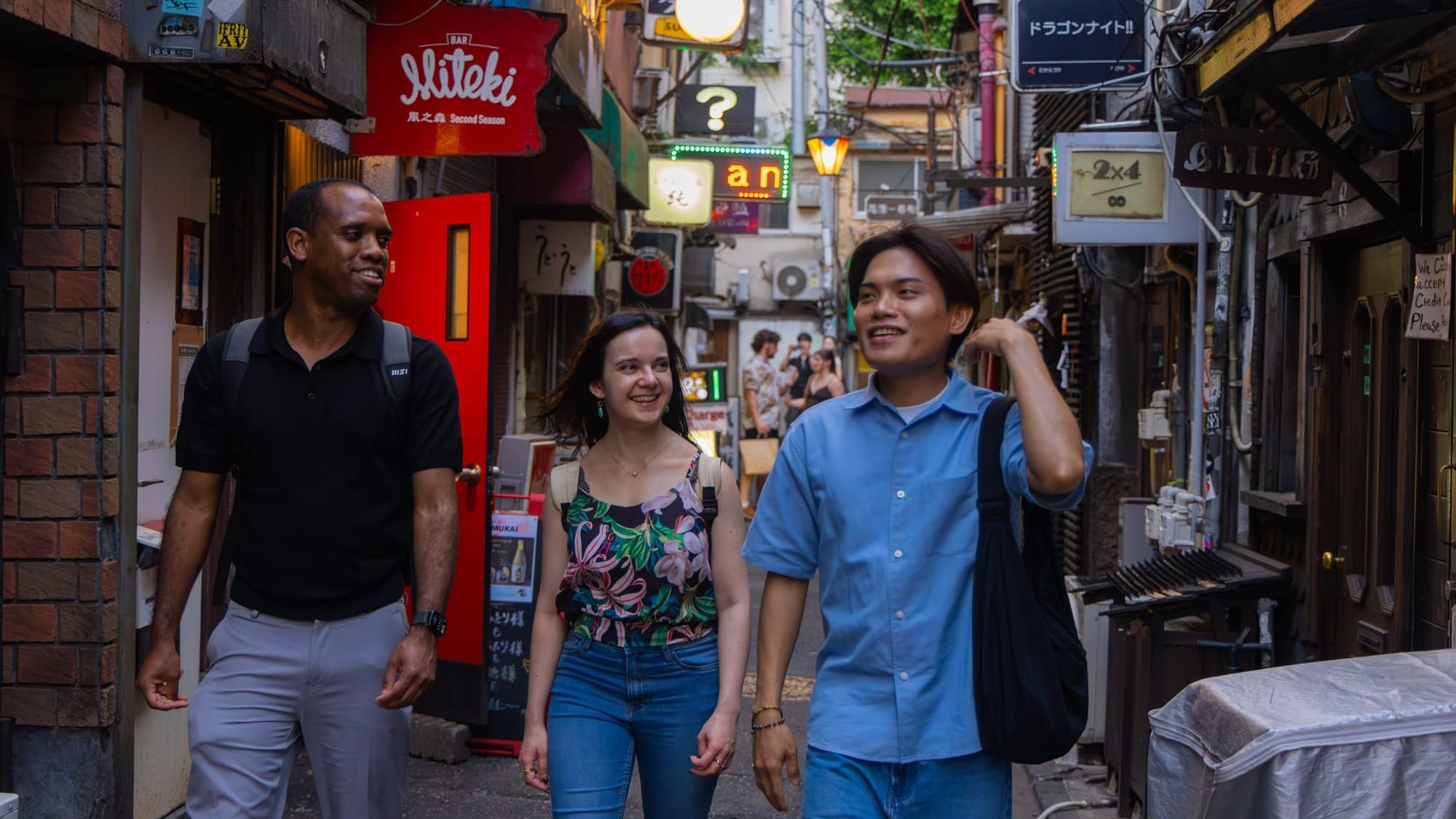
There’s More to Shinjuku Than the Station
Getting out of the station is one thing. Knowing what to do once you’re out is another.
Behind the neon of Kabukicho is a post-war story most visitors never hear. The tiny bars of Golden Gai each have their own subculture, their own regulars, their own reason for existing. And that giant 3D calico cat watching over the East Exit? There's a best time to see it, and your guide will know exactly when.
The TOMOGO! Shinjuku Backstreets Walking Tour is led by a local guide with the kind of knowledge that only comes from actually living here. Every route is shaped around your group, your pace, and what you're curious about.
 Nick Meurer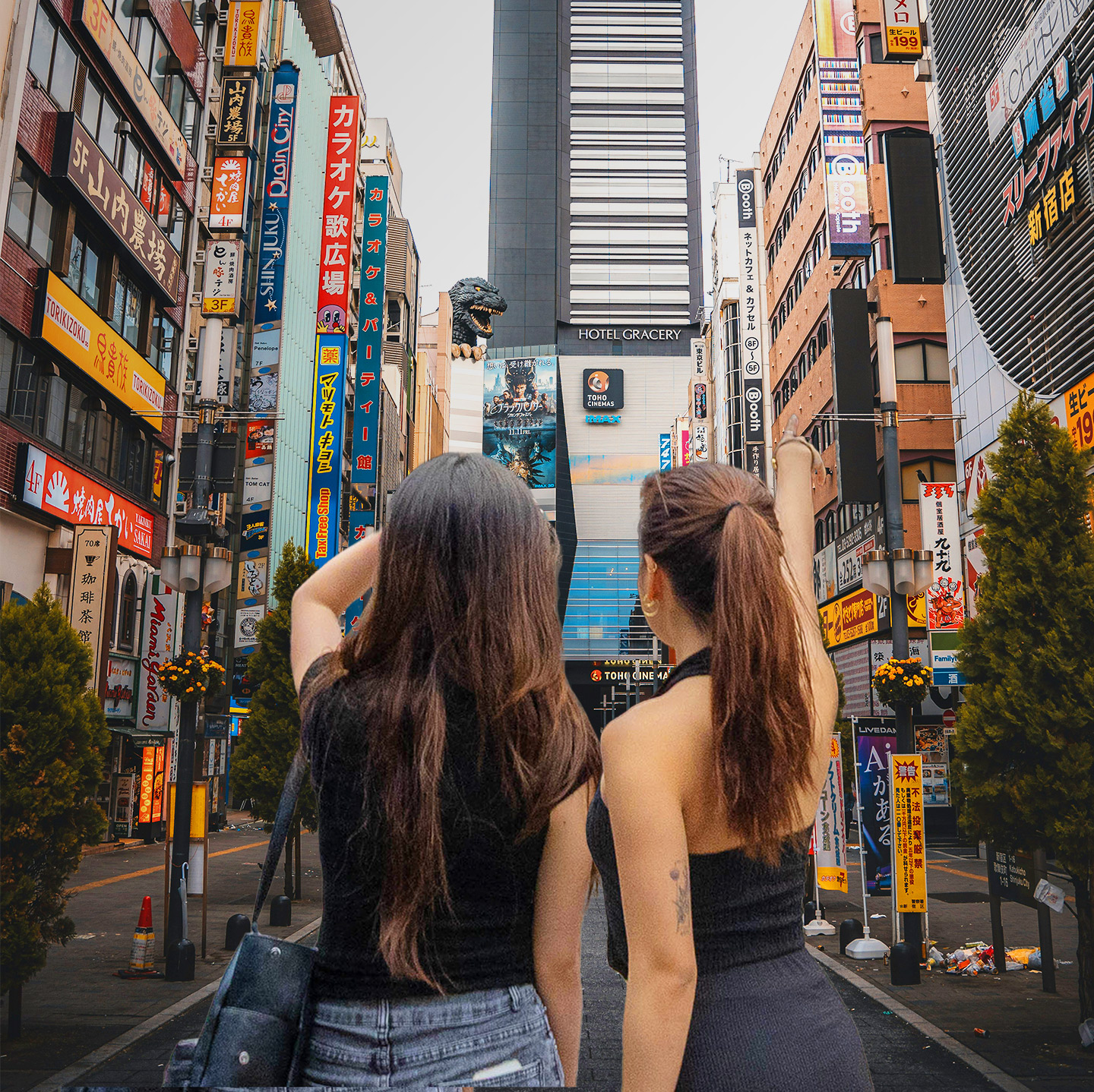
FAQs we get about Shinjuku Station
- Can I use a Suica or IC card on all lines at Shinjuku Station?
Yes, you can! Traveling with a Suica or IC card is the single best thing you can do to simplify your journey. A Suica or Pasmo IC card works across all operators at Shinjuku, including JR, Tokyo Metro, Toei, Keio, and Odakyu. You simply tap in and tap out at each gate without needing to buy individual tickets.
*The one thing to remember: if you're transferring between operators, you'll need to tap out of one gate and tap into another separately. The card handles the fare calculation automatically, so you just keep moving. - What are the best exits to use for tourists?
It depends on where you're headed, but these three cover most visitor needs.
The East Exit puts you directly in front of Kabukicho, Golden Gai, and the bulk of Shinjuku's restaurants and nightlife.
The West Exit takes you toward the skyscrapers, the free Tokyo Metropolitan Government Building observatory, and the department stores.
The South Exit is the most manageable for first-timers, with clear signposting, reliable elevator access, and easy connections to both sides of the station. - How to avoid rush hour at Shinjuku Station?
Weekday peak hours run approximately 7:30am - 9:30am and 5:30pm - 8:00pm. Shifting your journey by even 30 to 45 minutes outside of those windows makes a significant difference. If your plans are flexible, it's one of the easiest adjustments you can make to your day. - How much time do you need to navigate Shinjuku Station?
For a first-time transfer, budget 15 to 20 minutes on top of your normal travel time. With luggage, add another 10 to 15 minutes. After your first time through, this drops quickly as you begin to understand the logic behind navigating Shinjuku Station. The golden rule: always build in buffer time at Shinjuku. - How to use the Hakone Free Pass at Shinjuku Station?
If you’re planning to travel from Shinjuku Station to Hakone, the Hakone Free Pass is an absolute must! The pass includes a round-trip ticket from Shinjuku Station, unlimited transport on eight different modes of travel, and discounts at over 70 spots in the Hakone area.
A digital pass can be purchased online and comes with a QR code that must be scanned at the ticket gates for entry; alternatively, a paper ticket can be bought from the Odakyu ticket machines at Shinjuku Station.
*NOTE: If you want to travel directly from Shinjuku Station to Hakone without needing to transfer, you will need to buy an additional ticket for the Odakyu Limited Express Romancecar. - How do I navigate Shinjuku Station with luggage?
Shinjuku Station and large suitcases are not the best combination, but a little planning goes a long way.
If you need step-free access, the South Exit has the most reliable elevator system. (Just make sure to allow extra time, as lifts can mean waiting through several cycles.)
For coin lockers, you'll find them near the South Exit and West Exit areas. Alternatively, consider using Japan's takuhaibin luggage forwarding service, which lets you send your suitcase directly between hotels. It's reliable, affordable, and means you move through the station completely hands-free. Most hotels can arrange this at the front desk.
Now You're Ready for Shinjuku
That moment at the beginning of this guide, standing frozen in the concourse while the crowd streams past, doesn't have to be your Shinjuku story.
You now know why the station is the way it is. You know the East-West framework that makes the whole thing readable. You know which exit to look for, how to handle a transfer between operators, and when to avoid the morning rush.
Shinjuku Station is still large, still loud, and still occasionally bewildering. But it's a lot less intimidating when you know how it works.
And when you step out of those exits and into the neighborhood itself, the local guides here at TOMOGO! are ready to show you the rest of it: the backstreets with the stories, the restaurants with the locked-in regulars, and a version of Shinjuku that takes a true local to find.
Tokyo is waiting. Let's make sure you're ready for it.

Put the Guidebook Down and Come With Us!
Join a TOMOGO! local tour and explore neighborhoods, culture, and everyday gems with our friendly tour leaders.